



Asahi (あさひ) and Ujihikari (うじひかり) are two tencha cultivars developed in Kyoto in 1954, and they are the plants behind a surprising share of Japan's very best matcha. Together they cover about 48.9 hectares, roughly 3.6% of Kyoto Prefecture's improved-cultivar tea area (Kyoto Prefecture, FY2025 tea statistics, surveyed December 2025). Yet at the 69th National Tea Competition, held in 2015, every single one of the ten top-ranked tencha entries was one of these two plants (69th National Tea Competition, tencha results). That gap between how little is planted and how much wins is the whole story.
For where this sits on the map, see where Japan's tea is really grown.
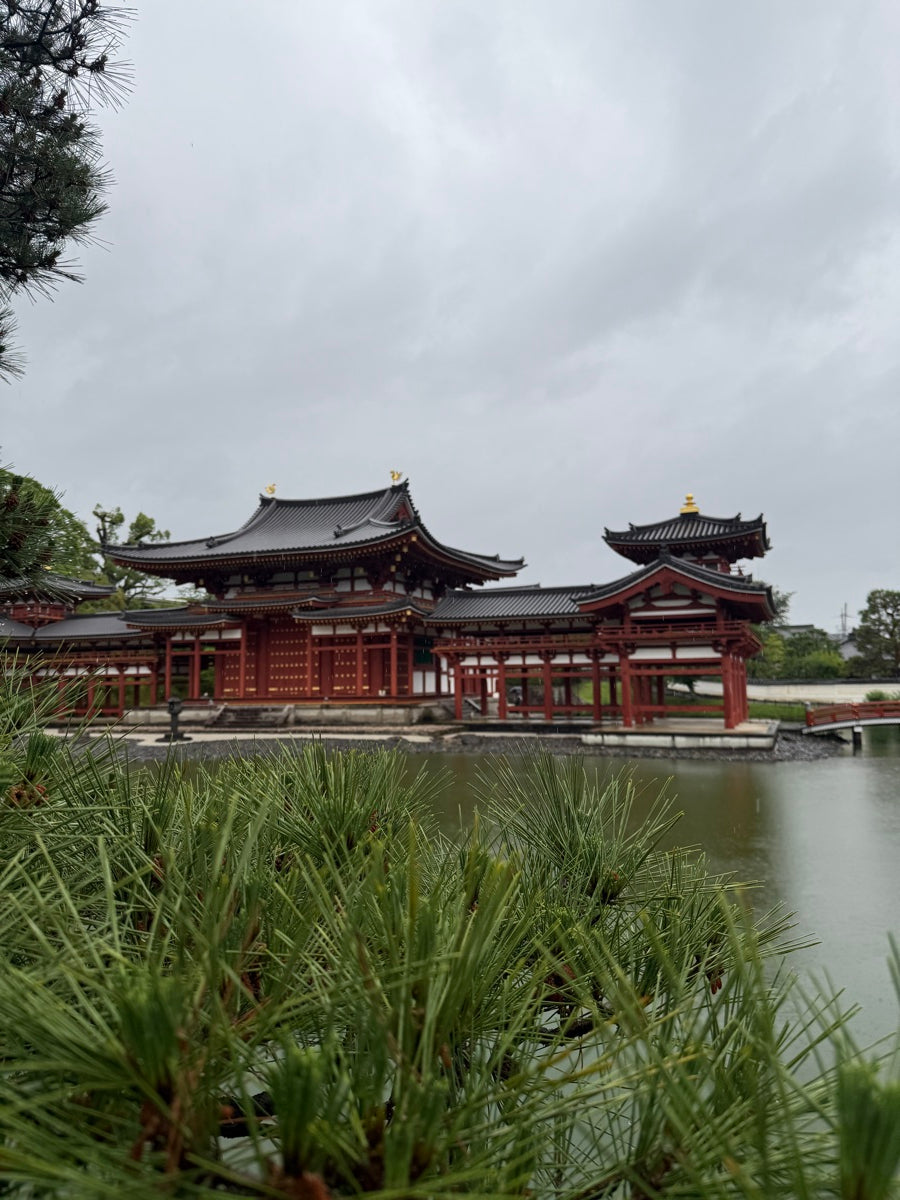
I walked the tea rows in Wazuka and the streets of Uji in May 2025, and the thing that struck me is how quietly these plants sit in the landscape. A cultivar does not announce itself. You cannot look at a hedge row and know what you are seeing. But it shapes almost everything you taste in the bowl.
Key Takeaways
- Asahi and Ujihikari were both developed in Kyoto in 1954. Asahi was selected from Uji native (zairai) seedlings by a private grower, Hirano Jinnojō; Ujihikari was bred at the Kyoto Prefectural Tea Research Institute (Kyoto Prefectural Tea Research Institute).
- Both are Kyoto prefectural cultivars rather than nationally bred ones, identified by their Kyoto line numbers, Hirano No. 11 and Kyōken No. 170.
- Ujihikari covers 25.7 ha and Asahi 23.2 ha in Kyoto, about 1.89% and 1.70% of the prefecture's improved-cultivar area.
- Asahi took seven of the ten top-ranked tencha entries at the 69th National Tea Competition in 2015, and Ujihikari took the other three.
- Yabukita, the cultivar behind most Japanese green tea, accounted for 75% of national tea acreage in FY2014, but only about 51.5% of Kyoto's improved-cultivar area today.

What exactly are Asahi and Ujihikari?
Both were developed in 1954, and both are made for shaded tea. That is the short answer, and it explains why most people have never heard of them.
Asahi carries the old line name Hirano No. 11 (selection from Uji native seedlings). It was selected not by an institute but by an individual grower, Hirano Jinnojō. Its picking season is mid-season, roughly the same as Yabukita. The Kyoto Prefectural Tea Industry Council describes it as particularly excellent as tencha and notes it is heavily used for competition and exhibition tea (Kyoto Prefectural Tea Industry Council).
Ujihikari carries the line name Kyōken No. 170 and was bred by the Kyoto Prefectural Tea Research Institute itself. It is also mid-season. The prefecture describes its colour as bright and vivid, and says it "dyes" well, meaning the colour carries through into the finished tea. As tencha, its leaf shape is described as uniform and soft.
One correction worth making, because it circulates widely and is wrong: Asahi is not Kyōken No. 166, is not mid-to-late season, and is not the gyokuro competition cultivar. Those are the characteristics of Gokou. The two are easy to confuse, and the transposition circulates widely. Asahi is Hirano No. 11, mid-season, tencha. If you want the wider picture of how these plants relate to each other, our guide to Japanese tea cultivars maps the whole field.
Something else that surprises people: these are prefectural cultivars, not national ones. Kyoto's institute lists them by their old Kyoto line numbers, Hirano No. 11 and Kyōken No. 170, and states plainly that almost all green tea cultivars developed in Kyoto are for covered tea, meaning tencha and gyokuro. Asahi, Ujihikari, Samidori and Gokou are Kyoto's own, which is part of why they stayed regional and why you rarely see them named outside Uji.
Why did Uji breed its own cultivars at all?

Because Uji spent eight centuries building a style of tea that the rest of Japan was not making, and eventually it needed plants suited to it.
The longer story is in 486 dated entries on the history of tea.
Tea seeds arrived in 1191, when the monk Eisai returned from China and gave seeds to Myōe at Kōzan-ji in Toganoo, north of Kyoto. From there the plants moved south into Uji. The decisive invention came later. Uji's tea masters worked out covered cultivation, shading the new shoots from the sun as they grow, in the late Muromachi period. Kyoto Prefecture's own regional history is direct about this, saying the method was devised by the tea masters of Uji, and that Uji tea came to surpass Toganoo tea in both flavour and volume (Kyoto Prefecture, Yamashiro Regional Bureau).
That single practice is the origin of matcha as we know it. The same document states that green tea was refined into the strongly umami, deep-green matcha through the invention of covered cultivation in Uji. Gyokuro emerged from the same district later, in Uji Ogura, and in 1738 Nagatani Sōen in what is now Ujitawara devised the Uji method of steamed sencha production.
So by the time anyone was selecting cultivars in the twentieth century, Uji had a very specific need. Asahi and Ujihikari were not bred to grow a lot of tea. They were bred to grow shaded tea well. For the place itself, walking the Uji region covers what that landscape actually looks like.
How rare are these cultivars, really?

Rarer than almost anything else you will find named on a tin. In Kyoto's FY2025 figures, Ujihikari sits at 25.7 hectares and Asahi at 23.2 hectares, against a total improved-cultivar area of 1,362.8 hectares (Kyoto Prefecture, FY2025 tea statistics). Improved-cultivar area means land planted with named, selected cultivars, and it excludes the older zairai seedling fields, which still account for 46.9 hectares in Kyoto.
The same table in numbers, since charts do not always travel well:
| Cultivar | Kyoto area, FY2025 (ha) | Share of improved-cultivar area |
|---|---|---|
| Yabukita | 702.4 | 51.5% |
| Okumidori | 188.0 | 13.8% |
| Samidori | 142.7 | 10.5% |
| Gokou | 63.1 | 4.6% |
| Hoshun | 33.0 | 2.4% |
| Ujihikari | 25.7 | 1.89% |
| Asahi | 23.2 | 1.70% |
| Saemidori | 20.8 | 1.5% |
Percentages here are my own arithmetic on the prefecture's published hectares, not figures printed in the source. Treat them as derived. Ujihikari works out to about 1.89% of Kyoto's improved-cultivar area, Asahi about 1.70%. Combined, the two cover roughly 3.6%. Hoshun, sitting just above them at 33.0 hectares, is another Kyoto cultivar, registered much later in 2006 for early-season gyokuro (Kyoto Prefectural Tea Research Institute).
The contrast with Yabukita is the point. Nationally, Yabukita accounted for 31,905 hectares, or 75% of Japanese tea acreage, in FY2014 (Ministry of Agriculture, Forestry and Fisheries). That figure is dated, and it is not the only one on offer. The Kyoto Prefectural Tea Research Institute puts Yabukita nearer 68% of Japanese cultivars, but prints no survey year against it. I am leading with the MAFF number because a share I can date is worth more to you than a rounder one I cannot. In Kyoto today, Yabukita is 702.4 hectares, about 51.5% of improved-cultivar area. Kyoto is simply a different place, planted for a different purpose.
One more set of numbers explains the current moment. Kyoto's tencha gardens now cover 717.1 hectares, up 20.7% year on year. The value of tencha production reached 14,092.4 million yen, which is 224.0% of the previous year's 6,291.9 million, an increase of 124%. That rise is price, not volume: tencha output actually fell slightly over the same period, to 973.8 tonnes from 1,057.0. The prefecture has 612 tea-growing households and 1,443.9 hectares of tea gardens in total, a figure that covers improved cultivars, zairai fields and the remaining smaller categories together (Kyoto Prefecture, FY2025 tea statistics).
What makes Asahi the competition tencha cultivar?
The clearest evidence is the scoreboard, though it is a decade old and worth reading as such. At the 69th National Tea Competition in 2015, in the tencha category, Asahi took first, second, third, fifth, eighth and both of the joint-ninth places, seven of the ten top-ranked entries. Ujihikari took fourth, sixth and seventh. The top-ranked entry, submitted for the Minister of Agriculture, Forestry and Fisheries Award, was an Asahi tea from Jōyō City in Kyoto.
I want to be careful about what this does and does not prove. Competition tencha is grown under conditions almost nobody applies commercially: heavy shading, meticulous plucking, small lots. The result tells you these cultivars have an exceptionally high ceiling in expert hands. It does not tell you that any tea labelled Asahi is automatically better than any tea labelled Yabukita.
I also want to name what I could not verify. There is a widely repeated claim that Asahi is notoriously difficult to grow and low-yielding. I looked for it in the prefectural sources, the industry council's cultivar notes and the national tea cultivar handbook (NARO, Tea Cultivar Handbook 6th edition), and it is not there. It is actually stronger than absence: Kyoto's institute publishes a yield rating for Asahi of medium, not low. It may still be a difficult plant in practice, and growers say so, but the yield half of that claim is contradicted by the source, so I am not going to print it. I also found no published parentage for Ujihikari, and no amino-acid or theanine measurements for either plant. One note on dating: the results sheet itself does not print a calendar year. The 2015 date here follows from the competition's annual cadence, counting back from the 79th, which was held in 2025 (Global Japanese Tea Association).
What do Asahi and Ujihikari actually taste like?
The honest answer is that the published descriptions are qualitative, not measured, and I would rather give you those than invent precision.
Kyoto's own descriptions focus on colour and clarity. Ujihikari is described as bright and vivid, with colour that carries through into the finished tea, and a tencha leaf that is uniform and soft in shape. Asahi is described simply as particularly excellent as tencha, which is the industry council's language, and its record in exhibition tea is the substance behind that phrase. For comparison, Samidori is credited with a bright colour and excellent aroma and flavour, and Gokou with a distinctive volatile aroma, which is why Gokou is the cultivar heavily used for gyokuro competition tea rather than tencha.
In the bowl, what I notice with well-made tencha from these plants is thickness and a long finish rather than a loud aroma. The colour settles deep and stays. But I want to be plain that no source I could find publishes theanine or amino-acid figures for either cultivar, so anyone quoting you a number for Asahi's umami content is quoting something they did not measure.
How do they differ from Samidori, Saemidori, Okumidori, Gokou and Yabukita?
The cleanest way to sort them is by where they came from and what they were built for.
| Cultivar | Developed | Where it came from | Bred for | Kyoto ha |
|---|---|---|---|---|
| Asahi | 1954 | Selected from Uji native seedlings (Hirano No. 11) | Tencha | 23.2 |
| Ujihikari | 1954 | Bred at the Kyoto institute (Kyōken No. 170) | Tencha | 25.7 |
| Samidori | 1954 | Selected from Uji native seedlings (Koyama No. 69) | Covered tea | 142.7 |
| Gokou | 1954 | Selected from Uji native seedlings (Kyōken No. 166) | Gyokuro | 63.1 |
| Okumidori | Not stated in the sources cited here | Not stated in the sources cited here | Not stated in the sources cited here | 188.0 |
| Saemidori | Crossed 1969, registered 1991 | Yabukita × Asatsuyu, bred at NARO Makurazaki | Gyokuro and kabusecha (covering suitability) | 20.8 |
| Yabukita | Not stated in the sources cited here | Selected from Shizuoka native seedlings | Not stated in the sources cited here | 702.4 |
Uji native selections. Asahi, Samidori and Gokou were all selected from Uji zairai, the native seed-grown population, and all were developed in 1954. Samidori was selected by Koyama Masajirō and has an unusually wide window for picking. Gokou came from the Kyoto institute and is mid-to-late season. Ujihikari is Kyoto-bred but its page gives no parentage and does not describe it as a zairai selection, unlike the other three. We go deeper on those pairs in Samidori and Saemidori.
Bred elsewhere. Yabukita is a selection from Shizuoka native seedlings. Saemidori is a cross of Yabukita and Asatsuyu, bred at NARO's Makurazaki station, crossed in 1969 and registered as a plant variety in November 1991, and the handbook credits it with covering suitability, suited to gyokuro and kabusecha (NARO, Tea Cultivar Handbook 6th edition). Okumidori is the other cultivar with a large Kyoto footprint, and it is not among Kyoto's own, though the sources cited here do not state where it was bred or what it was bred for.
There is a nice thread hiding in that last one. Asatsuyu, Saemidori's parent, is itself a seedling selection from Uji native stock. So Saemidori carries Uji ancestry one generation back, by way of a nationally bred parent. Uji's genetics travelled even when Uji's cultivar names did not. Gokou's later-picking side of the family is covered in Okumidori and Gokou.
Where do these plants actually grow?

Kyoto's tea sits in the Yamashiro region, south of the city, across districts including Uji, Jōyō, Kyōtanabe, Ujitawara, Wazuka and Minamiyamashiro.
Wazuka is the one that surprised me most on the ground. It is a small mountain town of terraced rows, and the prefecture credits it with producing more than 45% of all Uji tea. Minamiyamashiro is second, at about 27% of Kyoto Prefecture's tea production volume. Jōyō, where that first-place Asahi came from, is documented specifically as a tencha-producing district, and Ujitawara carries the title birthplace of Japanese green tea for Nagatani Sōen's work in 1738 (Kyoto Prefecture, Yamashiro Regional Bureau).
Standing in those rows, you understand why the cultivar question is not marketing. The hedges look identical. The difference is in what the leaf does after it is shaded, steamed and stone-milled.
What does this mean when you are buying matcha?

Treat a named cultivar as information, not as a grade.
A tin that names Asahi or Ujihikari is telling you something real, because these plants are scarce and are grown almost exclusively for shaded tea. That is a genuine signal about intent. What it is not is a guarantee. Shading, plucking standard, steaming, the age of the stone mills and how the tea was stored all move the cup more than the cultivar name does on its own. A carefully made Samidori will beat a carelessly made Asahi every time.
The honest version is this: cultivar is one input among several, and the growers who bother to tell you which one they used are usually the growers paying attention to the others too. If you want the practical framework for reading a tin, what ceremonial grade actually means covers the terms that matter and the ones that do not.
For our part, we buy on the cup first and treat the cultivar as context. If you are sourcing matcha for a café, a studio or a shop, we work with wholesale partners directly and can talk through what is in the current harvest. And if you would rather just taste the difference, start with a single bowl and pay attention to the colour as it settles.
Frequently asked questions
What is the Asahi matcha cultivar?
Asahi (あさひ) is a Japanese tea cultivar developed in Uji, Kyoto in 1954, selected from Uji native seedlings by the grower Hirano Jinnojō under the line name Hirano No. 11. It is a mid-season cultivar grown for tencha, the shaded leaf that becomes matcha, and Kyoto's tea industry council describes it as particularly excellent as tencha and heavily used for competition tea.
What is Ujihikari?
Ujihikari (うじひかり) is a Kyoto tea cultivar developed in 1954 at the Kyoto Prefectural Tea Research Institute under the line name Kyōken No. 170. It is mid-season, and the prefecture describes its colour as bright and vivid with good colour carry-through, and its tencha leaf as uniform and soft in shape.
Are Asahi and Ujihikari registered cultivars?
They are Kyoto prefectural cultivars rather than nationally bred ones. Kyoto's tea research institute identifies them by their prefectural line numbers, Hirano No. 11 for Asahi and Kyōken No. 170 for Ujihikari, both developed in 1954. They should be described as Kyoto prefectural cultivars rather than assigned a national registration number.
How rare is Asahi matcha?
In Kyoto's FY2025 statistics, Asahi covers 23.2 hectares and Ujihikari 25.7 hectares out of 1,362.8 hectares of improved-cultivar tea area, so together they represent roughly 3.6% of that area. No verified national acreage figure exists for either cultivar, and both are also grown in small amounts outside Kyoto, so the Kyoto figure is not a national total.
Is Asahi better than Yabukita for matcha?
For competition tencha the record strongly favours Asahi, which took seven of the ten top-ranked entries at the 69th National Tea Competition in 2015 while Ujihikari took the other three. But that reflects exceptional growing and processing rather than the cultivar alone. Yabukita remains the most planted cultivar in Japan at 75% of national acreage as of FY2014.
Where are Asahi and Ujihikari grown?
Almost entirely in the Yamashiro region of southern Kyoto, across districts including Uji, Jōyō, Ujitawara, Wazuka and Minamiyamashiro. Wazuka alone produces more than 45% of Uji tea according to Kyoto Prefecture, and Jōyō is documented as a tencha-producing district.
What does Asahi matcha taste like?
Published descriptions are qualitative rather than measured. Kyoto's sources describe Asahi as particularly excellent as tencha, and describe the related Ujihikari as bright and vivid in colour with good carry-through into the finished tea. No source publishes theanine or amino-acid figures for either cultivar, so any specific umami number quoted for Asahi is not coming from a measurement.
Is the Asahi tea cultivar related to Asahi beer?
No. Asahi (あさひ) here is a Japanese tea cultivar selected in Uji, Kyoto in 1954 and grown for tencha, the shaded leaf milled into matcha. It shares a common Japanese word meaning morning sun with unrelated companies and products.
Which cultivar makes the best matcha?
No single cultivar guarantees the best matcha. Asahi has the strongest competition record in tencha, taking seven of the ten top-ranked entries at the 69th National Tea Competition in 2015, but shading, plucking standard, steaming, milling and storage move the finished cup more than the cultivar name alone. A carefully made Samidori will outperform a carelessly made Asahi.
Sources
- Kyoto Prefectural Tea Research Institute, About Uji cultivars
- Kyoto Prefectural Tea Industry Council, Cultivars
- Kyoto Prefecture, FY2025 tea production and distribution statistics
- Kyoto Prefecture Yamashiro Regional Bureau, Uji tea and Kyoto Yamashiro
- Ministry of Agriculture, Forestry and Fisheries, Situation surrounding tea (May 2016)
- 69th National Tea Competition, tencha judging results
- NARO, Tea Cultivar Handbook 6th edition
Written by Christian Mauerer, founder of One with Tea, after visiting the tea districts of Kyoto in May 2025. Published 28 August 2026. Cultivar facts are sourced from Kyoto Prefecture and national agricultural publications rather than from supplier marketing.
Share:
Cold Coffee Is Driving Café Sales. Signature Matcha Drinks Are How You Win
Benifuuki: The Cultivar Bred for Black Tea That Japan Drinks Green