



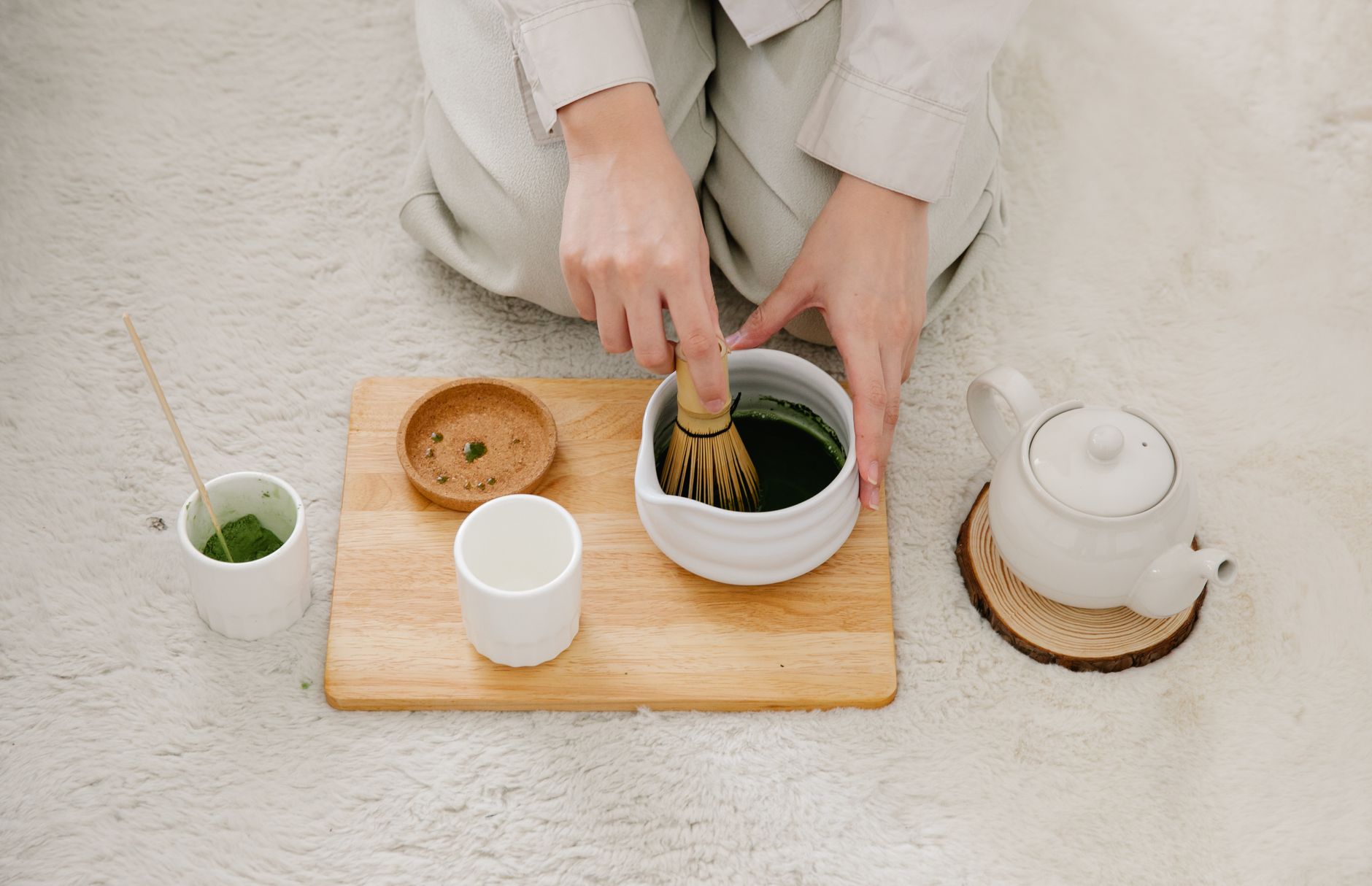
Quality matcha tastes savory and smooth, with a gentle natural sweetness and a fresh, grassy note, and it is not bitter when it is made from good tea and prepared with care. The savory quality is umami, a brothy, full-mouthed taste that comes from amino acids in the leaf of the tea plant, Camellia sinensis. Bitterness and astringency exist in matcha too, but in a well-shaded, well-whisked bowl they stay in the background, framing the sweetness rather than overwhelming it.
Most people who say matcha tastes bitter have met harsh, low-grade powder or a bowl made with water that was too hot. The taste of matcha is not one flavor. It is a balance of three, and when you understand that balance you can taste the difference between a bright, sweet ceremonial bowl and a flat, chalky one.
Key takeaways
- Good matcha tastes savory and smooth with a soft, natural sweetness and a clean, grassy freshness.
- The savory note is umami, driven by amino acids like theanine that the leaf builds up under shade.
- Bitterness and astringency come from catechins, and shading before harvest keeps those in check.
- Low-grade matcha tastes harsh because it uses older, sun-grown leaf that is higher in bitter compounds.
- Water that is too hot pulls out bitterness, so cooler water and a proper whisk protect the sweetness.
What matcha actually tastes like
Imagine the smell of fresh-cut grass, the deep savoriness of a good broth, and a quiet sweetness underneath, all in one warm mouthful. That is the shape of a well-made bowl of matcha. The texture matters as much as the flavor, because matcha is whole leaf ground to powder and whisked into suspension, not steeped and strained. You drink the leaf itself.
The result is thicker and more velvety than brewed green tea. A good bowl feels smooth and almost creamy across the tongue, with a lingering finish that stays sweet rather than drying. That long, gentle aftertaste is one of the clearest signs of quality. Harsh matcha finishes fast and leaves your mouth feeling stripped and chalky.
Color is a useful preview of taste. Vivid jade-green powder tends to be sweeter and rounder, because the same shading that builds sweetness also concentrates chlorophyll and turns the leaf a bright green. Dull, yellowish, or olive-toned powder usually tastes flatter and more bitter.
The three tastes inside every bowl
Every bowl of matcha carries three tastes at once. Their proportions decide whether a bowl reads as sweet and savory or sharp and grassy. Understanding each one tells you what you are tasting and why.
Umami, the savory heart
Umami is the savory, brothy, full-mouthed taste that separates matcha from ordinary green tea. It comes mainly from amino acids in the leaf. Theanine is the most important of these, and it can elicit an umami taste on its own. Theanine makes up roughly one to two percent of the dry weight of green tea leaves, and matcha carries an especially high share because of how it is grown.
This savoriness is what people mean when they call good matcha smooth or rich. It coats the mouth and gives the tea body. When a bowl tastes thin or watery, it is usually low in these amino acids, which points back to how the leaf was shaded and picked.
Sweetness, the gentle finish
The sweetness in matcha is soft and natural, closer to the sweetness of fresh peas or steamed greens than to sugar. It sits underneath the umami and shows up most clearly in the finish, once the first savory wave passes. High-grade matcha can taste almost dessert-like on the aftertaste, without anything added.
Sweetness and umami travel together, because both rise when the leaf holds more amino acids and fewer bitter compounds. A bowl that is genuinely sweet is almost always a bowl that is genuinely savory. The two are the reward of careful shading and an early harvest.
Bitterness and astringency, the frame
Bitterness and astringency are real parts of matcha, and a small amount gives the tea structure and keeps it from tasting flat. They come from catechins, the group of plant compounds that make green tea taste brisk and drying. Push them too far and the bowl turns harsh, sharp, and puckering.
Astringency is the dry, mouth-tightening sensation, while bitterness is the sharp taste on the back of the tongue. In fine matcha these stay light and blend into the whole. In poor matcha, or in a bowl brewed too hot, they take over. The craft of matcha is really the craft of keeping bitterness in balance.
What shapes the flavor
Four things decide where a given matcha lands on the scale from sweet-and-savory to sharp-and-grassy. Growing method, harvest timing, grade, and preparation each move the balance of umami, sweetness, and bitterness.
| Factor | Pushes toward sweet and savory | Pushes toward harsh and bitter |
|---|---|---|
| Shading | Two to three weeks under shade before harvest, building amino acids and chlorophyll | Full sun, which raises catechins and lowers the savory amino acids |
| Harvest | First flush of spring, the youngest leaves and shoots | Later harvests with older, coarser leaf |
| Grade | Ceremonial grade, stone-milled from tender shade-grown leaf | Culinary grade, made for baking and stronger in bitterness |
| Water | Cooler water, around 70 to 80 degrees Celsius | Boiling water, which draws out excess bitterness |
Why shading changes everything
The single biggest reason quality matcha tastes sweet instead of bitter is shade. For the last two to three weeks before harvest, the tea plants are covered so that direct sunlight cannot reach the leaves. This one step reshapes the chemistry of the leaf and, with it, the taste of the powder.
Limiting sunlight slows photosynthesis. That keeps the leaf from converting its theanine into catechins, the compounds behind bitterness and astringency. So shading increases the free amino acids that carry umami and sweetness, while it reduces the catechins that carry bitterness. The leaf also builds more chlorophyll, which is why deeply shaded matcha is such a vivid green.
This is the same technique used for gyokuro, Japan's most prized shaded leaf tea. Deliberately shading tea plants from direct sunlight raises the theanine content of the leaf. When you taste a genuinely sweet, savory bowl of matcha, you are tasting the result of those weeks under cover. Sun-grown green tea, by contrast, keeps more of its catechins and tastes brisker and more astringent.
Grade, and why cheap matcha tastes harsh
Not all matcha is grown or picked the same way, and grade is the shorthand for that difference. Ceremonial grade is made from the youngest, most tender shade-grown leaves of the first spring harvest, stone-milled slowly into a fine powder. It is meant to be whisked with water and tasted on its own, which is why it leans sweet and smooth.
Culinary grade is made for cooking, baking, lattes, and smoothies. It often uses later harvests and coarser leaf, so it carries more bitterness and astringency by design. That sharper edge is a feature when the matcha is competing with milk and sugar, but it tastes harsh when you drink it straight. Much of the bitter matcha people remember is culinary grade served as if it were ceremonial.
Low-grade matcha tastes harsh for reasons that all trace back to the leaf. Older, sun-grown leaf is naturally higher in catechins and lower in the amino acids that bring sweetness. The powder is often coarser, which whisks poorly and can taste gritty or chalky. Some cheap products even lean on color rather than shade to look green, without the flavor that real shading brings. The taste follows the growing, every time.
| Ceremonial grade | Culinary grade | |
|---|---|---|
| Taste | Sweet, savory, smooth, long finish | Bolder, more bitter and astringent |
| Leaf | Youngest first-harvest shade-grown leaf | Often later harvests, coarser leaf |
| Best for | Whisked and sipped on its own | Lattes, baking, smoothies |
| Color | Vivid jade green | Duller, more yellow-green |
How matcha tastes next to other green drinks
Matcha sits in its own place among green teas and everyday drinks. Because you drink the whole leaf, it is fuller, thicker, and more intense than tea you steep and strain. Placing it beside familiar drinks makes its flavor easier to recognize before your first bowl.
Compared with steeped green tea like sencha, matcha is richer and more savory, with a heavier body and a longer finish. Sencha is lighter and more refreshing, and it drains away faster on the palate. Against coffee, matcha is gentler and greener, without the roasted, toasted bitterness that coffee carries. It trades that dark edge for a vegetal sweetness and a smoother mouthfeel.
| Drink | Dominant taste | Body and finish |
|---|---|---|
| Ceremonial matcha | Savory umami with soft sweetness and grassy freshness | Thick and creamy, long sweet finish |
| Steeped sencha | Fresh, grassy, lightly astringent | Light and clean, quick finish |
| Black coffee | Roasted, bitter, sometimes fruity or nutty | Bold and drying, dark finish |
The takeaway is that matcha rewards attention. Its flavor is layered rather than loud, so it opens up as you slow down and sip. That quality is part of why matcha is tied so closely to ritual and to the calm space around a bowl of tea.
Where the flavor really comes from
Every taste in your bowl was decided long before the whisk. It was decided in the field, in the timing of the harvest, and in the care of the milling. This is why sourcing matters as much as preparation when you are chasing a sweet, smooth cup.
Region and cultivar shape the baseline. Different growing areas and tea plant varieties lean toward different balances of umami, sweetness, and briskness, the way wine grapes carry a sense of place. On top of that, the freshest spring leaf holds the most amino acids and the least accumulated bitterness, which is why first-harvest matcha tastes the sweetest.
Milling is the final step that touches taste. Traditional stone mills turn shade-grown leaf into an ultra-fine powder slowly and without much heat, which protects the delicate flavor. A finer powder also suspends more evenly in water, so the bowl feels silky rather than gritty. When you taste a truly smooth matcha, you are tasting good leaf and patient milling together.
What matcha does not taste like
Matcha should not taste fishy, and it should not taste like straight lawn clippings. A faintly marine or seaweed-like note can appear in very high-umami tea, and in small measure it reads as savory depth. When that note dominates, or when the tea tastes stale and hay-like, the matcha is usually old or was stored badly.
Freshness shapes taste more than people expect. Matcha oxidizes once the tin is opened, and stale powder loses its bright green color along with its sweetness. Old matcha turns dull, flat, and increasingly bitter. Buying from a source with real turnover, and keeping the tin sealed, cool, and away from light, protects the flavor you paid for.
Above all, good matcha should not taste punishingly bitter. If your bowl does, the cause is almost always the grade or the water, not matcha itself. The fix is simple, and it starts with how you prepare it.
How to taste matcha the way it is meant to be tasted
A few small choices decide whether you meet matcha as sweet and savory or sharp and bitter. This is the method that lets a quality powder show its real flavor.
- Start with fresh, high-grade powder. Use ceremonial grade for drinking straight, and check that the color is a vivid green.
- Sift about one to two grams into a warm bowl. Sifting breaks up clumps so the powder whisks smooth instead of gritty.
- Add cooler water, not boiling. Pour roughly 60 millilitres at about 70 to 80 degrees Celsius, since hot water pulls out bitterness.
- Whisk briskly in a W or M motion. Whisk for fifteen to twenty seconds until a fine, even foam forms across the surface.
- Taste in small sips. Notice the savory umami first, then the sweetness that arrives on the finish.
- Adjust to your palate. More water softens the intensity, and less water gives a thicker, more savory bowl.
Prepared this way, most people are surprised by how sweet and smooth real matcha is. If you want to go deeper on strength and preparation, see our guide to choosing the best organic matcha powder. To understand the calm-energy side of the leaf, our note on whether matcha is caffeinated covers how theanine and caffeine work together. You can also explore our organic Japanese matcha collection to taste the difference for yourself.
A closing note from One with Tea
When we filmed with matcha producers in Japan, the thing that stayed with us was patience. The sweetness in a good bowl is the sum of many careful choices, from the weeks under shade to the slow turn of the stone mill. None of it can be rushed, and all of it shows up in the taste.
If matcha has ever tasted bitter to you, it is worth trying again with fresh, high-grade leaf and cooler water. The tea most people remember and the tea we set out to make are not the same drink. One is harsh and forgettable. The other is savory, sweet, and quietly alive, and it is the one worth slowing down for.
Frequently asked questions
Is matcha supposed to taste bitter?
No, quality matcha should not taste bitter. Good matcha tastes savory, smooth, and gently sweet. Bitterness usually means low-grade powder, water that was too hot, or matcha that has gone stale.
What does good matcha taste like?
Good matcha tastes savory and creamy with a soft natural sweetness and a fresh, grassy note. The savory umami comes first, then a sweet, lingering finish. The texture is smooth rather than chalky or drying.
Why does my matcha taste like grass or fish?
A grassy note is normal in green tea and part of matcha's freshness. A strong fishy or seaweed taste usually means the matcha is old or was stored in heat or light. Fresh powder kept sealed and cool tastes cleaner and sweeter.
What flavor is matcha?
Matcha's flavor is built from three tastes: savory umami, a gentle sweetness, and a light bitterness that frames them. In quality matcha the umami and sweetness lead, so the overall impression is smooth, green, and softly sweet.
Does matcha taste better with milk?
Milk softens matcha's bitterness and adds creaminess, which is why culinary grade suits lattes. Ceremonial grade is sweet and smooth enough to enjoy on its own with just water, where its umami and finish come through clearest.
Why is my matcha powder bitter and chalky?
A gritty, chalky, bitter bowl points to coarse or low-grade powder, unsifted clumps, or overly hot water. Sifting the powder, using cooler water, and choosing finely stone-milled ceremonial matcha fixes most of it.
Sources
- Wikipedia, "Matcha," accessed 2026-08-05. Theanine as an umami component, shading for two to three weeks increasing amino acids and reducing catechins, and chlorophyll increase. https://en.wikipedia.org/wiki/Matcha
- Wikipedia, "Theanine," accessed 2026-08-05. Theanine as an amino acid in Camellia sinensis, roughly one to two percent of green tea dry weight, eliciting umami, and increasing under shading. https://en.wikipedia.org/wiki/Theanine
- Wikipedia, "Green tea," accessed 2026-08-05. First flush of spring bringing the best-quality leaves, and steeping too hot or too long releasing tannins for a bitter, astringent brew. https://en.wikipedia.org/wiki/Green_tea
Share:
What Is Matcha? A Clear Definition of Japanese Green Tea Powder
What Is Matcha Made Of? From Tencha Leaf to Stone-Ground Powder