



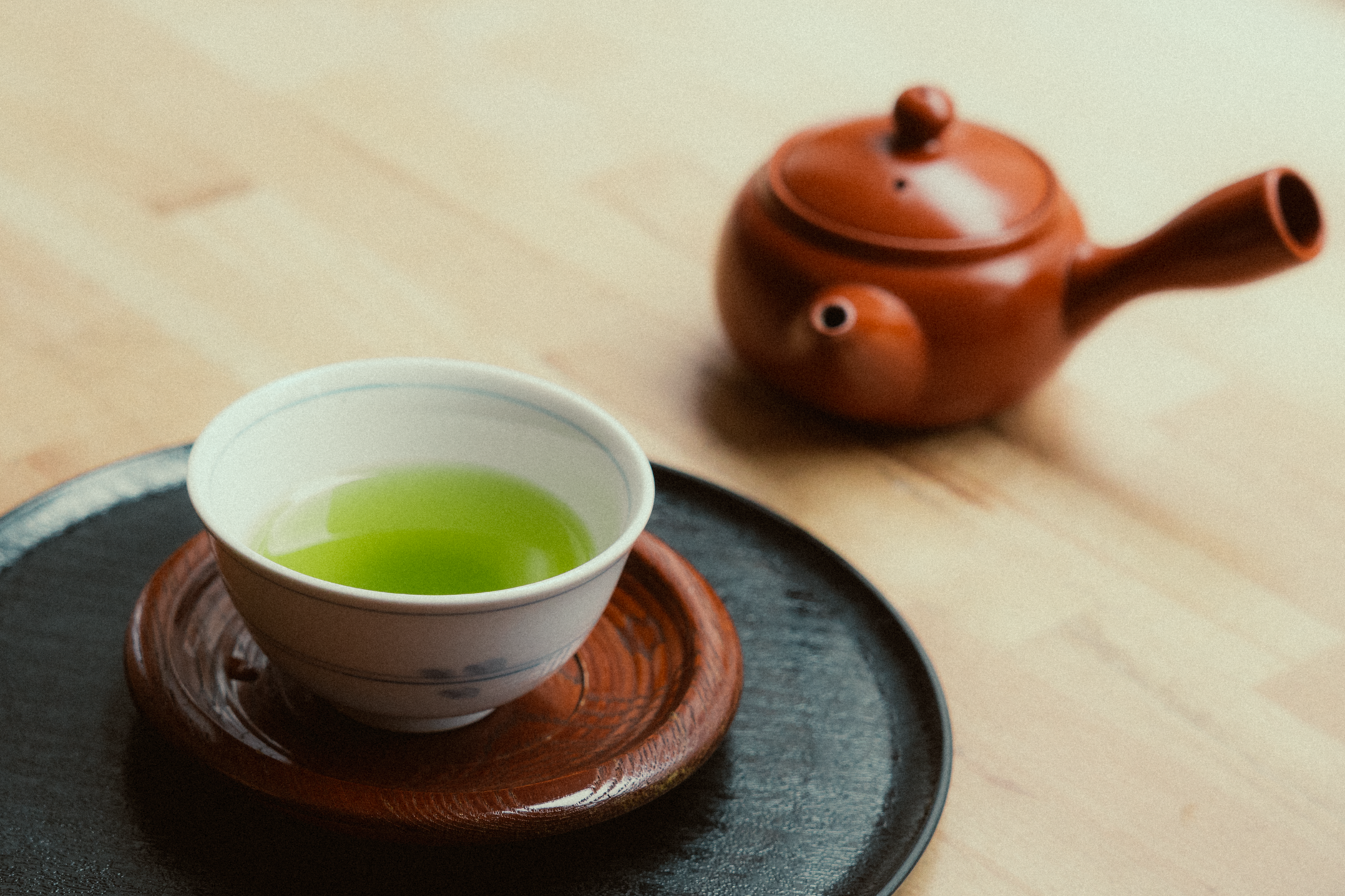
Japanese teas are green teas made from the leaves of a single plant, Camellia sinensis, then steamed instead of pan-fired so they keep their fresh green color and savory flavor. The main types are sencha, gyokuro, matcha, bancha, kukicha, and shincha. They differ in three things: how long the plant is shaded before harvest, when the leaves are picked, and whether the leaf is steeped or ground and whisked whole.
This guide names and defines each of the main Japanese teas, shows how they compare in a single table, and links to a full guide for every type. Think of it as the map. Each tea below has its own page for when you want to go deeper.
Key takeaways
- Every tea here comes from one plant, Camellia sinensis. The differences come from farming and processing, not from different species.
- Japanese green tea is steamed soon after picking. That single step is what keeps it green and gives it a vegetal, oceanic taste rather than the toasty note of pan-fired Chinese green tea.
- Shade is the biggest flavor lever. Shading the plant for weeks before harvest raises L-theanine and deepens umami. Gyokuro and matcha are shaded. Sencha is not.
- Sencha is the everyday standard and accounts for roughly 80 percent of Japanese tea. Matcha is the outlier: you drink the whole ground leaf instead of steeping it.
One plant, many teas: why Japanese green tea tastes different
Almost every Japanese tea on this page starts as the same leaf. Camellia sinensis is the tea plant behind green, black, oolong, and white tea worldwide. What makes a tea Japanese is not the plant. It is what happens in the first minutes after the leaf is picked.

From our tea room
Superior Sencha Green Tea - USDA Organic Japanese First Flush
First-flush loose leaf, USDA Organic, direct from Japanese family farms.
View Superior SenchaJapanese producers steam fresh leaves for a short window, commonly around 15 to 20 seconds, to stop oxidation before it starts. Steaming fixes the bright green color and gives Japanese green tea its signature vegetal, almost grassy character. Chinese green teas are usually pan-fired instead, which is why they lean toasty and nutty rather than fresh and marine. After steaming, the leaves are rolled, shaped, and dried into the form you buy.
From there, three choices decide which tea you end up with:
- Shade or sun. Covering the plants for a few weeks before harvest changes the leaf chemistry and pushes flavor toward umami and sweetness.
- Early or late harvest. The first tender leaves of spring taste concentrated and sweet. Later flushes in summer and autumn are coarser and more everyday.
- Steep or grind. Most Japanese teas are steeped and the leaf is discarded. Matcha is ground to powder and whisked into water, so you consume the whole leaf.
Hold those three levers in mind and the whole category stops looking like a wall of unfamiliar names. Every tea below is just a different setting on the same three dials.
Region and cultivar play a supporting role too. Japan grows tea across famous areas with their own house styles, and different plant cultivars bring their own balance of sweetness and briskness. Those details matter to a serious drinker, but they sit on top of the same three choices. Get shade, harvest, and steep versus grind clear in your head first, and the finer distinctions of terroir and cultivar will make sense later.
The main types of Japanese tea, defined
Here are the six teas most people mean by "Japanese tea," each defined in a line or two, with a link to its own full guide.
Sencha
Sencha is the default Japanese green tea and the one most people drink daily. It is grown in full sun with little or no shading, steamed, rolled into thin needles, and steeped. Sencha represents roughly 80 percent of the tea produced in Japan, which is why it sets the reference point for the whole category. The taste is fresh and grassy with a clean, slightly astringent finish and a balance of sweetness and briskness. If you want one tea that shows you what Japanese green tea is, start here. Read the full sencha guide.
Gyokuro
Gyokuro is the shaded, high-end cousin of sencha. Growers cover the plants for about 20 days before harvest, blocking most sunlight. That shade makes the plant hold onto the amino acid L-theanine and slows its conversion into the catechins that taste bitter. The result is a deep green leaf and a thick, sweet, intensely savory cup with very little astringency. Gyokuro is brewed cool and slow, and it is treated as a special-occasion tea rather than an everyday one. Read the full gyokuro guide.
Matcha
Matcha is the one Japanese tea you do not steep. It starts as shade-grown leaves, similar in spirit to gyokuro, that are steamed and dried without rolling to make a flat leaf called tencha. The tencha is then stone-ground into a fine powder. Because you whisk that powder into water and drink it, you consume the entire leaf as a suspension rather than an infusion. That is why matcha tastes and feels so different: fuller, creamier, and more vivid. Read our guide to choosing a quality organic matcha, or browse our organic matcha collection.
Bancha
Bancha is the everyday, easygoing Japanese green tea. It comes from the same plants as sencha but is picked later, from the third and fourth flushes between summer and autumn, which gives it a lower market grade and a mellower, more rustic character. Expect coarser leaves and flavors that run toward roasted nuts, grass, straw, and earth rather than the crisp brightness of sencha. Bancha is forgiving to brew and easy to drink all day. Read the full bancha guide.
Kukicha
Kukicha is a tea made from the parts other teas leave out. Instead of leaf blades, it is blended from the stems, stalks, and twigs of the tea plant. That gives it a light body, a fresh green aroma, and a mildly nutty, gently creamy sweetness that many people find soft and approachable. Because it is built from stems rather than tender leaf tips, kukicha drinks as a lighter, everyday cup. Read the full kukicha guide.

From our tea room
Superior Kukicha Green Tea - USDA Organic Japanese Twig Tea
Japanese twig tea, gentle and naturally low in caffeine. USDA Organic.
View Superior KukichaShincha
Shincha means "new tea," and it is the first flush of the year's sencha. It is harvested in spring, roughly early April to late May depending on the region, from tender new leaves that spent the winter storing up nutrients. That timing gives shincha a fresh aroma and a concentrated sweetness with less bitterness, which is why many drinkers consider the first harvest the most delicious of the year. It is seasonal and celebrated, the tea equivalent of the first produce of spring. Read the full shincha guide.
Japanese tea comparison table
The fastest way to see how these teas relate is side by side. Shade and harvest timing explain most of the differences you taste.
| Tea | Shaded? | Form | How you drink it | Flavor in a phrase |
|---|---|---|---|---|
| Sencha | No (full sun) | Rolled needles | Steeped | Fresh, grassy, brisk |
| Gyokuro | Yes (about 20 days) | Rolled needles | Steeped, cool and slow | Deep umami, sweet, low astringency |
| Matcha | Yes | Stone-ground powder | Whisked, whole leaf | Full, creamy, vivid |
| Bancha | No | Coarse leaves | Steeped | Mellow, roasted, rustic |
| Kukicha | No | Stems and twigs | Steeped | Light, nutty, creamy-sweet |
| Shincha | No | Rolled needles (first flush) | Steeped | Fresh, sweet, seasonal |
A useful mental model: sencha is the reference tea, gyokuro and matcha are the shaded and concentrated end, bancha and kukicha are the relaxed everyday end, and shincha is sencha caught at its freshest moment of the year.
How shading changes the leaf
Shade is the single choice that most changes a Japanese tea, so it is worth understanding. When growers cover the plants for a couple of weeks before harvest, the leaves receive far less light. The plant responds in a few connected ways.
First, it makes more chlorophyll to catch what light remains, which is why shaded teas like gyokuro and matcha are such a deep, saturated green. Second, and more important for taste, the plant keeps more of the amino acid L-theanine in the leaf instead of converting it into catechins. Catechins are the compounds behind green tea's bitterness and astringency, so holding them back and keeping the theanine tilts the cup toward umami, a savory sweetness, with far less bite. Shading also raises the caffeine content of the leaf.
That is the whole reason a shaded tea tastes rich, smooth, and brothy while a sun-grown sencha tastes bright and brisk. Same plant, same field, different amount of light. Once you can taste that difference, you can read a Japanese tea menu with confidence.
There is a middle ground worth knowing. When leaves are shaded for a shorter stretch than gyokuro, the tea is often called kabusecha, or shaded tea. It lands between crisp sencha and deep gyokuro: rounder and sweeter than sencha, but lighter and more approachable than a full gyokuro. If gyokuro feels intense and sencha feels sharp, a shaded tea in the middle can be the cup that clicks.
Beyond the six: roasted and blended cousins
Two more names come up often once you start exploring, and both are made from the everyday teas above rather than being separate crops.
Hojicha is bancha or sencha that has been roasted over high heat until it turns reddish brown. Roasting drives off much of the grassy edge and leaves a warm, toasty, caramel-like cup that is smooth and easy to drink in the evening. Genmaicha is green tea, usually bancha or sencha, blended with roasted brown rice. The rice adds a popcorn-like, comforting note and stretches a modest tea into something cozy and filling. Neither is a new plant. They are simply green tea taken one step further by roasting or blending.
How to brew Japanese green tea
Japanese green tea rewards slightly cooler water and shorter steeps than most people expect. Boiling water scorches the delicate leaf and pulls out bitterness. Here is a simple, reliable method for a small pot of sencha, with notes for the other types.
- Warm the pot. Rinse your teapot and cups with hot water, then pour it out. This keeps the brew from cooling too fast.
- Cool the water. Let just-boiled water rest until it is around 70 to 80 degrees Celsius for sencha. Go cooler, roughly 50 to 60 degrees, for gyokuro. Bancha, hojicha, and genmaicha are happy with hotter water, close to a boil.
- Measure the leaf. Use about one level teaspoon, roughly 2 grams, of tea per cup. Adjust up if you like it stronger.
- Steep briefly. Pour the cooled water over the leaves and steep for about one minute for sencha. Gyokuro steeps longer at its lower temperature. Everyday teas like bancha are forgiving on time.
- Pour to the last drop. Empty the pot completely into your cup so the leaves do not keep stewing and turning bitter.
- Re-steep. Good Japanese leaf gives two or three infusions. Use slightly hotter water and a shorter steep on each following round.
Matcha follows a different ritual entirely. You sift a small scoop of powder into a bowl, add a little hot water, and whisk briskly with a bamboo whisk until it is smooth and frothy, then top up with more water. There is no leaf to strain and no steep time to watch.

From our tea room
Green tea with roasted rice. Toasty, everyday, USDA Organic.
View Organic Genmaicha
From our tea room
Organic Hojicha Powder - USDA Certified Roasted Green Tea
Roasted green tea, naturally low in caffeine. USDA Organic.
View Organic HojichaHow to choose your first Japanese tea
If you are new to the category and want a starting point rather than the whole shelf, match the tea to what you want from the cup.
- Want the classic, versatile daily green tea? Start with sencha. It is the reference flavor and the easiest to find and brew.
- Want the richest, sweetest, most savory experience? Try gyokuro, and brew it cool and slow to taste why shade matters.
- Want energy, ritual, and a fuller body, or a tea you can cook and blend with? Choose matcha and whisk it.
- Want something gentle and easy for all-day drinking? Reach for bancha or kukicha.
- Want the freshest cup of the year and you are shopping in spring? Look for shincha.
At One with Tea we focus on organic Japanese tea from named producers we have filmed on their farms in Japan, with third-party lab testing on our matcha for lead and cadmium so you know exactly what is in the bowl. Whichever tea you start with, the plant is the same. The craft is what you are really buying.
Frequently asked questions
Are all Japanese teas green tea?
Almost all of the well-known ones are. Sencha, gyokuro, matcha, bancha, kukicha, and shincha are all green teas made from Camellia sinensis and steamed to stay green. Roasted styles like hojicha and blends like genmaicha are still made from green tea, just taken a step further.
What is the most popular Japanese tea?
Sencha. It accounts for roughly 80 percent of the tea produced in Japan and is the everyday green tea most households drink. It is the natural starting point for anyone new to Japanese tea.
What is the difference between matcha and other Japanese teas?
Matcha is ground into a powder and whisked into water, so you drink the whole leaf as a suspension. Sencha, gyokuro, bancha, kukicha, and shincha are steeped, and you discard the leaf after brewing. That is why matcha tastes fuller and looks so vivid.
Why is gyokuro more expensive than sencha?
Gyokuro is shaded for about 20 days before harvest, which takes extra labor and lowers yield, and it holds more L-theanine for a sweeter, umami-rich cup. That combination of hand work, lower volume, and prized flavor makes it a premium tea compared with sun-grown sencha.
Which Japanese tea has the least caffeine?
Caffeine varies by leaf and brewing, but shading raises caffeine, so gyokuro and matcha sit at the higher end. Teas made from later harvests or from stems, such as bancha and kukicha, are generally treated as gentler everyday cups. If caffeine is a concern, brew cooler and shorter, and lean toward the everyday styles.
What is shincha and when can I buy it?
Shincha is the first flush of the year's sencha, harvested in spring, roughly early April to late May depending on the region. It is prized for fresh aroma and concentrated sweetness, and it is seasonal, so it appears for a limited window each spring.
Sources
- Wikipedia, "Sencha" (accessed 5 August 2026): sencha represents about 80 percent of tea produced in Japan; steaming 15 to 20 seconds; grown with little or no shade. https://en.wikipedia.org/wiki/Sencha
- Wikipedia, "Gyokuro" (accessed 5 August 2026): shaded about 20 days per the Japan Tea Central Association; shading raises L-theanine and caffeine and lowers catechins, increasing umami. https://en.wikipedia.org/wiki/Gyokuro
- Wikipedia, "Matcha" (accessed 5 August 2026): made from shade-grown tencha, steamed and dried without rolling, then stone-ground; whisked and consumed as a suspension. https://en.wikipedia.org/wiki/Matcha
- Wikipedia, "Bancha" (accessed 5 August 2026): harvested from the third and fourth flushes between summer and autumn; lower market grade than sencha. https://en.wikipedia.org/wiki/Bancha
- Wikipedia, "Kukicha" (accessed 5 August 2026): a blend made of stems, stalks, and twigs of the tea plant; mildly nutty, creamy-sweet flavor. https://en.wikipedia.org/wiki/Kukicha
- Wikipedia, "Shincha" (accessed 5 August 2026): the first month's harvest of sencha, spring season roughly early April to late May; fresh aroma and sweetness. https://en.wikipedia.org/wiki/Shincha
Share:
What Is Matcha Made Of? From Tencha Leaf to Stone-Ground Powder
Why matcha energy feels steady, not spiky