



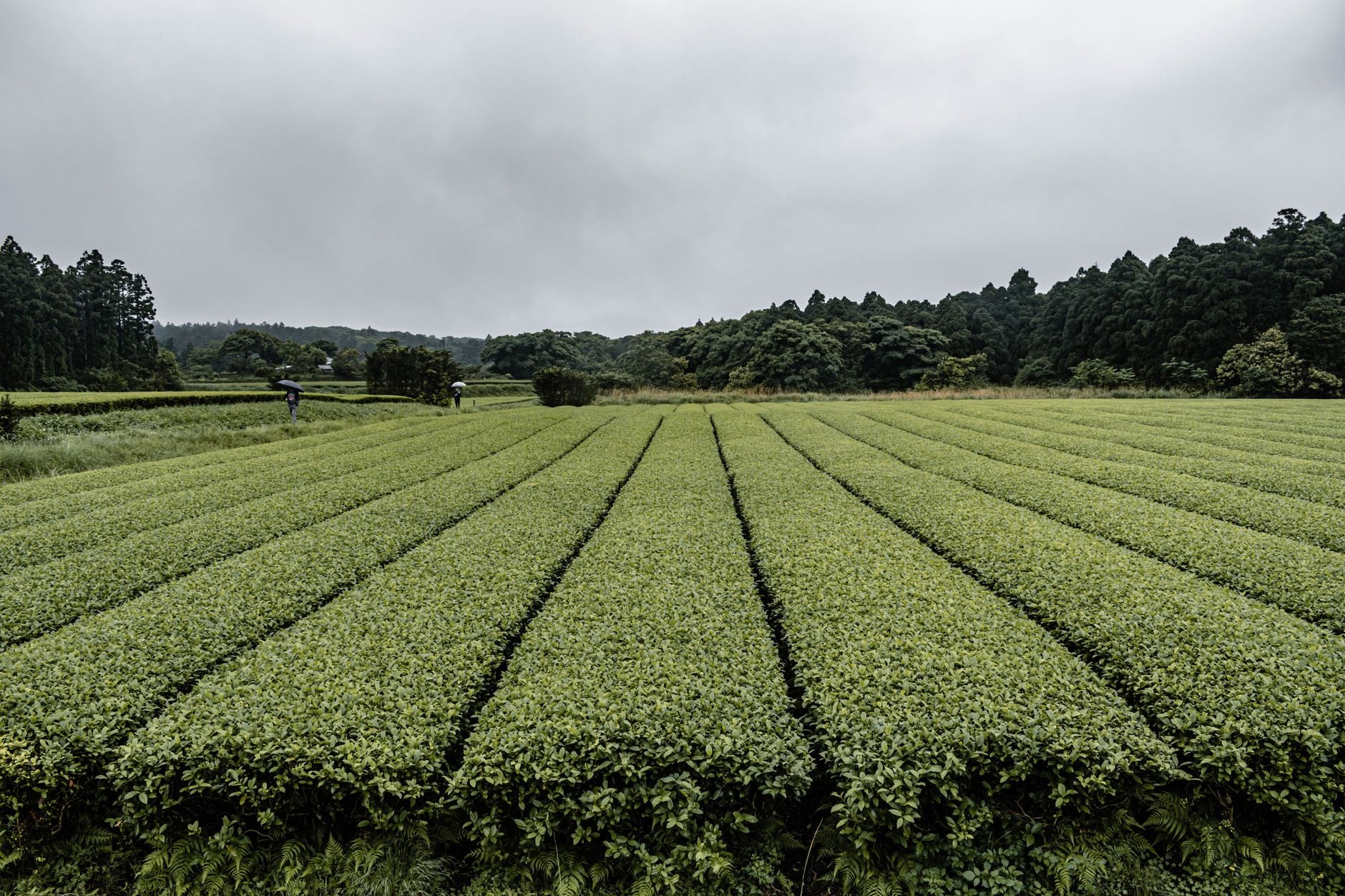
Matcha tea gives steady, calm energy because the caffeine in the whole leaf is buffered by an amino acid called L-theanine, so it releases more gradually than the caffeine in coffee. Matcha is made from stone-ground Camellia sinensis leaves, and because you drink the whole leaf you take in both compounds together in one cup. That pairing is why many people describe matcha energy as a smooth, level lift rather than a sharp spike followed by a crash.
Key takeaways
- Matcha delivers caffeine and L-theanine in the same cup, and that combination is what shapes the calm, steady feel.
- Matcha holds roughly 19 to 44 mg of caffeine per gram of powder, so a standard serving lands well under a cup of coffee.
- The energy tends to feel gradual because you are drinking the whole leaf, not a fast-extracted brew.
- Most people find the best time to drink it is mid-morning or early afternoon, on a settled stomach.
Why matcha energy feels steady, not spiky
The reason sits in how two compounds arrive together. Matcha carries caffeine, the same molecule found in coffee, and it also carries L-theanine, an amino acid concentrated in shade-grown tea leaves. Growers shade the plants for weeks before harvest, and that shading raises the level of theanine in the leaf. Because matcha is the powdered whole leaf, you take in both at once instead of a caffeine-forward extract.
Researchers have studied this pairing directly. In a 2008 study published in Nutritional Neuroscience, a drink combining 50 mg of caffeine with 100 mg of L-theanine improved the speed and accuracy of an attention-switching task at 60 minutes, and it reduced how easily people were distracted during a memory task. The point worth holding onto is that the two compounds were studied together, which mirrors how you actually receive them in a bowl of matcha. If you want the deeper mechanism, our L-theanine explainer walks through it slowly.
How matcha energy feels, minute by minute
People describe the experience in fairly consistent terms. The lift arrives gently, usually within twenty to forty minutes, rather than hitting all at once. There is a sense of settled focus, the kind that lets you stay with one task without feeling wired or restless. And the fade at the end is soft, which is the part most people mean when they say matcha does not give them a crash.
None of this is a promise about your body, since caffeine sensitivity varies from person to person. What we can say plainly is that the whole-leaf format and the theanine content are the two things that make matcha feel different from a fast cup of drip coffee.
Matcha vs coffee for energy
The clearest way to see the difference is side by side. Coffee delivers more caffeine per serving and delivers it faster. Matcha delivers less caffeine, paired with L-theanine, at a gentler pace.
| Cup of energy | Caffeine per serving | L-theanine present | How the energy tends to feel |
|---|---|---|---|
| Matcha (2 g serving) | About 40 to 90 mg, at roughly 19 to 44 mg per gram | Yes, from the whole leaf | Gradual, calm, level |
| Brewed coffee (8 oz) | About 96 mg | No | Faster onset, sharper peak |
| Brewed green tea (8 oz) | About 28 mg | Yes, but lower, since you steep and discard the leaf | Light and mild |
Matcha sits in a useful middle. It carries more caffeine than a cup of steeped green tea because you drink the whole leaf, yet less than a standard coffee, and it pairs that caffeine with theanine. If you are comparing options across the green tea category, our guide to the best green tea for energy covers where matcha fits.
How to drink matcha for steady energy
A few simple habits help the energy land the way you want it to. This is the routine we suggest.
- Measure about 1 to 2 grams of matcha, which is roughly half to one level teaspoon, into a bowl or cup.
- Add a little water just off the boil, around 70 to 80 degrees Celsius, since water at a full rolling boil turns the taste harsh.
- Whisk briskly in a zigzag motion for fifteen to twenty seconds until the surface is smooth and lightly frothy.
- Top with more hot water or steamed milk to your preferred strength, then sip slowly rather than drinking it down fast.
- Drink it mid-morning or early afternoon, ideally after you have eaten something, so the lift feels even.
How much caffeine is in matcha
Matcha holds roughly 19 to 44 mg of caffeine per gram of powder, according to a 2020 review in the journal Molecules. A common serving is 1 to 2 grams, so a single cup usually lands somewhere between about 40 and 90 mg depending on how much powder you use and the grade of the matcha. Ceremonial-grade matcha, made from the youngest shaded leaves, tends toward the higher end. For a fuller breakdown, see our note on whether matcha is caffeinated.
Because you control the scoop, you control the dose. A lighter half-teaspoon gives a softer lift, and a fuller teaspoon gives more. That adjustability is part of why matcha suits people who want energy without the guesswork of a variable coffee pour.
Frequently asked questions
Does matcha give you energy like coffee?
Matcha gives energy from caffeine, the same molecule in coffee, but it delivers less per serving and pairs it with L-theanine. Most people describe the result as calmer and more gradual than a coffee lift.
Why does matcha not cause a crash for many people?
Because you drink the whole ground leaf, the caffeine tends to release more gradually, and it arrives alongside L-theanine. That combination is why so many people report a soft fade rather than a sharp drop. Individual sensitivity still varies.
When is the best time to drink matcha for energy?
Mid-morning or early afternoon works well for most people, ideally after eating. Drinking it late in the day can affect sleep, since matcha does contain caffeine.
How much matcha should I use for a good energy lift?
One to two grams, about half to one level teaspoon, is a typical serving. Start with less and adjust upward, since a fuller scoop delivers more caffeine.
Is matcha for energy better than green tea?
They come from the same plant, but matcha is the whole ground leaf while green tea is steeped and strained, so matcha carries more caffeine and theanine per cup. If you want a stronger, steadier lift, matcha usually delivers more.
Sources
- Owen GN, Parnell H, De Bruin EA, Rycroft JA. The combined effects of L-theanine and caffeine on cognitive performance and mood. Nutritional Neuroscience, 2008. https://pubmed.ncbi.nlm.nih.gov/18681988/
- Kochman J, Jakubczyk K, Antoniewicz J, et al. Health Benefits and Chemical Composition of Matcha Green Tea: A Review. Molecules, 26(1):85, 2020. https://www.mdpi.com/1420-3049/26/1/85
- Mayo Clinic. Caffeine content for coffee, tea, soda and more, 2024. https://www.mayoclinic.org/healthy-lifestyle/nutrition-and-healthy-eating/in-depth/caffeine/art-20049372
Share:
Types of Japanese Tea: The Main Green Teas Explained
Matcha Meaning: What the Word Really Says