



If you are putting matcha on a menu, the grade that wins is the one that still tastes like matcha after it meets milk, ice, and sweetener. That usually means a fresh, vibrant green powder from a single Japanese region, milled fine, and turned over fast. In 2026, sourcing that powder reliably matters more than ever, because Kyoto tencha trading prices rose 265% between 2024 and 2025 (Associated Press, citing the International Tea Committee, 2025).
We built One with Tea by buying directly from Japanese growers, and we have watched cafe owners struggle with the same three questions: which grade, what to look for, and how to keep getting it. This guide answers all three, with the numbers behind them.
Key Takeaways
- For lattes, a catechin-forward, vibrant-green matcha holds its flavor through milk and syrup better than a delicate top-grade tea (First Agri, 2026).
- "Ceremonial" and "culinary" are useful menu shorthand, not regulated standards, so judge the powder by color, aroma, and origin instead of the label.
- Matcha is only about 7% of Japan's total tea production, which is why demand spikes hit prices so hard (USA Tea Council via Supply Chain Dive, 2025).
- Retail matcha sales rose 86% over three years, and a cafe matcha latte now averages $6.15 a cup (NielsenIQ and Square, via AP and NBC News, 2025).
- A direct relationship with a Japanese grower protects a menu from price swings and sudden purchase limits during the shortage.

What does cafe-grade matcha actually mean?
There is no official "cafe grade." Matcha sits at roughly 7% of all Japanese tea production, and within that slice growers and sellers use informal labels like ceremonial and culinary (USA Tea Council, via Supply Chain Dive, 2025). No Japanese government standard defines those words, so they describe intent more than a fixed quality bar.
In practice, the distinction is real even if it is unregulated. Higher grades come from the first spring harvest, get longer shading before picking, and are stone-milled slowly into a bright, almost neon green powder. Later harvests and faster milling give a duller, more olive or tan powder with a sharper, more bitter cup. Both have a place behind a counter.
So the honest answer is this. "Cafe-grade" is whatever consistently makes a great drink at your volume and price. For a straight whisked bowl you want the delicate top tier. For a busy latte program you often want something a little sturdier, which is the next question.
For the full breakdown of where that top tier comes from, see our guide to ceremonial grade matcha.
Which matcha grade holds up in a latte?

For lattes, a catechin-forward matcha usually beats a delicate ceremonial tea. A trade supplier guide puts it plainly: the most prized ceremonial teas are smooth because they are low in astringent catechins, and that "produces a flat, underwhelming matcha signal when there's 250 ml of milk to cut through" (First Agri, 2026). Milk and ice dilute subtlety, so a tea with more presence reads better in the cup.
This is the counterintuitive part for new buyers. Spending the most per gram on the silkiest single-cultivar matcha can give you a worse latte, because the very thing you paid for, that gentle umami, disappears under steamed milk. A vivid, slightly bolder powder carries flavor and color all the way through.
Color still matters here. Even a sturdier latte matcha should be a fresh spring green, not brown. A dull powder signals oxidation or later harvest, and milk only deepens that muddiness. The goal is a drink that looks alive and tastes clearly of matcha, hot or iced.
What we tell wholesale partners: taste your shortlist as a 2g shot in 6oz of your house milk, hot and iced, before you ever judge it as a straight bowl. The milk test is the real test for a menu.
What to look for when sourcing matcha at volume

When you buy for a menu rather than a single tin, four things predict whether the cup stays consistent: color, origin, milling, and turnover. Matcha is delicate, and the powder you taste in a sample is only as good as the case that arrives three months later. Freshness and a stable origin are what protect that.
Start with color and aroma. A vibrant, even spring green and a fresh, grassy, slightly sweet smell are the fastest quality signals. Gray, yellow, or hay-like aromas mean age or lower-harvest leaf. Then ask about origin. Single-region matcha from a named area gives you a flavor you can reproduce, while anonymous blends drift between deliveries.
Milling and harvest matter next. Stone-milled, first or second-harvest leaf gives a finer, brighter powder than fast machine milling of late leaf. Finally, turnover. Matcha fades within weeks of opening, so buy from a supplier who moves stock quickly and can tell you the harvest and milling dates. For the qualities we test for, see our notes on the best organic matcha powder.
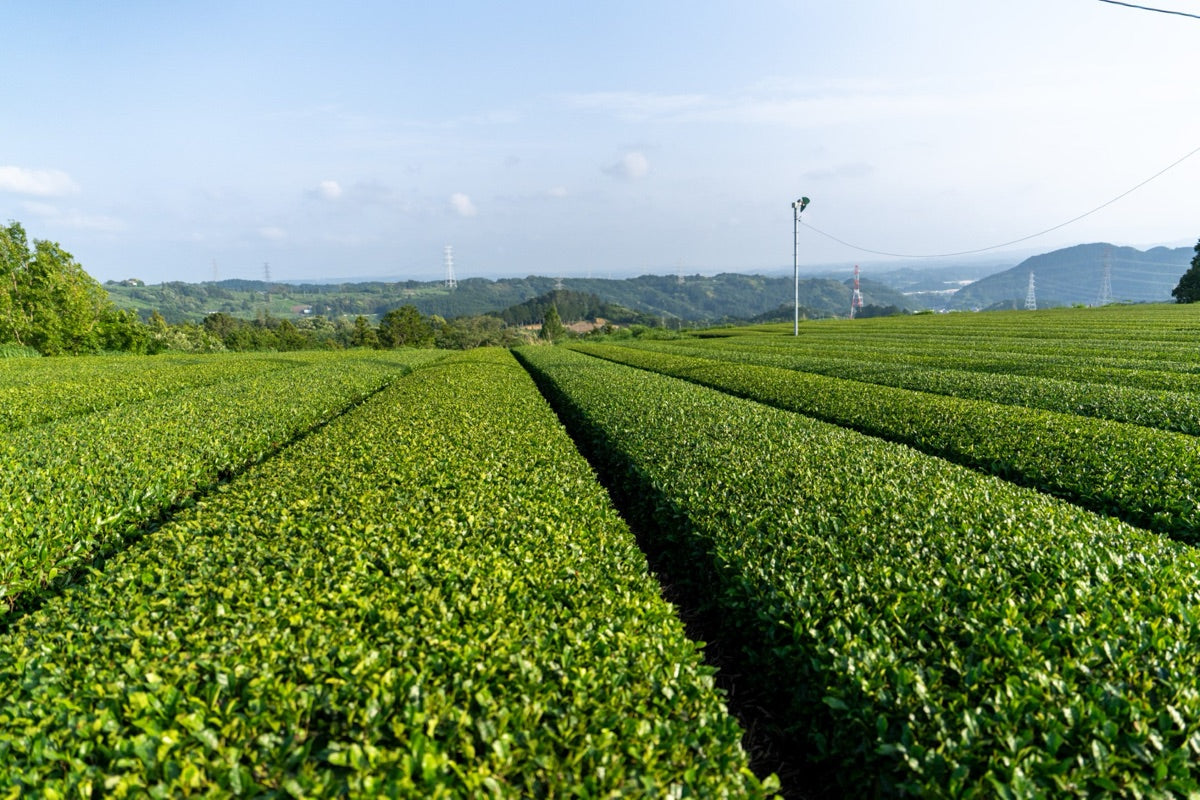
Japan's geography helps you here. Shizuoka has long been the country's tea heartland, producing close to 40% of the nation's tea, while Uji in Kyoto is the historic home of matcha and the tea ceremony (All About Japan). Naming the region on your menu is both honest and good marketing.
How do you prepare matcha at cafe speed?
At volume, technique is about consistency, not ceremony. The mechanics are simple: sift to kill clumps, mix with a little water below boiling first, then build the drink. With a cafe matcha latte now averaging $6.15 a cup in the United States, up from $5.84 the year before, the margin rewards a fast, repeatable method (Square data, via NBC News, 2025).
Use about 2 grams per drink, which means roughly 15 servings from a 30g tin, so your cost per cup is easy to model once you know your case price. Whisk or a milk frother both work for a paste; a frother is faster and more uniform across a shift. Keep water around 175F, never boiling, since hot water scorches matcha into bitterness.
For iced lattes, make a slightly stronger concentrate so the flavor survives the ice melt. For hot lattes, build the matcha paste first, then add steamed milk, so you never chase clumps in a full cup. Batch the paste only in small amounts during a rush, because matcha loses its bright color and aroma within an hour or two of mixing.
Why sourcing directly from Japan protects your menu

A direct grower relationship is the single best defense against the current squeeze. Between 2024 and 2025, Kyoto tencha trading prices rose 265%, and retail matcha sales climbed 86% over three years, while century-old Kyoto producers began imposing purchase limits and publishing reseller blocklists (Associated Press and NielsenIQ, via Food Dive, 2025). When supply tightens, growers serve their direct partners first.
The shortage is structural, not a passing trend. A new tea tree takes about five years to reach harvest, so growers cannot simply plant their way out of a demand spike (Supply Chain Dive, 2025). The global matcha market is projected to pass $7 billion by 2030, up from $4.3 billion in 2023, which means the pressure is likely to stay (Perfect Daily Grind, 2025).
Direct sourcing also buys you traceability. We can tell a cafe which farm, region, and harvest a batch came from, which matters for both quality control and the story you tell guests. One Shizuoka partner we visited, Ichikawa-en, has spent more than half a century in tea, growing from a small local shop into a family operation making matcha, sencha, and hojicha. You can read more in our profile of this Shizuoka family tea operation. That kind of continuity is exactly what a menu needs.
How to start a wholesale matcha program

Start small, taste hard, then commit to a relationship. Because matcha is a tiny, weather-dependent crop, the smart move is to find one or two growers you trust and grow with them, rather than chasing the cheapest case each quarter. The producers who survive this market are the ones protecting their direct partners.
Order samples first and run the milk test on every candidate, hot and iced, in your own drinks. Confirm the harvest, region, and milling, and ask how quickly stock turns over. Then think in modest opening quantities so you can prove the cup before you scale, and lock a reorder rhythm so freshness and flavor stay consistent across deliveries. Consistency across reorders is the whole game for a menu.
Build your matcha menu on a supply you can count on.
We source organic Japanese matcha directly from growers and supply cafes with consistent, traceable, vibrant-green powder, batch after batch.
Matcha is more than a menu item. It is a small daily ritual you get to hand to every guest who orders it. May you, and they, become one with tea, one with yourself.
Frequently Asked Questions
What grade of matcha is best for lattes?
A vibrant, catechin-forward matcha usually beats a delicate top-grade tea for lattes, because milk and ice mute subtlety. The most prized ceremonial teas are smooth and low in astringency, which "produces a flat, underwhelming matcha signal" against 250ml of milk (First Agri, 2026).
Is ceremonial grade matcha an official standard?
No. Ceremonial and culinary are informal market labels, not Japanese government standards. Matcha is only about 7% of Japan's total tea production, and within that slice growers use these terms loosely (USA Tea Council, via Supply Chain Dive, 2025). Judge a powder by color, aroma, and origin instead.
How much matcha is in one latte, and what does it cost?
Most cafes use about 2 grams per drink, roughly 15 servings from a 30g tin. A cafe matcha latte averaged $6.15 a cup in the United States in 2025, up from $5.84 the prior year, so the per-cup margin is healthy once you know your case price (Square via NBC News, 2025).
Why are matcha prices rising in 2026?
Demand has outrun a tiny crop. Kyoto tencha trading prices rose 265% between 2024 and 2025, retail sales climbed 86% over three years, and a new tea tree takes about five years to reach harvest (AP and NielsenIQ via Food Dive, 2025). Supply simply cannot scale quickly.
Where does the best matcha for cafes come from?
Japan's leading regions are Shizuoka, the historic tea heartland producing close to 40% of the nation's tea, and Uji in Kyoto, the home of matcha and the tea ceremony (All About Japan). Single-region matcha from a named area gives a cafe a flavor it can reproduce.
How do I keep matcha quality consistent across reorders?
Source directly from one or two growers, confirm harvest and milling dates, and lock a regular reorder rhythm so stock stays fresh. Matcha fades within weeks of opening, so turnover and a stable origin matter more than chasing the lowest price each quarter.
Sources
- Associated Press (via Food Dive), "A matcha shortage is coming for social media's latest obsession," 2025, retrieved 2026-06-12, https://www.fooddive.com/news/a-matcha-shortage-is-coming-for-social-medias-latest-obsession/761141/
- Supply Chain Dive, "A matcha shortage is coming for social media's latest obsession," 2025, retrieved 2026-06-12, https://www.supplychaindive.com/news/matcha-shortage-social-medias-latest-obsession/761258/
- NBC News, "Matcha faces shortage, higher prices, tariffs," 2025, retrieved 2026-06-12, https://www.nbcnews.com/business/consumer/matcha-shortage-higher-prices-tariffs-rcna223111
- Perfect Daily Grind, "There's a matcha shortage in Japan: Where else can it grow?," 2025, retrieved 2026-06-12, https://perfectdailygrind.com/2025/09/matcha-shortage-japan-production/
- First Agri, "Best Matcha Grade for Cafe Lattes 2026: Ceremonial vs Latte Grade," 2026, retrieved 2026-06-12, https://first-agri.jp/matcha/columns/048
- All About Japan, "All About Japan's Top Five Tea-Producing Regions," retrieved 2026-06-12, https://allabout-japan.com/en/article/11136/
- Ichikawa-en Co., Ltd. (official site), retrieved 2026-06-12, https://www.ichikawaen.com/
Share:
L-Theanine: The Tea Molecule Behind Matcha's Calm Focus (2026)
Inside Uji: Walking the Birthplace of Matcha in Kyoto