



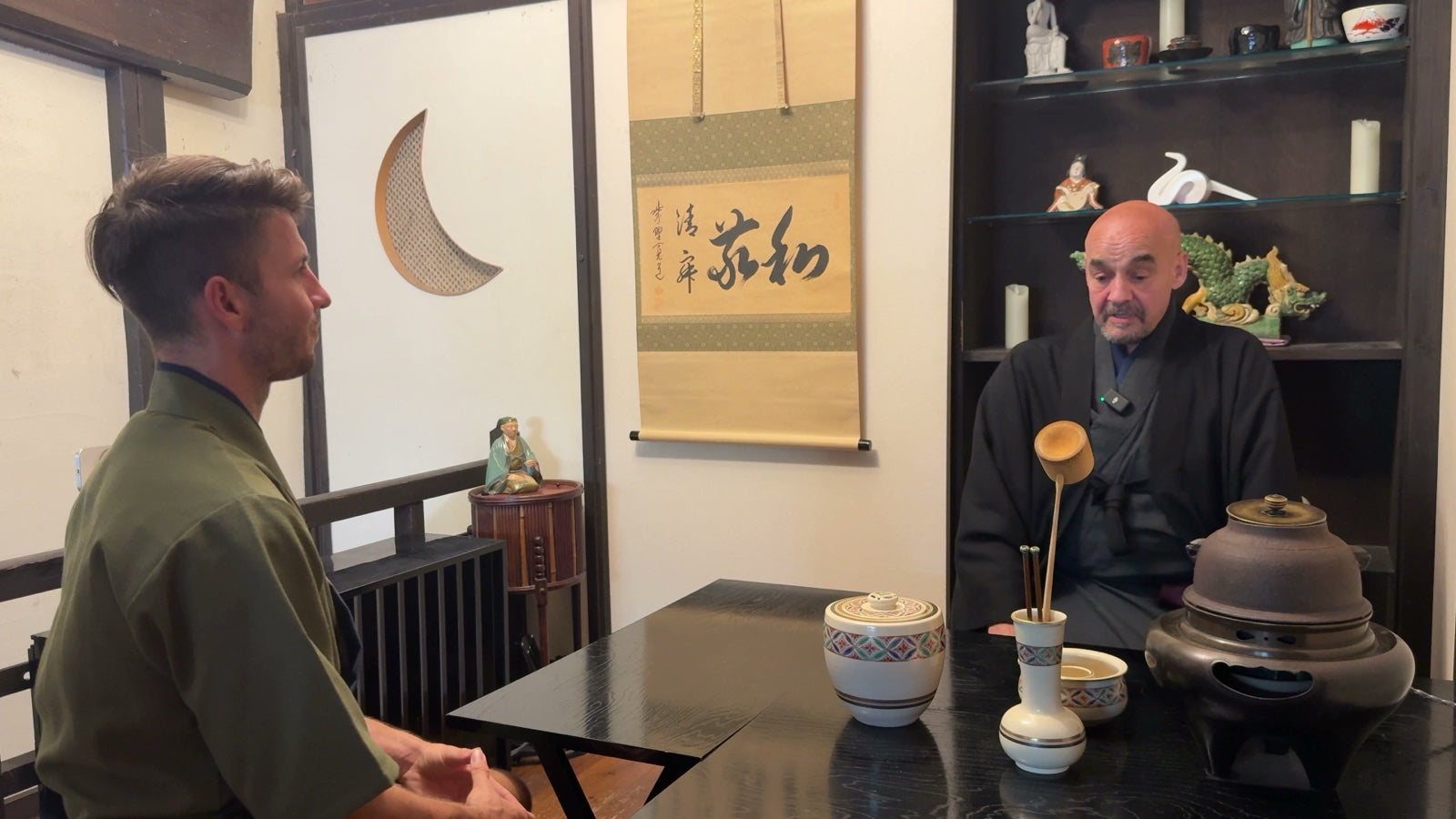
By Christian Mauerer, Founder of One with Tea · Updated August 2026

From our tea room
Superior Sencha Green Tea - USDA Organic Japanese First Flush
First-flush loose leaf, USDA Organic, direct from Japanese family farms.
View Superior SenchaFukamushi sencha is deep-steamed Japanese green tea. It's ordinary sencha that spends two to three times longer in the steamer during processing, which breaks the leaf into finer pieces and pours a cloudy, deep-green cup that tastes sweeter and less bitter than a standard steam. The name says it plainly: fukamushi means "deeply steamed" (Fukamushicha, Wikipedia).
I've sourced Japanese green tea directly from farms in Shizuoka for years, including deep-steamed lots from the Makinohara area. This is the plain, practical guide I wish I'd had at the start. What fukamushi actually is, why the longer steam changes the cup, how it compares to lighter-steamed sencha and to gyokuro, how much caffeine to expect, and how to brew it so it tastes the way the farmer intended.
Key Takeaways
- Fukamushi sencha is deep-steamed sencha, steamed roughly two to three times longer than the standard style (My Japanese Green Tea).
- The longer steam makes the leaf brittle and broken, so it brews faster and pours a cloudy, deep-green cup (brewing reference).
- It tastes fuller, sweeter, and lower in bitterness than lighter-steamed sencha, with a thick, soft body (Wikipedia).
- Deep-steaming gained popularity in the 1960s in Shizuoka. Several towns around the Makinohara plateau claim its origin.
- Brew it cool and fast. Around 60 to 80°C for just 30 to 45 seconds, because the broken leaf gives up its flavor quickly.

What Is Fukamushi Sencha?
Fukamushi sencha is a steamed Japanese green tea made from Camellia sinensis, the same plant behind sencha, gyokuro, and matcha (Sencha, Wikipedia). It starts life as regular sencha: sun-grown leaf, plucked and steamed within hours to stop oxidation, then rolled and dried. The one thing that sets it apart is how long that first steam lasts.
Standard sencha is steamed for roughly 30 to 40 seconds. Fukamushi steams for a minute or more, sometimes as long as three minutes (My Japanese Green Tea; Wikipedia). That extra time in the steam does quiet, permanent work on the leaf. It softens the leaf structure and breaks the tips, so the finished tea looks finer and a little powdery compared with the clean needles of a lighter steam.
The payoff shows up the moment you pour. Fukamushi brews a cloudy, opaque, deep-green liquor rather than a clear one, and it leaves fine sediment at the bottom of the cup (My Japanese Green Tea). If you've ever had a Japanese green tea that looked almost like thin green soup and tasted round and sweet with barely any edge, there's a good chance it was deep-steamed.
Where Does Fukamushi Come From?
Deep-steaming is a modern refinement, not an ancient one. It gained popularity in Shizuoka Prefecture in the 1960s, when producers experimented with longer steaming to make a softer, less astringent tea for the home market (Fukamushicha, Wikipedia). The result was a cup with rich flavor, a mild aroma, and little to no bitterness, and it caught on.
The exact birthplace is genuinely contested, so it's worth being honest about it. Several towns on and around the Makinohara plateau claim the origin, including Makinohara, Kikugawa, Kakegawa, and Shimada (Wikipedia). At least one tea reference traces the technique further back, to a producer in the Meiji era, before it became widely popular in the 1960s (My Japanese Green Tea). You'll see a single town or a single date stated as fact around the web. The sourced truth is looser than that, and I'd rather tell you so.
What everyone agrees on is the region. Shizuoka, and the Makinohara plateau in particular, grows a lot of full-sun, lowland leaf that can run thick and a little astringent. Longer steaming is a natural answer to that kind of leaf, coaxing out sweetness and body that a quick steam leaves behind. It's the same plateau we source some of our own deep-steamed sencha from, and you can read that Makinohara fukamushi sourcing story for the named-farm version.
How Deep-Steaming Works, and How It Changes the Leaf
Steaming is the step that makes Japanese green tea Japanese. Soon after plucking, the leaves are steamed to halt oxidation, which locks in the green color and the fresh, vegetal aroma. Most Chinese green teas are pan-fired instead, which is why they lean toastier. Japan took the steam path, and fukamushi simply takes it further.
Here's the mechanism in plain terms. The longer the leaf sits in steam, the more brittle it becomes, and during rolling it fractures into smaller pieces (brewing reference). Those smaller pieces have far more surface area for their size. More surface area means more of the leaf dissolves into the water, and it dissolves faster. That single change explains almost everything you notice about fukamushi: the cloudy cup, the deep color, the fuller body, and the quick brew.
It's a trade. A light steam preserves the whole needle and a crisp, clean flavor. A deep steam sacrifices some of that structure to pull more of the leaf into the cup. Neither is better. They're two honest answers to the same question of how to get the most out of a leaf.
Fukamushi vs Asamushi vs Regular Sencha
The quickest way to place fukamushi is on a spectrum of steam. On one end sits asamushi, or light-steamed sencha, steamed for under 30 seconds. In the middle is standard sencha at 30 to 40 seconds. On the far end is fukamushi, deep-steamed for a minute to three minutes (My Japanese Green Tea). More steam means a more broken leaf, a cloudier cup, a rounder and sweeter flavor, and a faster brew.
Gyokuro is the common point of confusion, so it's worth clearing up. Gyokuro isn't defined by steam at all. It's defined by shade: the bushes are covered for roughly three weeks before harvest, which builds deep umami and sweetness (Global Japanese Tea Association). So fukamushi and gyokuro sit on different axes. One is a steaming choice, the other a growing choice. For the shaded side of the family, read our gyokuro guide, and for the sun-grown standard, our sencha guide maps the whole picture.
| Asamushi (light) | Fukamushi (deep) | Gyokuro | |
|---|---|---|---|
| Defined by | Short steam | Long steam | Weeks of shade before harvest |
| Steam time | Under 30 sec | 60 sec to ~3 min | Steamed like sencha |
| Leaf | Whole, needle-like | Broken, fine, powdery | Deep-green needles |
| Brew clarity | Clear, bright | Cloudy, opaque green | Clear, jade green |
| Flavor | Crisp, grassy, bright | Sweet, full, low bitterness | Intense umami, sweet |
| Brewing speed | Slower | Fast (broken leaf) | Slow, low temperature |
Steam times and leaf/clarity contrasts from My Japanese Green Tea and Fukamushicha (Wikipedia); gyokuro shading from the Global Japanese Tea Association. Producer practice varies.
What Does Fukamushi Sencha Taste Like?
Fukamushi tastes fuller and sweeter than a standard steam, with the astringency turned down and the body turned up. The long steam suppresses bitterness while building sweetness and a thick, almost creamy mouthfeel (My Japanese Green Tea). Tea references describe the deep-steamed cup as rich in flavor, mild in aroma, and low to nearly free of bitterness (Wikipedia).
Put a fukamushi next to a lighter-steamed sencha and the contrast is easy to feel. The lighter steam is crisp, clean, and grassy, with a brighter edge and more definition. The deep steam is round, soft, and mellow, a cup that fills the mouth rather than snapping across it. Many people who find regular green tea a little sharp find their way in through fukamushi, because there's so little bitterness to work around.
This is also a forgiving tea. Because the flavor comes out quickly and sweetly, fukamushi is hard to brew into something harsh, as long as you keep the steep short. It rewards presence more than technique. Pour it, watch the color cloud, and drink it while it's fresh and green.
How Much Caffeine Does Fukamushi Sencha Have?
Here's the honest answer first. No lab publishes a caffeine figure specific to the deep-steamed style, so anyone quoting an exact "fukamushi caffeine" number is guessing. What we can say is that fukamushi is a green tea, and green tea sits well below coffee. Expect roughly 25 to 45 mg of caffeine in an 8 oz cup, depending on leaf, dose, and steep.
For a reference point, Mayo Clinic lists brewed green tea at about 29 mg of caffeine per 8 oz, against about 96 mg for the same size cup of coffee (Mayo Clinic). A few things nudge fukamushi's number within that range. A heavier dose of leaf and a hotter, longer steep pull more caffeine, while a light hand pulls less. First-flush spring leaf tends to carry more caffeine than later harvests.
Green tea also carries L-theanine, an amino acid naturally present in the leaf that many drinkers associate with a calmer, steadier feel than coffee gives. If you're weighing tea against coffee cup for cup, our tea and coffee caffeine comparison lays the numbers side by side so you can decide what fits your day.
How to Choose and Buy Fukamushi Sencha
Good fukamushi comes down to leaf, timing, and craft, in that order. When you're reading a label or a listing, look for a few honest signals rather than marketing words.
- Harvest year and flush. Green tea is freshest young. First-flush spring leaf, the earliest harvest, gives the sweetest, most vivid cup. A stated harvest year tells you the producer isn't hiding old stock.
- Region. Shizuoka, and the Makinohara plateau especially, is the heartland for deep-steamed sencha. A named region is a sign the seller knows the leaf's origin.
- Steam depth. If the tea is sold as fukamushi, expect the fine, slightly powdery leaf and the cloudy cup. That's the style working as intended, not a flaw.
- Certification and testing. An organic certification such as JAS or USDA Organic, plus third-party lab testing, tells you what's in the tin is clean, current-season leaf and nothing else.
- Whole loose leaf. Loose leaf beats tea bags here. The broken fukamushi leaf still gives you cleaner flavor and a second and third steep when it's whole rather than dust in a bag.
That's the standard I set for our own cup. We source from named organic-certified farms, list the region and harvest, work with growers directly, and lab-test every lot before it's sold. Our organic Japanese sencha loose leaves include a Fukamushi-Sencha option for exactly this style, sourced with the same discipline as the rest of the range.
If fukamushi is your way into Japanese green tea, it's a forgiving place to begin, and it opens onto a whole family worth knowing. Our Japanese green tea guide maps how sencha, gyokuro, matcha, and the roasted styles relate to one another, so you can find your next cup with a little context. Start with a deep steam for its sweetness and soft body, then branch toward the brighter sun-grown styles or the deeper shaded ones as your palate settles in. There's no wrong order. Each tells you something about the last.

How Do You Brew Fukamushi Sencha?
Fukamushi asks for the opposite instinct from most teas. Because the leaf is broken and gives up its flavor fast, you brew it cool and short. Water that's too hot or a steep that runs too long will over-extract it. Keep both gentle and the cup pours sweet and thick.
A reliable starting point is about 5 grams of leaf per 150 ml of water, around 60 to 80°C, steeped for just 30 to 45 seconds (brewing reference; My Japanese Green Tea). One practical note: the fine leaf can clog a coarse strainer, so use a kyusu or teapot with a fine mesh filter.
- Measure the leaf. Use about 5 grams, a heaped teaspoon or two, per 150 ml of water.
- Cool the water. Bring water to a boil, then let it drop to about 60 to 80°C. Cooler favors sweetness, warmer brings a little more brightness.
- Use a fine mesh. Add the leaf to a kyusu or teapot with a fine mesh filter so the broken leaf doesn't slip through or clog it.
- Steep short. Pour the water over the leaf and steep for just 30 to 45 seconds. The broken leaf extracts fast, so resist the urge to wait.
- Pour it all out. Empty the pot completely into your cup so the leaves aren't left sitting in water. That keeps the next steep clean.
- Re-steep. Good fukamushi gives you two or three infusions. Nudge the water slightly warmer and keep each following steep short.
Can You Cold-Brew It? Storage and Troubleshooting
Fukamushi cold-brews beautifully, and its fast-releasing leaf is part of why. For a smooth, sweet cold cup, use around 5 to 10 grams of leaf to 500 ml of chilled or room-temperature water and let it sit for a few hours (brewing reference). Cold water pulls out sweetness and umami while leaving most of the astringency behind, so a cold-brewed fukamushi is about as mellow as green tea gets.
Storage is simple and it matters. Green tea fades when it meets air, light, heat, moisture, and strong odors. Keep fukamushi in an airtight container, somewhere cool and dark, away from the spice rack and the coffee. Buy it in sizes you'll finish within a few months of opening, because fresh, current-season leaf is the whole point of a tea like this.
A few quick fixes for the common snags:
- Too bitter or grassy? Your water was too hot or the steep ran too long. Cool the water and cut the time to 30 seconds.
- Cloudier than you expected? That's normal. Fukamushi is meant to brew cloudy and deep green. It isn't a sign of a dirty cup.
- Leaf clogging the strainer? Switch to a kyusu or teapot with a fine mesh. The broken leaf needs a finer filter than whole-leaf sencha.
- Flat or dull flavor? The leaf is likely old or has been open too long. Green tea is perishable, so freshness is doing more work than technique.
Want to taste real deep-steamed sencha?
USDA Organic, sourced from named Japanese farms in Shizuoka, third-party lab tested, whole loose leaf. Choose the Fukamushi-Sencha option.
Shop Fukamushi Sencha Inquire About WholesaleFrequently Asked Questions
What is fukamushi sencha in simple terms?
Fukamushi sencha is deep-steamed Japanese green tea. It's regular sencha steamed two to three times longer during processing, which breaks the leaf into finer pieces and pours a cloudy, deep-green cup that tastes sweeter and less bitter than a standard steam.
What's the difference between fukamushi and regular sencha?
The difference is steam time. Standard sencha is steamed about 30 to 40 seconds and stays a clear cup with a crisp, grassy flavor. Fukamushi steams for a minute or more, so the leaf breaks down further and brews cloudier, sweeter, and faster.
What does fukamushi sencha taste like?
It tastes fuller, sweeter, and softer than lighter-steamed sencha, with a thick body and very little bitterness. The long steam suppresses astringency and builds sweetness, which makes fukamushi an easy green tea for newcomers.
How do you brew fukamushi sencha?
Brew it cool and short. Use about 5 grams of leaf per 150 ml of water at 60 to 80°C, and steep for just 30 to 45 seconds because the broken leaf extracts fast. Use a fine mesh filter so the leaf doesn't clog the strainer.
Does fukamushi sencha have caffeine?
Yes. As a green tea, expect roughly 25 to 45 mg of caffeine per 8 oz cup, well under coffee. Mayo Clinic lists brewed green tea at about 29 mg per 8 oz versus about 96 mg for coffee. Green tea also carries L-theanine, naturally present in the leaf.
Sources
- Fukamushicha. Wikipedia. Deep-steaming definition, 1 to 3 minute steam, 1960s Shizuoka emergence, multiple-town origin claims, flavor profile.
- Fukamushicha. My Japanese Green Tea (Ricardo Caicedo). Steam times, broken leaf, cloudy cup, suppressed astringency, brewing parameters.
- Fukamushi Sencha Brewing Guide. Nio Teas, updated June 2026. Brittle broken leaf, faster extraction, temperature and steep time, mesh filter, cold-brew method.
- Caffeine content for coffee, tea, soda and more. Mayo Clinic. Brewed green tea about 29 mg per 8 oz; brewed coffee about 96 mg per 8 oz.
- Sencha. Wikipedia. Sencha and its subtypes are made from Camellia sinensis.
- Japanese Tea Kinds. Global Japanese Tea Association. Gyokuro is defined by pre-harvest shading, not steam.
Have a question or want to talk wholesale? Email info@onewithtea.com. I read everything.
Share:
Best Organic Japanese Loose-Leaf Green Tea (2026)
Can You Mix Matcha and Coffee? The Dirty Matcha Guide