



By Christian Mauerer, Founder of One with Tea · Published July 17, 2026
Sencha is Japan's everyday green tea. It's made from tea leaves grown in open sunlight, steamed within hours of harvest to stop oxidation, then rolled and dried into thin, needle-like shapes. Brewed gently at 70 to 80°C, it pours a clear green cup that tastes grassy, fresh, and lightly brisk. Sencha is also the most produced green tea in Japan, roughly 54% of the country's total tea output (Global Japanese Tea Association).

From our tea room
Superior Sencha Green Tea - USDA Organic Japanese First Flush
First-flush loose leaf, USDA Organic, direct from Japanese family farms.
View Superior SenchaI've spent years sourcing sencha directly from Japanese farms, tasting it across harvests and grades. This is the plain, practical guide I wish someone had handed me when I started. What sencha is, how it differs from the other green teas, how to read a grade, and how to brew a cup that tastes the way the farmer intended.
Key Takeaways
- Sencha is Japan's most-produced green tea, about 54% of the country's total tea output (GJTA).
- It's grown in full sun, steamed to halt oxidation, then rolled into thin needle shapes. Shade the same bushes and you move toward gyokuro and matcha's tencha.
- The most prized sencha comes from the first harvest of spring, called shincha or ichibancha.
- Brew it cool. Around 70 to 80°C for 60 to 90 seconds, cooler still for premium grades (brewing guidance).
- Fukamushi is deep-steamed sencha: cloudier, softer, faster to brew than a standard steam.
Caffeine at a glance: Sencha carries about 25 to 45 mg per 8-oz cup, a moderate, everyday level. See how it compares with every Japanese green tea in our caffeine-by-tea-type comparison.
What Is Sencha?
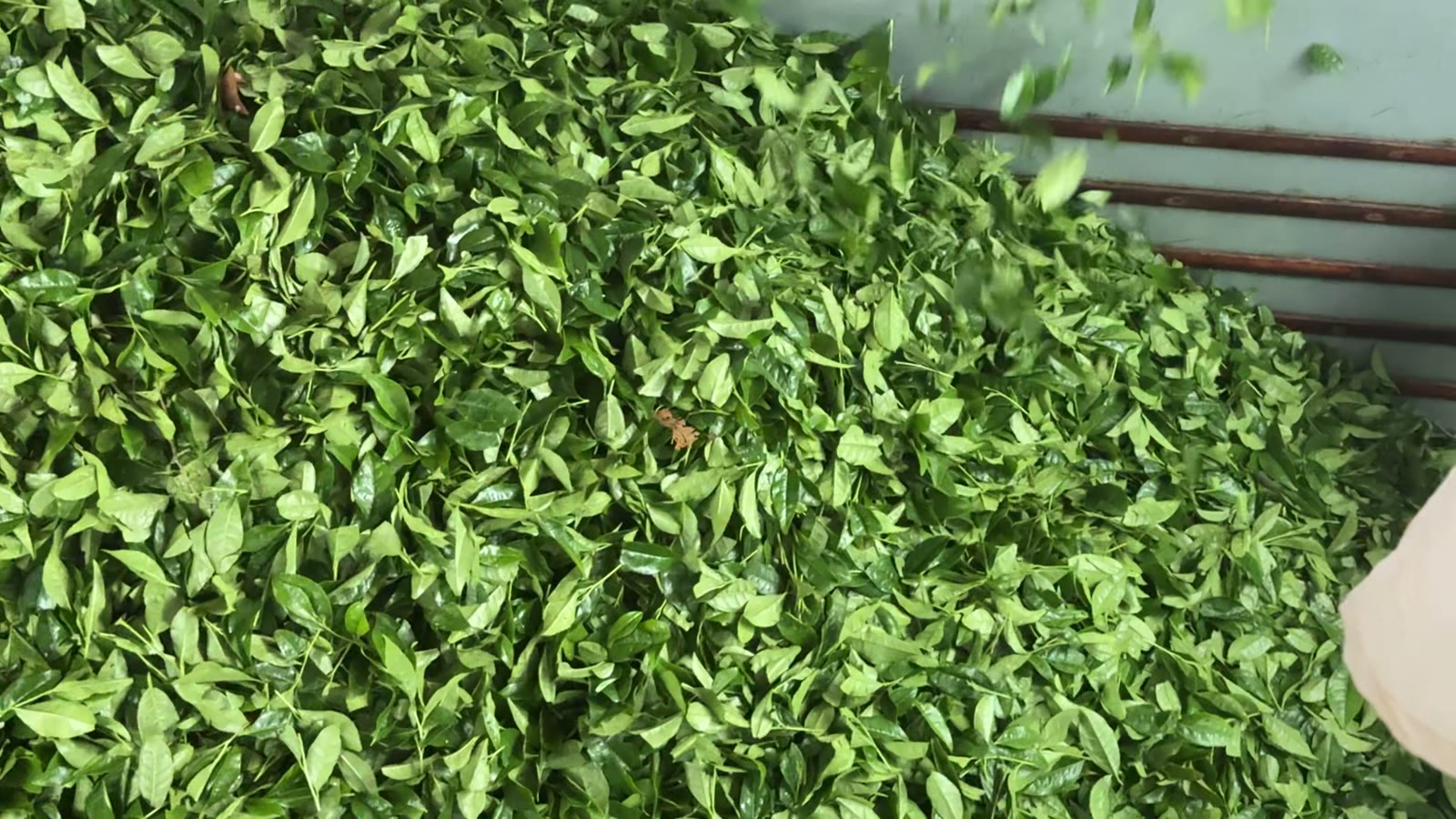
Sencha is a steamed Japanese green tea made from leaves grown in the open, unshaded field. That single detail, sunlight, shapes almost everything about the cup. Full sun gives sencha its brisk, grassy character and clean astringency, the flavor most people picture when they think of Japanese green tea.
The processing is what makes it distinctly Japanese. Soon after the leaves are plucked, they're steamed to stop oxidation, which locks in the green color and the fresh, vegetal aroma (Global Japanese Tea Association). Most Chinese green teas are pan-fired instead, which is why they lean toastier and nuttier. Steaming is the fork in the road, and Japan took the steam path.
After steaming, the leaves are rolled and dried in stages until they take on their signature look: fine, dark-green needles that resemble the thin needles of a pine tree (GJTA). The rolled-and-steamed style we call sencha today dates to 1738, and it has been Japan's daily cup ever since (GJTA). It is, by the association's own measure, the most consumed tea in Japan today.
Sencha vs Other Japanese Green Teas
Nearly every Japanese green tea starts from the same plant and the same steaming step. What separates them is how the leaves are grown and finished. Sencha sits at the center of that family as the sun-grown standard.
Here's the quick orientation, from most sun to least:
- Sencha: grown in full sun, steamed, rolled into needles. Brisk and grassy.
- Gyokuro: shaded for weeks before harvest, which builds sweetness and umami and softens the astringency.
- Matcha: made from tencha, a shaded leaf that's dried flat and stone-milled into powder.
- Bancha, hojicha, genmaicha: later-harvest or roasted styles, lower in caffeine and mellower in the cup.
If a bush is shaded before harvest, the resulting tea is often called kabuse sencha, a step on the path toward gyokuro (GJTA). For the full head-to-head on the two most-compared leaves, read our sencha vs gyokuro guide. To see where every type fits together, our Japanese green tea guide maps the whole family.
| Tea | Shade before harvest | Processing | Flavor | Form |
|---|---|---|---|---|
| Sencha | None (full sun) | Steamed, rolled | Bright, brisk, grassy | Loose leaf |
| Kabuse sencha | ~1 to 2 weeks (partial) | Steamed, rolled | Between sencha and gyokuro, gently sweet | Loose leaf |
| Gyokuro | ~20 days | Steamed, rolled | Sweet, deep umami, low bitterness | Loose leaf |
| Matcha (from tencha) | ~20+ days (as tencha) | Steamed, dried, stone-ground | Rich, brothy, full-bodied | Powder (whisked) |
| Bancha / hojicha / genmaicha | None (later harvest / roasted) | Steamed and rolled, some roasted | Mellow, lower in caffeine | Loose leaf |
Sencha Grades and First Flush
Sencha grade is mostly a story about timing. Japanese tea bushes are harvested in flushes across the year, and the first flush of spring produces the most prized leaf. That first harvest is called ichibancha. Its freshest, earliest lots are sold as shincha, or new tea, and the association names first-harvest sencha as the most appreciated of the year (GJTA).
Shincha is a seasonal moment more than a permanent grade. It arrives in late spring, tastes especially sweet and vivid, and sells out fast. Later flushes, the summer nibancha and autumn harvests, give sturdier, more astringent tea that many people drink every day and often prefer iced.
Beyond harvest timing, sencha quality tracks a few honest signals. Younger leaves and buds make a sweeter, more delicate cup. Careful rolling and even steaming show up as tight, glossy needles. Where higher grades ask for cooler water and a patient hand, everyday sencha is forgiving and brisk. None of this requires a secret vocabulary. It's leaf, timing, and craft, in that order.
Sencha, L-theanine, and Everyday Calm
Part of sencha's appeal is the way it wakes you gently. Green tea leaves carry L-theanine, an amino acid tied to the savory, umami side of the cup and to a settled, unhurried kind of alertness. Sencha grows in full sun, so it holds less theanine than shaded gyokuro, but the amino acid is still present, balancing the tea's caffeine.
Researchers have looked at that pairing directly. A 2008 study found that the combination of L-theanine and caffeine improved attention more than either compound on its own (Haskell-Ramsay et al., Biological Psychology, 2008), though how strongly you notice it varies from person to person. We keep the claim simple and let the cup speak: sencha is an easy, everyday way to slow down for a few minutes.
How to Brew Sencha
Sencha is easy to brew and easy to scorch. The single most common mistake is water that's too hot, which strips out bitterness and buries the sweetness. Keep the kettle cool and you'll taste why people love this tea.
Here's a reliable starting point. Use about 4 to 5 grams of leaf, a heaped teaspoon or two, per 200 ml of water. Brew the first infusion around 70 to 80°C for about 60 seconds, and go a little longer and cooler for premium grades (brewing guidance).
| Sencha style | Water temp | Steep time | Leaf |
|---|---|---|---|
| Premium / first-flush | 50 to 70°C (122 to 158°F) | 60 to 90 sec | ~5 g / 200 ml |
| Everyday sencha | 70 to 80°C (158 to 176°F) | 60 sec | ~5 g / 200 ml |
| Second and third steeps | Slightly hotter each time | 15 to 30 sec | Reuse the same leaf |
| Iced sencha | Cold water, fridge | 2 to 4 hours | ~5 g / 300 ml |
Temperatures and times adapted from specialist brewing guidance (Tezumi); leaf amounts are a general starting point. Adjust to taste.
Good sencha gives you two or three infusions from one measure of leaf. Pour the pot all the way out each time so the leaves aren't left sitting in water. Cool the water toward the low end for sweetness, or nudge it warmer for a brighter, more astringent cup. The leaf is doing the work. You're just setting the conditions.
Fukamushi vs Regular Sencha
Fukamushi means deep-steamed. Standard sencha is steamed for about 30 to 40 seconds, while fukamushi steams for a minute or more, often twice as long or more (My Japanese Green Tea). That longer steam changes the cup in ways you can see and taste.
The extra steaming breaks the leaf down further, so fukamushi brews into a cloudier, deep-green liquor with a rounder, softer body and less sharp edge. The smaller leaf particles also release flavor faster, so you brew it for a shorter time than regular sencha (brewing guidance). Regular, or standard-steamed, sencha stays clearer in the cup with a crisper, more defined flavor. Neither is better. One is bold and mellow, the other bright and clean. Both start from the same sun-grown leaf, and both live in the same green tea family.
Where Does Sencha Grow?
Almost all sencha comes from a handful of Japanese prefectures, and two of them dominate. Shizuoka, along the Pacific coast below Mount Fuji, grows about 40% of Japan's tea, and Kagoshima, on the warm southern island of Kyushu, adds over 30%. Together those two account for roughly 70% of the country's production (Ito En).
Region shapes the cup in quiet ways. Kagoshima's warmer climate brings an earlier first flush and leans toward deep-steamed fukamushi styles, while Shizuoka spans a wide range of elevations and more classic steaming. Uji in Kyoto, famous for gyokuro and matcha, makes prized sencha too. When we taste a lot, the prefecture already tells us something about its character before the water hits the leaf.
How We Source Our Sencha
For full transparency, here's how we do it. We source our sencha from named Japanese organic-certified farms, the kind that list prefecture and harvest on the lot. We work with growers directly rather than buying anonymous blended tea, because knowing the farm is the only way we can stand behind what's in the tin.
Every lot is third-party lab tested before we sell it, so what reaches you is clean, current-season leaf and nothing else. We keep our sourcing honest about timing too. First-flush lots are seasonal and limited, and we'd rather tell you when something is a later harvest than dress it up as spring tea. That's the standard I set for our own cup, and it's the one I'd want as a buyer.
How to Store Sencha
Sencha is fresh tea, and freshness is the whole point, so treat it a little carefully. Keep it airtight, cool, dark, and away from anything fragrant, because the leaf readily takes on nearby smells from coffee, spices, or a scented cupboard. An opaque tin, or a resealable foil pouch pressed flat to push the air out, both work well.
Use an opened bag within a month or two while the aroma is still bright and green. For longer keeping, an unopened, sealed pack can go in the freezer; let it return fully to room temperature before opening so no condensation touches the leaf. Sencha does not spoil in a worrying way. It simply fades, losing the vivid grassy notes that make it worth drinking.
Where to Buy Sencha
Look for three things on the label: a named region or farm, the harvest year, and an organic certification such as JAS or USDA Organic. Those details tell you the producer knows what they're shipping. Loose leaf almost always beats tea bags for sencha, because the whole needle unfurls and gives you cleaner flavor and a second and third steep.
Our USDA Organic Japanese sencha loose leaves are sourced from named farms and lab-tested per lot. If you're new to Japanese green tea, sencha is the right place to start, and our Japanese green tea guide will point you to the rest of the family from there.
Ready to taste real Japanese sencha?
USDA Organic, sourced from named Japanese farms, third-party lab tested, whole loose leaf.
Shop Sencha Inquire About WholesaleFrequently Asked Questions
What is sencha in simple terms?
Sencha is Japan's everyday green tea, made from sun-grown leaves that are steamed soon after harvest, then rolled into thin needles. It's the most produced green tea in Japan, about 54% of total tea output (GJTA).
What does sencha taste like?
Sencha tastes fresh, grassy, and lightly brisk, with a clean finish. Cooler brewing brings out its sweetness and a savory umami note. Water that's too hot makes it bitter.
What's the difference between sencha and matcha?
Sencha is a whole loose leaf you steep and strain out. Matcha is a shaded leaf, dried flat as tencha, then stone-milled into a fine powder you whisk into water and drink whole.
How do you brew sencha?
Use about 5 grams of leaf per 200 ml of water. Brew the first cup at 70 to 80°C for about 60 seconds, and go cooler and slightly longer for premium grades. Most sencha gives two or three infusions.
Does sencha have caffeine?
Yes. Sencha contains caffeine, generally less per cup than coffee, along with the amino acid L-theanine that's naturally present in tea leaves. First-flush and shaded teas tend to carry more caffeine than later harvests.
Have a question or want to talk wholesale? Email info@onewithtea.com. I read everything.
Sources
- Global Japanese Tea Association, "Sencha (煎茶)," retrieved 2026-07-28, https://gjtea.org/sencha/
- Global Japanese Tea Association, "Japanese Tea Kinds," retrieved 2026-07-28, https://gjtea.org/japanese-tea-information/japanese-tea-kinds/
- Ito En, "Tea Growing Regions," retrieved 2026-07-28, https://www.itoen-global.com/allabout_greentea/production/regions.php
- Tezumi, "Mastering Sencha Brewing Temperature," retrieved 2026-07-28, https://www.tezumi.com/blogs/tezumi-insights/mastering-sencha-brewing-temperature
- My Japanese Green Tea, "Fukamushicha," retrieved 2026-07-28, https://www.myjapanesegreentea.com/fukamushicha
- Haskell-Ramsay et al., "The effects of L-theanine, caffeine and their combination on cognition and mood," Biological Psychology 77(2):113-122, 2008, PubMed 18006208, https://pubmed.ncbi.nlm.nih.gov/18006208/
Share:
What Is Genmaicha? Benefits, Caffeine & How to Brew (2026)
Does Matcha Go Bad? How to Store Matcha and Keep It Fresh