

By Christian, Founder of One with Tea. Published July 10, 2026.

From our tea room
Green tea with roasted rice. Toasty, everyday, USDA Organic.
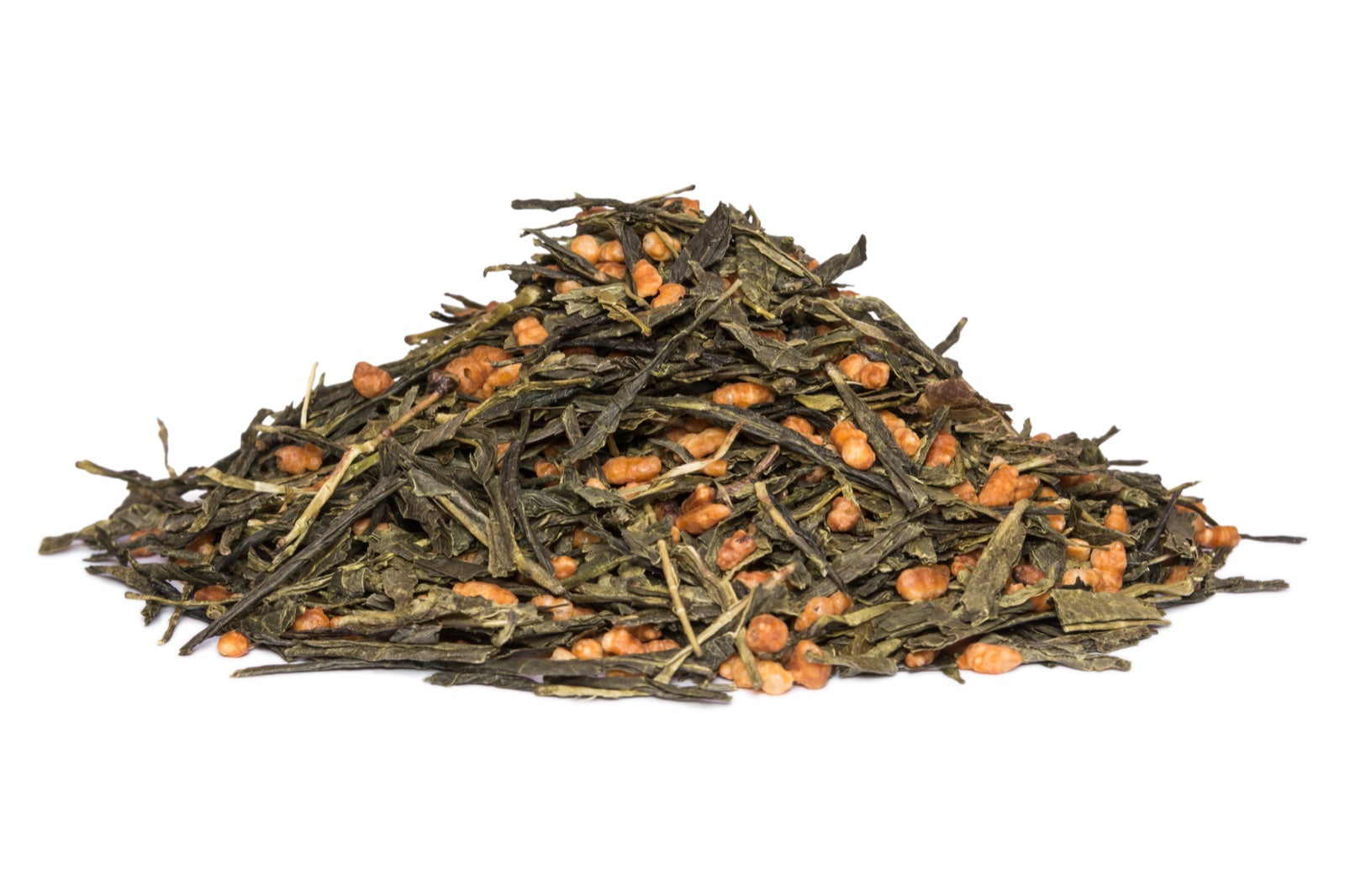
View Organic GenmaichaGenmaicha is Japanese green tea blended with roasted rice, and it's one of the gentlest, most comforting cups in the whole tea cabinet. The word "genmai" means brown or unpolished rice, and during roasting a few grains pop open like tiny popcorn, which earned genmaicha its affectionate nickname, popcorn tea. It's toasty, nutty, low in bitterness, and naturally low in caffeine. If you want the warmth of green tea without the buzz, this is where I'd start you.
- Genmaicha is green tea, usually bancha or sencha, blended with roasted rice at roughly half tea and half rice by volume (Global Japanese Tea Association).
- It's naturally low in caffeine, commonly cited around 15 to 30 mg per cup, well under coffee's roughly 96 mg (Mayo Clinic; tea-industry estimates).
- Traditional genmaicha is the low-caffeine one. Matcha-iri genmaicha adds matcha powder, which pushes the caffeine back up.
- Brew it hot and fast: 80 to 90 °C water, about 3 g of leaf, steeped 45 to 90 seconds, re-steeped two to four times.

Caffeine at a glance: Genmaicha carries about 10 to 20 mg per 8-oz cup, low, since it is cut with caffeine-free roasted rice. See how it compares with every Japanese green tea in our caffeine-by-tea-type comparison.
What Is Genmaicha? Green Tea Meets Toasted Rice
Genmaicha is a blend of Japanese green tea leaves and roasted rice, typically mixed at about half and half by volume (Global Japanese Tea Association). The leaf base is traditionally bancha, the mature, later-harvest leaf that sits lower on the grade scale and lower in caffeine, though many modern blends use brighter sencha instead. The rice is roasted until fragrant, and some grains puff and pop, which is where "popcorn tea" comes from.
One honest wrinkle on the name. "Genmai" points to brown rice, but in practice a lot of genmaicha is made with roasted white or mochi rice rather than true brown rice (Global Japanese Tea Association). The result is the same warm, cereal-like aroma either way. What you're tasting is the marriage of two things: fresh green tea's clean, grassy backbone and the deep, toasty sweetness of roasted grain.
The blend also softens the tea. Because roughly half of every scoop is caffeine-free rice, genmaicha delivers a lighter, rounder cup than straight sencha, with much less of the astringency that can make green tea taste sharp. It's the tea I hand to people who tell me they don't like green tea, because more often than not, what they didn't like was bitterness, and genmaicha barely has any.
Where Does Genmaicha Come From?

Most accounts trace genmaicha to Kyoto in the early twentieth century, though the exact origin is debated and poorly documented. The best-known story: a Kyoto tea merchant, unwilling to waste leftover fragments of kagami mochi rice cakes after the New Year, roasted them and blended them into green tea. That reflects a very Japanese ethic, mottainai, the sense that waste is shameful.
For much of its history, genmaicha was a "people's tea." The rice stretched a costly ingredient and lowered the price, which put green tea within reach of poorer households (Wikipedia). What started as thrift became a classic. Today genmaicha isn't a compromise, it's a distinct style people seek out for its comfort and warmth, and it sits proudly alongside sencha and gyokuro on any good tea list. I love that a tea born from not wasting food became something people travel for.
How Much Caffeine Is in Genmaicha?
Genmaicha is low in caffeine, typically cited around 15 to 30 mg per 8 oz cup, roughly a quarter of a cup of coffee (tea-industry estimates; coffee at ~96 mg per Mayo Clinic, 2024). Two things pull the number down: about half the blend is caffeine-free rice, so there's simply less leaf per scoop, and the traditional bancha base uses mature leaf, which naturally holds less caffeine than young spring sencha.
A quick honesty note on those figures. The coffee and green tea numbers are hard-sourced from Mayo Clinic and the matcha figure from USDA data, but the genmaicha and hojicha values are tea-industry estimates, not lab-measured USDA entries. Caffeine also swings with cultivar, leaf age, dose, and how long you steep. Treat the chart as a reliable ranking, not a lab certificate.
That gentle profile is the whole appeal. Genmaicha sits between an afternoon sencha and a nearly caffeine-free roasted hojicha on the caffeine curve. If your goal is to wind down without giving up tea entirely, genmaicha belongs on a short list with a few other gentle Japanese green teas worth keeping on the shelf.
What Are the Benefits of Genmaicha?

Genmaicha's benefits come mostly from its green tea base, delivered in a lighter, gentler dose than straight sencha. It carries the same families of compounds green tea is studied for, the calming amino acid L-theanine and antioxidant catechins, just diluted by the rice and softened by the mature leaf. Here's what the research actually supports, and where it stays modest. Individual response varies, so consider this general information, not medical advice, and talk with your doctor before changing your routine if you manage a health condition.
L-theanine and calm, focused attention
Green tea contains L-theanine, an amino acid associated with a calm, alert state, and it may support focused attention when paired with a little caffeine. In a 2008 randomized trial, 100 mg of L-theanine plus 50 mg of caffeine improved speed and accuracy on an attention-switching task and reduced distraction (Owen et al., Nutritional Neuroscience, 2008, PMID 18681988, n=27). Green tea leaf averages about 6.56 mg of L-theanine per gram (Frontiers in Nutrition, 2022, PMID 35445053), so a normal serving delivers well under the 100 mg used in that trial.
Where the data stays modest: that trial used 100 mg of L-theanine, far more than one cup delivers, and the sample was small at 27 people. L-theanine on its own shows little effect in most studies, and human clinical evidence remains limited. So genmaicha "may support" a settled, focused feeling, especially as a slow afternoon ritual, but I wouldn't sell it as a focus supplement. Much of what people feel is the pause itself, the few quiet minutes the brewing asks of you. For the deeper science, we wrote a full guide to L-theanine and tea's calm focus.
Antioxidant catechins, in a lighter dose
Genmaicha delivers green tea catechins, led by EGCG, the antioxidants green tea is best known for, though in a gentler amount than pure sencha because the rice dilutes the leaf and the mature bancha base holds fewer catechins than young spring sencha. The important caveat is dose: most catechin research uses concentrated extracts, often 100 to 800 mg of EGCG, not a brewed cup at a fraction of that (systematic review, 2021). A cup of genmaicha is a pleasant, modest source of antioxidants, not a therapeutic dose.
A gentler cup for the caffeine-sensitive
Because it's low in caffeine, genmaicha may be a gentler choice for the evening or for people who feel jittery on coffee or matcha. If you're weighing your morning cup, our breakdown of matcha versus coffee shows how the stronger options compare. Its roughly 15 to 30 mg per cup sits well under the 200 mg daily caffeine ceiling that major health bodies suggest for those watching intake. That said, low-caffeine is relative, not caffeine-free, and blends with more sencha or added matcha run higher. Anyone pregnant or especially caffeine-sensitive should still check with their doctor rather than treat any tea as automatically safe.
For the numbers beside every other tea, see how matcha compares with coffee and other teas on caffeine.
Traditional Genmaicha vs Matcha-Iri Genmaicha
Not all genmaicha is low in caffeine, and the difference is one ingredient. Matcha-iri genmaicha is ordinary genmaicha with powdered matcha dusted through it. It looks greener, tastes fresher and fuller, and it's genuinely delicious, but that matcha is concentrated whole-leaf tea, so it pushes the caffeine back up (Wikipedia). If low caffeine is your goal, the plain traditional blend is the one you want.

From our tea room
Japanese green tea with roasted rice, dusted with matcha. USDA Organic.
View Genmaicha with MatchaThink of it as two teas sharing a name. Traditional genmaicha is the mellow, toasty, evening-friendly cup this guide is about. Matcha-iri genmaicha is a brighter, more caffeinated cousin for when you want the roasted-rice comfort with more of a lift. Neither is better, they just do different jobs. When you shop, read the label: if it lists added matcha, expect more caffeine than the numbers in the chart above.
Tea
What it is
Caffeine (per 8 oz)
Flavor
Traditional genmaicha
Green tea (bancha or sencha) blended with roasted rice
~15 to 30 mg (low)
Toasty, nutty, mellow, very low bitterness
Matcha-iri genmaicha
Genmaicha dusted with powdered matcha
Higher (added whole-leaf matcha)
Brighter, fresher, fuller
Hojicha
Green tea whose leaves are themselves roasted
Often under 15 mg
Deep, caramel-like, even gentler
The longer story is in 486 dated entries on the history of tea.
How Do You Brew Genmaicha at Home?

Brew genmaicha hot and fast: heat water to 80 to 90 °C (176 to 194 °F), use about 3 g of leaf per cup, and steep just 45 to 90 seconds for the first infusion. Unlike delicate gyokuro or sencha, which want cooler water to protect their sweetness, genmaicha likes real heat because that's what coaxes the buttery, popcorn aroma out of the roasted rice (Global Japanese Tea Association). Then re-steep it two to four times, adding 10 to 15 seconds each round.
Infusion
Water temp
Leaf
Steep time
First
80 to 90°C (176 to 194°F)
~3 g per cup
45 to 90 sec
Second
80 to 90°C (176 to 194°F)
Same leaf
Add 10 to 15 sec
Third to fourth
80 to 90°C (176 to 194°F)
Same leaf
Add 10 to 15 sec each round
Expect a cup that's toasty and nutty, with a warm rice aroma, a natural sweetness, and a clean, savory backbone (Global Japanese Tea Association). Genmaicha is famously forgiving, so if you oversteep it a little, it won't turn harsh the way a bitter oversteeped sencha can. That easy-going nature makes it a wonderful everyday tea and a natural pairing for food, especially rice dishes, grilled fish, and anything savory. It's also lovely last thing at night, when you want ritual without the caffeine keeping you up.
Why Genmaicha Earns a Place in Our Collection

I'll be honest about why I keep genmaicha on the shelf. It's the tea I reach for when I'm not chasing energy, when I just want to slow down and sit with a warm cup. There's something grounding about a tea that began as an act of not wasting food, and still tastes like comfort a century later. Our USDA organic genmaicha uses organic green tea and roasted rice, and it's the plain traditional style, so it stays gentle and low in caffeine.
I source with the same care I bring to our matcha, because a tea being humble in price is no reason to be careless about what's in it. Genmaicha asks almost nothing of you, no fussy water temperature, no fear of oversteeping, no caffeine to plan your day around. It just meets you where you are. In a world that pushes more energy, more output, more speed, a quiet toasty cup that asks you to pause feels like the point.
Frequently Asked Questions
Is genmaicha high in caffeine?
No. Genmaicha is one of the lower-caffeine Japanese green teas, commonly cited around 15 to 30 mg per 8 oz cup, versus roughly 96 mg for coffee (Mayo Clinic, 2024, for coffee). About half the blend is caffeine-free rice, which keeps the number low. Matcha-iri versions with added matcha run higher.
What does genmaicha taste like?
Toasty and nutty, with a warm popcorn or roasted-rice aroma, a natural sweetness, and a clean, savory green backbone (Global Japanese Tea Association). It has very little of green tea's astringency or bitterness, which makes it smooth and easy to drink, and a good starting point for anyone who thinks they dislike green tea.
Is genmaicha good for you?
It offers green tea's L-theanine and antioxidant catechins in a gentle dose. Research associates these compounds with calm focus and antioxidant activity, though usually at higher doses than a single cup (Owen et al., 2008). Enjoy genmaicha for comfort and a modest caffeine lift, not as a treatment. Individual response varies.
What is the difference between genmaicha and hojicha?
Genmaicha is green tea blended with roasted rice, so it tastes toasty but keeps a green backbone. Hojicha is green tea whose leaves are themselves roasted, giving a deeper, caramel-like flavor and even less caffeine, often under 15 mg per cup. Both are gentle, low-caffeine, and comforting, just from different techniques.
How do you brew genmaicha?
Use water at 80 to 90 °C (176 to 194 °F), about 3 g of leaf per cup, and steep 45 to 90 seconds (Global Japanese Tea Association). It brews hotter and faster than sencha because the heat brings out the roasted-rice aroma. Re-steep two to four times, adding a little time each round.
Can I drink genmaicha at night?
For most people, yes. Its low caffeine, around 15 to 30 mg per cup, makes traditional genmaicha a common evening choice. Caffeine sensitivity varies, though, and matcha-iri blends contain more, so if you're highly sensitive or pregnant, check with your doctor rather than assume any tea is caffeine-free.
Try Genmaicha for Yourself
If you want a gentle, toasty cup you can drink from afternoon into evening, shop our USDA organic genmaicha. It's the traditional low-caffeine style, organic green tea and roasted rice, nothing else. Running a cafe or tea program and looking to add a low-caffeine, easy-drinking option your customers will love? Inquire about wholesale sourcing and we'll talk through volume and pricing.
May you become one with tea, one with yourself.
Christian, Founder of One with Tea
Sources
- Global Japanese Tea Association, "Genmaicha," https://gjtea.org/genmaicha/
- Mayo Clinic, "Caffeine content for coffee, tea, soda and more," https://www.mayoclinic.org/healthy-lifestyle/nutrition-and-healthy-eating/in-depth/caffeine/art-20049372
- USDA FoodData Central, caffeine values for tea and matcha, https://fdc.nal.usda.gov/
- Owen GN et al., "The combined effects of L-theanine and caffeine on cognitive performance and mood," Nutritional Neuroscience, 2008, PMID 18681988, https://pubmed.ncbi.nlm.nih.gov/18681988/
- L-theanine content of green tea leaf, Frontiers in Nutrition, 2022, PMID 35445053, https://pmc.ncbi.nlm.nih.gov/articles/PMC9014247/
- Systematic review of green tea catechins (EGCG), 2021, https://www.ncbi.nlm.nih.gov/pmc/articles/PMC7922336/
- "Genmaicha," Wikipedia, https://en.wikipedia.org/wiki/Genmaicha
Share:
Lead-Free Matcha Brands: Low-Lead, Tested Matcha (2026)
What Is Sencha? Japan's Everyday Green Tea, Explained