



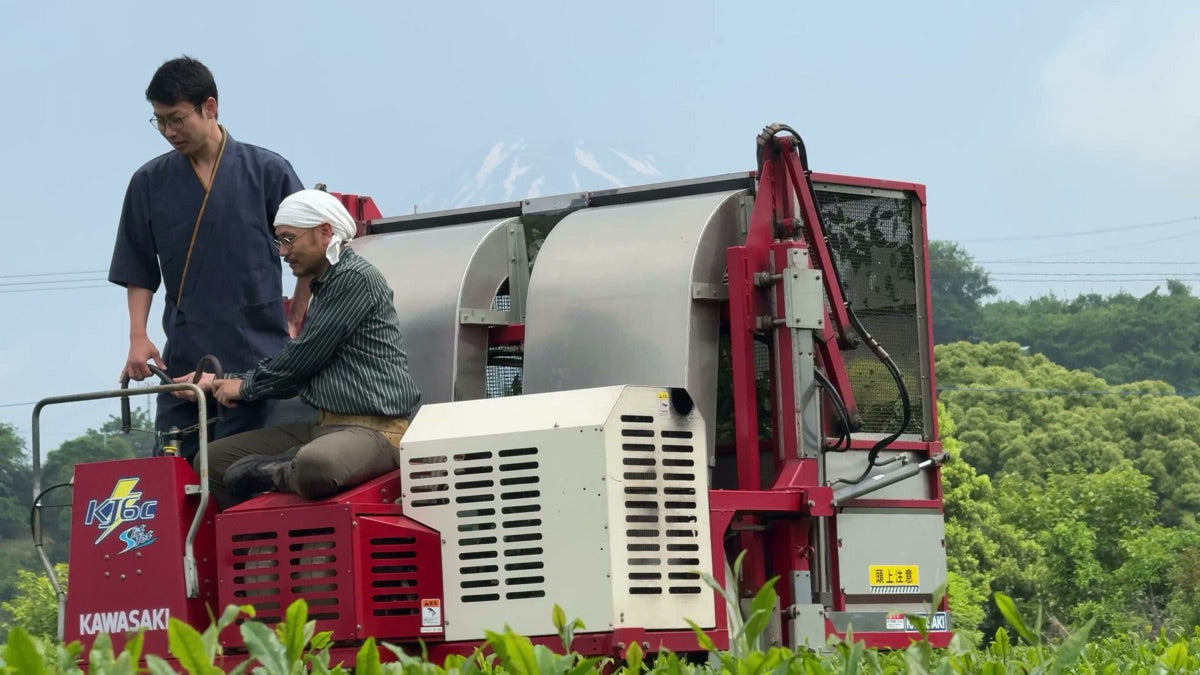
Japan's 2026 first flush, the year's first and finest tea picking, came in healthy, and it walked straight into the strongest matcha demand the country has seen in decades. In 2026, the opening tencha auction at the Kyoto market averaged 14,127 yen per kilogram, the highest in ten years (Shokuhin Shimbun, May 2026). For anyone who buys, brews, or sells Japanese green tea, this harvest tells the story of the year ahead.
We were on the ground for much of it. This spring we walked fields in Shizuoka, Fukuoka, and Shibushi while the first leaves were coming off the bushes, and what we saw on the auction sheets matched what we felt in the gardens. Demand is real, the leaf is moving toward matcha, and prices are climbing.
Key Takeaways
- In 2026, Kyoto's first tencha auction averaged 14,127 yen per kilo, a 10-year high, up roughly 72% from the 2025 opening average of 8,235 yen (Shokuhin Shimbun, 2026).
- Spring weather cooperated. Uji reported no frost damage, and Shizuoka saw warm temperatures and ample rain from mid-March that accelerated growth (Global Japanese Tea Association, 2026).
- Japan's green tea exports hit a record 13,125 tonnes in fiscal 2025, up 42% year over year, with powdered tea around 70% of that volume (Japanese customs data via The Japan Times, 2026).
- Matcha is still a small slice of the crop, only about 6% of Japan's total tea production, which is why surging demand pushes prices so hard (GJTA, 2025).

What happened in Japan's 2026 first flush?
The 2026 first flush delivered good leaf into a tight market. In 2026, Kyoto's opening tencha auction moved 375 lots and 25,188 kilograms at an average of 14,127 yen per kilo, the highest opening price in ten years (Shokuhin Shimbun, 2026). The top lot cleared 40,021 yen. That is the headline of this harvest: quality leaf, record prices, buyers competing hard.
The raw cost is public, and we keep it current: our running index of Japanese tea import prices.
First flush, called ichibancha in Japanese and sold fresh as shincha, is the spring picking. It carries the sweetness and depth that growers store up over winter, so it sets the tone and the price for everything that follows. When the first auction runs hot, the rest of the year usually follows. For the difference between this picking and later ones, see our guide to first flush versus second flush matcha.
The 2026 numbers did not appear from nowhere. The opening auction averaged about 72% above the 2025 opener of 8,235 yen per kilo, and it did so on far more volume, roughly 25,000 kilograms against about 1,700 the year before (Shokuhin Shimbun, 2026). More leaf, higher price. That combination only happens when demand is genuinely outpacing supply.
How did the 2026 spring weather shape the crop?

The weather mostly helped this year. In 2026, the Global Japanese Tea Association reported no frost damage in Uji, and in Shizuoka, warm temperatures and ample rainfall from mid-March accelerated growth and offset an earlier dry spell (GJTA, 2026). Frost is the spring grower's nightmare, since a single cold night can scorch the tender new buds, so a frost-free Uji was good news for matcha leaf.
We track the production side: where Japan's tea is really grown.
Walking the rows ourselves, you could feel the season was on time. The new growth in Shizuoka was bright and even, the kind of vivid spring green that tells you the bushes wintered well. Harvest ran on a normal calendar across the regions, with Shizuoka starting around April 9 and other areas following through late April (GJTA, 2026).
Good weather lifted quality across the board, and the leaf auctions showed it. In 2026, first flush prices rose region-wide, with Kagoshima averages up about 60% year over year and Uji gyokuro setting a record near 500,000 yen per kilo (GJTA, 2026). A strong crop did not soften prices, because there simply is not enough matcha leaf to go around.
Why did Kyoto's tencha auction hit a 10-year high?

Tencha is the shaded leaf that gets ground into matcha, and it has become the most fought-over green tea in Japan. At Kyoto's distribution center, tencha now makes up around 90% of trade (GJTA, 2026), and the 2026 opening auction set a 10-year high at 14,127 yen per kilo (Shokuhin Shimbun, 2026). When one product dominates a market and still breaks records, you are watching a structural shortage, not a seasonal blip.
The 2026 result is even more striking against 2025. Last year's opener averaged 8,235 yen per kilo on about 1,678 kilograms; this year the market cleared roughly fifteen times that volume at a price 72% higher (Shokuhin Shimbun, 2026). We broke down the opening session in more detail in our look at the Kyoto tencha auction 2026 opening prices.
Matcha demand is still outrunning supply
The export figures explain the auction. In fiscal 2025, which ended in March 2026, Japan's green tea exports reached a record 13,125 tonnes, up 42% year over year, and the export value more than doubled to 84.7 billion yen, with powdered tea around 70% of volume (Japanese customs data via The Japan Times, 2026). Most of that powder is matcha, and most of it is leaving the country.
Here is the squeeze in one line. In 2026, matcha and its raw leaf, tencha, account for only about 6% of Japan's total tea production, yet that sliver is carrying the bulk of an export boom (GJTA, 2025). When global demand lands on such a thin supply base, even a healthy harvest cannot cool prices. The shortage is structural, and we walked through the full picture in the 2026 matcha shortage explained.
The momentum is not slowing. In the first ten months of 2025, Japanese tea exports passed 10,000 tonnes for the first time since 1954, a 71-year record, running about 44% ahead of the prior year (GJTA, 2025). The United States has been the single largest market. If you want the export trend in full, see our breakdown of Japan's green tea export surge.
Why growers keep shifting from sencha to tencha

Farmers are following the price. Output of tencha rose for four straight years through 2024, and the higher prices it commands have pulled growers away from sencha, the everyday loose-leaf green tea (Kyodo via The Nation, 2026). When matcha leaf earns several times what sencha does, the math makes the choice for a farming family.

From our tea room
Superior Sencha Green Tea - USDA Organic Japanese First Flush
First-flush loose leaf, USDA Organic, direct from Japanese family farms.
View Superior SenchaPolicy is pushing the same direction. Japan's Ministry of Agriculture, Forestry and Fisheries has been encouraging increased tencha production, and subsidies to support the shift have already been announced (GJTA, 2025). Converting a sencha field to tencha is not instant, though. It takes new shading structures, different handling, and time for bushes and growers to adapt, so supply will keep lagging demand for a while.
That shift has a cost on the other side of the shelf. As leaf moves toward matcha, everyday sencha and lower-grade teas get tighter and pricier too. We unpack what that rebalancing means in matcha and sencha supply shifts in 2026.
What the 2026 harvest means for buyers

Plan for firm prices and reward real sourcing. In 2026, with a 10-year-high opening auction and record exports, matcha costs are not retreating this year (Shokuhin Shimbun, 2026). For cafes and home drinkers alike, the smart move is to buy from people who actually know where their leaf comes from, because that is who keeps supply through a tight year.
For us, the 2026 first flush confirmed why we travel. Standing in those Shizuoka and Fukuoka gardens this spring, watching first-flush leaf come off bushes we have known for years, is how we hold our quality and our allocation when the market gets loud. The reasons behind the climbing prices, from shading to shortage, are laid out in why matcha prices are rising in 2026.
Tea has always asked us to slow down and pay attention. A harvest like this one is a good reminder that what is in your bowl began as a single spring leaf, grown by someone, picked at the right moment, carried a long way with care. That is worth honoring, and it is worth paying a fair price for.
Frequently Asked Questions
What is the first flush in Japanese tea?
The first flush, called ichibancha, is the season's first leaf picking, harvested in spring and often sold fresh as shincha. In 2026, Shizuoka began around April 9, with other regions following through late April (GJTA, 2026). It is prized for its sweetness, depth, and the highest quality of the year.
How much did the 2026 Kyoto tencha auction cost?
In 2026, Kyoto's opening tencha auction averaged 14,127 yen per kilogram, a 10-year high, with the top lot reaching 40,021 yen (Shokuhin Shimbun, 2026). That average was roughly 72% above the 2025 opening price of 8,235 yen per kilo.
Why is matcha so expensive in 2026?
Matcha leaf is scarce relative to demand. Matcha and tencha make up only about 6% of Japan's total tea production, yet they drive an export boom that grew 42% in fiscal 2025 (GJTA, 2025; The Japan Times, 2026). Thin supply plus rising global demand keeps prices high.
Did weather hurt the 2026 spring harvest?
No. In 2026, Uji reported no frost damage, and Shizuoka had warm temperatures and ample rain from mid-March that accelerated growth (GJTA, 2026). The crop quality was strong, though good weather did not lower prices given the ongoing shortage.
Are Japanese farmers growing more matcha?
Yes. Tencha output rose for four straight years through 2024, and growers keep shifting from sencha to tencha to chase higher prices (Kyodo via The Nation, 2026). Japan's agriculture ministry is encouraging the shift with announced subsidies, but converting fields takes time.
Will matcha prices come down later in 2026?
Not likely this year. With a 10-year-high opening auction and record exports through early 2026, the supply remains tight (Shokuhin Shimbun, 2026). Field conversions to tencha may ease pressure over future seasons, but they will not relieve the current year.
Source matcha grown with intention
We source our organic Japanese matcha directly from the farms we visit, which is how we hold quality and supply through a tight harvest year. If you run a cafe and want a steady, traceable matcha partner, reach out to us about wholesale. If you brew at home, you can explore our single-origin matcha and meet the gardens behind it. Every bowl starts with one spring leaf, and we would love to share ours with you.
May you become one with tea, one with yourself.
Share:
Matcha and Sencha: Supply Shifts in 2026 and What They Mean for Buyers
Cooking With Matcha: A Founder's Guide to Grade and Heat