



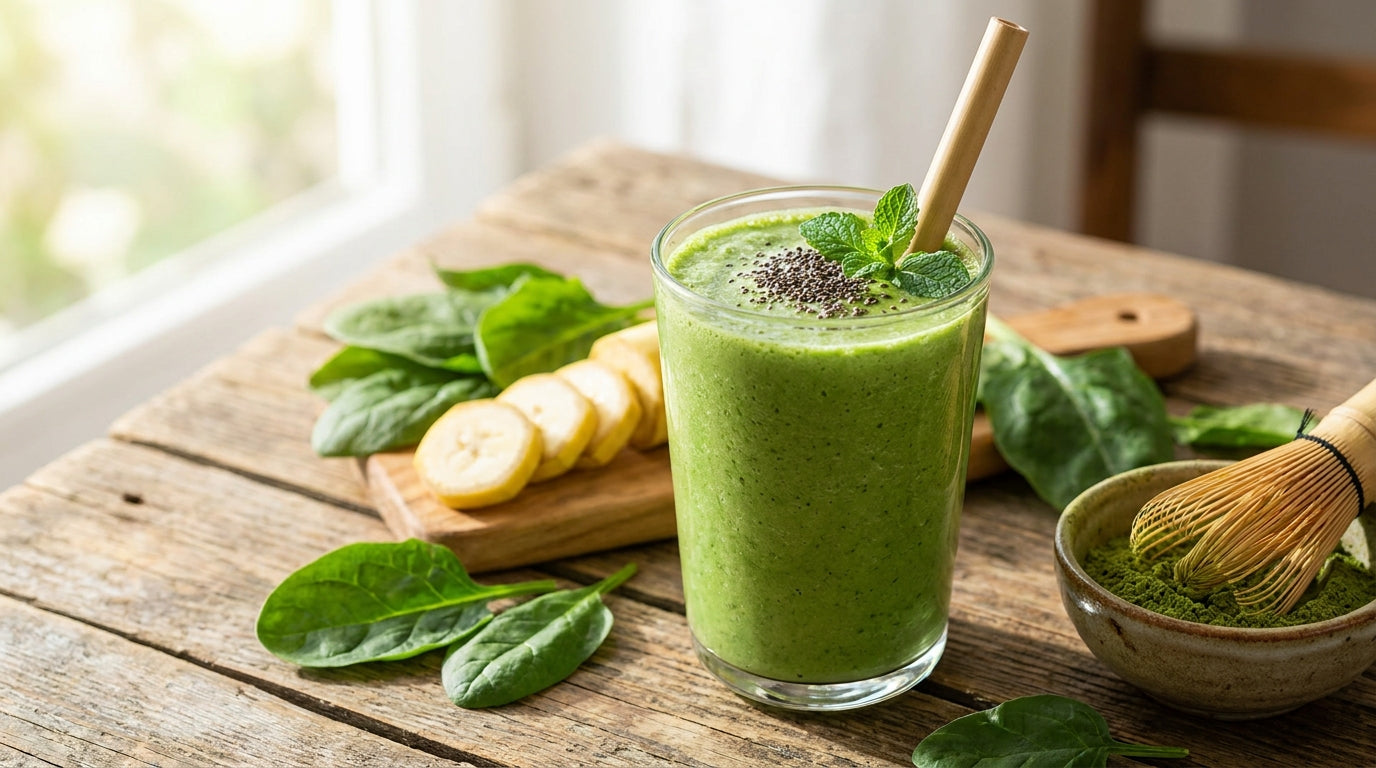
This matcha green smoothie is the fastest way to get a genuinely satisfying breakfast into your morning, no cooking required. One blender, five minutes, and you've got a thick, creamy smoothie that tastes like tropical fruit with an earthy matcha undertone. Matcha menu items grew 30% year-over-year in 2025 according to Tastewise trend data, and smoothies are one of the biggest drivers of that growth. There's a good reason: matcha's flavor profile pairs naturally with fruit and greens in a way that coffee simply can't replicate.
We developed this recipe after months of testing matcha smoothie combinations at One with Tea. The version you see here is the one we kept coming back to, morning after morning. The pineapple brings natural sweetness and a tropical brightness, the spinach adds color and substance without any grassy taste, and the matcha ties everything together with that distinctive earthy depth.
Key Takeaways
- This smoothie takes 5 minutes and uses one blender. No hot water needed for the matcha.
- Frozen pineapple and banana create a thick, creamy texture while naturally sweetening the drink.
- Latte grade matcha is the ideal choice for smoothies, with robust flavor that holds up alongside fruit.
- You can meal prep smoothie packs (everything except the liquid) in freezer bags for grab-and-go mornings.
- The recipe is naturally dairy-free, and you can adapt it with protein powder, nut butter, or different fruits.
Ingredients
Every ingredient here earns its place. Nothing is filler.
- 1 teaspoon latte grade matcha powder, the base flavor and the reason this smoothie is green in the best possible way
- 1 cup fresh spinach (packed) , adds nutrients and a deeper green color without changing the taste. According to USDA FoodData Central, one cup of raw spinach provides 24% of your daily vitamin A and 16% of daily folate
- 1/2 cup frozen pineapple chunks , natural sweetness plus tropical flavor that complements matcha beautifully
- 1/2 frozen banana , creates that thick, creamy body you want in a smoothie
- 3/4 cup oat milk , smooth and neutral, though any plant or dairy milk works here
- 1 tablespoon hemp seeds , adds protein and healthy fats without altering the flavor
- 1/2 teaspoon vanilla extract , rounds out the sweetness and ties the flavors together
- 4-5 ice cubes , optional, for an extra-thick and frosty texture
A note on matcha quality: This recipe works best with a matcha that's meant for blending. Our USDA organic latte grade matcha is stone-ground specifically for drinks like this, with enough body to stand up to fruit and greens without getting lost. If you're using a very low-quality matcha, the bitterness can throw off the whole smoothie.
Step-by-Step Instructions
The order matters here. Layering ingredients correctly is the difference between a smooth, uniform drink and one with matcha clumps floating on top.
- Blend the liquid and matcha first. Pour the oat milk into your blender, add the matcha powder, and blend on low for about 10 seconds. This step dissolves the matcha completely before anything else goes in. Skip this step and you'll find green clumps in your smoothie.
- Add the spinach next. Drop in the packed cup of spinach and blend on medium for 15 seconds. You want the leaves fully broken down before you add the frozen fruit. This keeps the final texture silky instead of leafy.
- Add the frozen fruit and extras. Now add the frozen pineapple, frozen banana, hemp seeds, and vanilla extract. The frozen fruit is what gives this smoothie its thick, almost soft-serve consistency.
- Blend with ice on high. Toss in the ice cubes and blend on high for 45-60 seconds. You're looking for a completely smooth, creamy pour with no chunks. Most standard blenders handle this fine, though a high-speed blender gives an even silkier result.
- Pour, dust, and drink. Pour into your favorite glass. If you want that café look, tap a tiny amount of matcha through a fine mesh strainer over the top. Drink it fresh for the brightest flavor and color.
Smoothie Nutrition at a Glance
Here's how this matcha green smoothie compares to other common smoothie bases. The numbers below are approximate per single serving.
The matcha green smoothie sits in a sweet spot: more substantial than green juice, but lighter than a peanut butter-heavy blend. The fiber from spinach and pineapple keeps you full without that overly heavy feeling. Research published in Food Chemistry (2019) confirms that matcha retains higher concentrations of catechins, particularly EGCG, compared to regular steeped green tea because the whole leaf is consumed.
Why Matcha Works So Well in Smoothies
Matcha blends into smoothies more naturally than you might expect, and there's a practical reason: you don't need hot water.
When you're making a traditional matcha drink, hot water is essential to properly dissolve the fine powder and release its flavor. But in a smoothie, the blender does that work mechanically. The high-speed blending action breaks up matcha particles just as effectively as whisking with hot water. This means you can use cold or room-temperature liquid and still get a smooth, fully-dissolved result.
The frozen fruit actually works in your favor here. Matcha's vegetal, slightly bitter flavor profile pairs well with sweet, acidic fruits like pineapple and mango. The cold temperature mellows any bitterness and lets the sweeter, more umami notes of the matcha come through. If you've ever tried matcha with hot milk and found it too grassy, try it cold with fruit. It's a completely different experience.
Matcha also brings something unique to a smoothie that other greens can't: L-theanine. This amino acid is found almost exclusively in tea plants, particularly in shade-grown matcha from Japan's traditional growing regions like Uji and Nishio. A 2019 systematic review in Nutrients found that L-theanine at doses of 200-400mg had measurable effects on stress reduction and attention in human trials. One teaspoon of matcha typically provides 20-30mg of L-theanine, promoting a state of calm alertness, which is why so many people describe the energy from matcha as "focused" rather than "wired."
Best Add-Ins to Customize Your Smoothie
The base recipe is great on its own, but here are the add-ins we've tested that actually improve it:
- Collagen peptides (1 scoop): Dissolves completely and adds about 10g of protein without changing the flavor at all.
- Almond butter (1 tablespoon): Makes the smoothie richer and more filling. Adds a subtle nuttiness that pairs well with the matcha.
- Fresh ginger (1/2 inch piece): A small amount adds a warm, spicy note that cuts through the sweetness. Blend it with the spinach step for best results.
- Chia seeds (1 tablespoon): Thickens the smoothie and adds omega-3 fatty acids. Let the finished smoothie sit for 2-3 minutes after blending if you want the chia to gel slightly.
- Coconut yogurt (2 tablespoons): Makes the texture extra creamy, almost like a smoothie bowl consistency. Also adds probiotics.
- Medjool date (1, pitted): If you prefer a sweeter smoothie, one date blends in completely and adds caramel-like sweetness without refined sugar.
Ingredient Ratio Guide
Getting the proportions right is what separates a great smoothie from a watery or overly thick one. Here's the ratio framework behind this recipe.
If your smoothie is too thick, add a splash more liquid. Too thin? Add more frozen fruit or an extra ice cube. The frozen-to-liquid ratio is the main lever you have for texture control.
Meal Prep and Make-Ahead Tips
Mornings are busy. Here's how to make this smoothie even faster during the week.
Freezer smoothie packs are the most effective meal prep approach. Measure out the spinach, pineapple, banana, and hemp seeds into individual freezer bags or containers. In the morning, dump the contents into your blender, add the liquid, matcha, and vanilla, and blend. Total active time drops to about 2 minutes.
You can prep 5 packs on a Sunday evening in under 10 minutes. The frozen ingredients keep well for up to 3 months in the freezer. Keep the matcha powder separate (in its sealed tin in a cool, dark spot) and add it fresh each morning for the best flavor.
Blending the night before is also an option, though the color does shift. A freshly blended matcha smoothie is vivid green. After 8-12 hours in the fridge, it turns more of an olive or army green. The flavor stays fine, just give it a good shake. An airtight bottle with a tight seal is important to prevent oxidation.
Smoothie bowls: Use about half the liquid to get a thicker consistency. Pour into a bowl and top with granola, sliced banana, coconut flakes, or a drizzle of honey. This turns a 280-calorie smoothie into a more substantial 400-450 calorie breakfast.
Variations Worth Trying
Once you've nailed the base recipe, these variations keep things interesting throughout the week.
Berry Matcha Smoothie
Swap the pineapple for 1/2 cup frozen mixed berries (blueberries, raspberries, strawberries). The color shifts to a deeper purple-green, and the tartness of the berries contrasts nicely with matcha's earthy notes. If you enjoy our strawberry matcha blend, try using that instead of plain matcha here for a double strawberry layer.
Tropical Matcha Smoothie
Replace the spinach with 1/2 cup frozen mango chunks and add 2 tablespoons of coconut cream. This version tastes like a tropical vacation in a glass. The mango-matcha combination is popular across Japanese cafes for good reason, the flavors have a natural harmony.
Protein Matcha Smoothie
Add one scoop of vanilla plant-based protein powder and swap the hemp seeds for 1 tablespoon of almond butter. This bumps the protein to roughly 25g, making it a solid post-workout option. Blend an extra 15-20 seconds to incorporate the protein powder fully.
Matcha Smoothie Bowl
Use only 1/2 cup of liquid instead of 3/4 cup, and skip the ice. The result is thick enough to eat with a spoon. Top with sliced kiwi, granola, shredded coconut, and a light dusting of matcha. This works especially well as a weekend breakfast when you have a few extra minutes.
Frequently Asked Questions
Do I need to dissolve matcha in hot water before adding it to a smoothie?
No, you don't need hot water for a smoothie. The blender's speed dissolves matcha particles effectively. Just blend the matcha with your liquid base first, before adding frozen ingredients. This one step prevents clumps and distributes the matcha evenly throughout the drink. If you do notice small clumps, try sifting your matcha powder before adding it to the blender.
Can I taste the spinach in a matcha green smoothie?
Not really. Fresh spinach has a very mild flavor that gets completely masked by the sweetness of frozen pineapple and banana. Matcha's earthy taste actually complements spinach rather than clashing with it. One full packed cup of spinach essentially disappears into the smoothie. Kale, on the other hand, has a stronger taste and may come through more noticeably.
What grade of matcha is best for smoothies?
Latte grade matcha is ideal. It's crafted for blended drinks with a robust flavor that holds its own alongside fruit and greens. Ceremonial grade works but its delicate notes get lost in a smoothie, making it a less efficient use of a premium product. Our latte grade matcha is specifically stone-ground for this kind of preparation.
How much caffeine is in a matcha smoothie?
One teaspoon of matcha contains roughly 70mg of caffeine, similar to a small cup of coffee. The difference is how you feel it. Matcha's caffeine pairs with L-theanine, promoting calm focus rather than the jittery spike some people experience with coffee. Most people describe the energy as smoother and longer-lasting, typically 4-6 hours without a crash.
Can I make a matcha green smoothie the night before?
You can, though expect the color to shift from vibrant green to a more muted olive tone. Store it in an airtight jar, refrigerate immediately, and shake well before drinking. The flavor holds up for about 12 hours. For the freshest taste and brightest color, morning blending is best. Freezer smoothie packs are a better make-ahead strategy if freshness matters to you.
If you're new to matcha or looking for more ways to use it, our iced matcha latte recipe is another great starting point, especially if you want something simpler with fewer ingredients.
Start Your Morning with Intention
There's something worth pausing for in the act of making a smoothie. The colors coming together, the hum of the blender, the first sip of something you made with care. At One with Tea, we think of moments like these as small rituals, chances to be present before the day pulls you in every direction.
This matcha green smoothie is one of those rituals. Five minutes of attention, real ingredients, and a result that genuinely nourishes you. If you're ready to try it, our USDA organic latte grade matcha is the perfect starting point. It's stone-ground in Japan, organic, and made for exactly this kind of drink.
Here's to mornings that start with presence, not just productivity.
Share:
5-Minute Iced Matcha Latte Recipe (Better Than What You're Getting at the Cafe)
Chewy White Chocolate Matcha Cookies (Ready in 25 Minutes)