



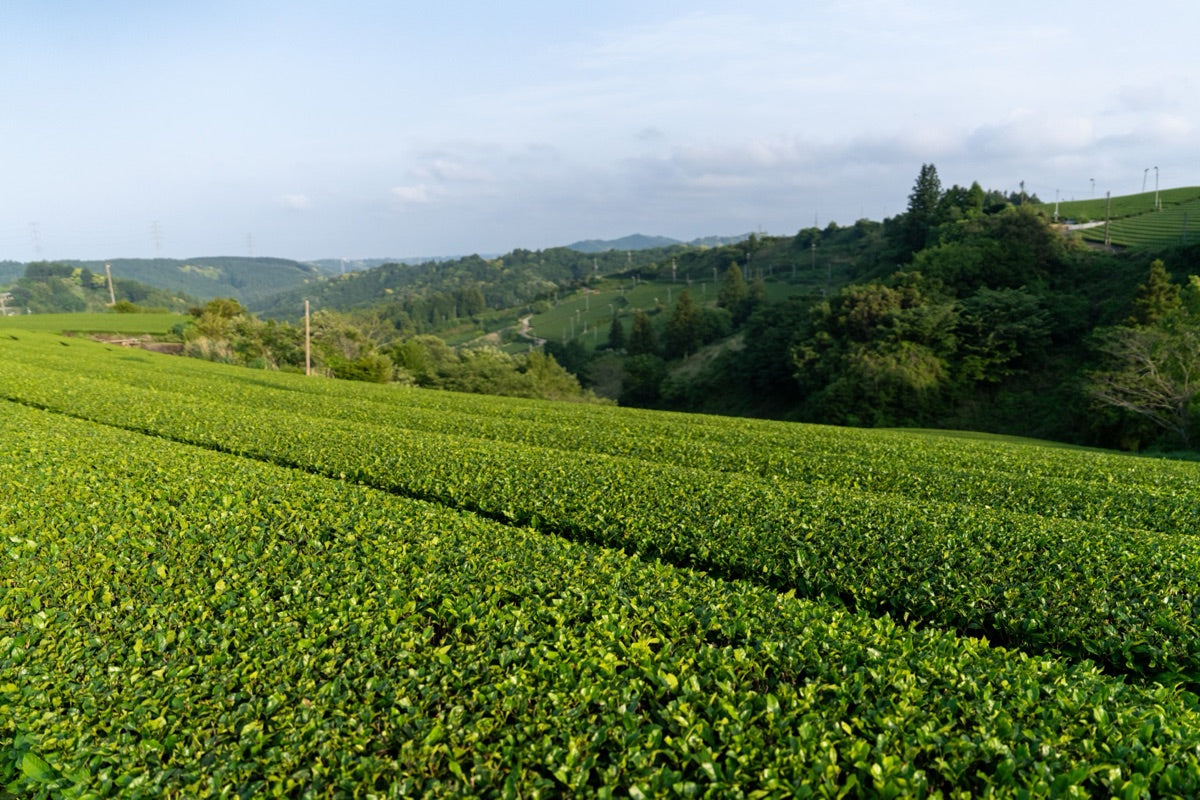
I came to Wazuka chasing a quiet rumor. Somewhere south of Kyoto, in a valley most travelers never reach, a single small town grows roughly half of all the tea that carries the famous Uji name. I wanted to stand in those fields and understand how.
Wazuka sits in Sōraku District, in the south of Kyoto Prefecture, in the old province of Yamashiro (The Kansai Guide, Wazuka and Fushimi). A river runs through it, the hills fold steeply on every side, and tea climbs those hills in long green terraces. You feel, walking it, that the place was made for this.
Key Takeaways
- Wazuka, in southern Kyoto's Sōraku District, produces about half of Kyoto Prefecture's Uji-cha tea leaves (ANA Japan Travel Planner).
- Tea has grown here for about 800 years, said to begin when the priest Jishin Shonin cultivated tea on Mount Jubu (ANA Japan Travel Planner).
- The hand-carved terraced landscape was named the first Kyoto Scenic Asset and registered as a Japan Heritage site in 2015 (Wazuka town).
- Nearly 300 small tea farms still work the slopes, in a style known for large variety and small quantities (Wazuka town).

Where is Wazuka, and why does the land grow such tea?
Wazuka is a town in Sōraku District, in the south of Kyoto Prefecture, set in the historic province of Yamashiro (The Kansai Guide, Wazuka and Fushimi). It produces about half of Kyoto Prefecture's total tea leaf output, the Uji-cha category that includes matcha (ANA Japan Travel Planner).
The terroir does real work here. The Yamashiro basin swings hard between day and night, and across the seasons, and the Wazuka River throws up a low fog that settles over the bushes (Wazuka town). That fog softens the sunlight and keeps the new shoots tender.
So much of what we call quality in tea is really just patience plus place. Wazuka has both. The cold mornings slow the leaf down, the mist protects it, and the slopes force everything to be done in small, careful batches.
How did tea first come to Wazuka?

Tea has been cultivated in Wazuka for roughly 800 years, a history said to begin when Jishin Shonin, a high priest, planted tea on Mount Jubu (ANA Japan Travel Planner). The craft took root in the Kamakura period and never left.
That long lineage carried real prestige. During the Edo period, Wazuka's tea was held as imperial property, grown for the court rather than the open market (Wazuka town). Few places in Japan can trace an unbroken tea history this far back.
This is the part I keep returning to. The tea I drank in Wazuka is not a recent product dressed up in old language. It's the living end of a line that started with a monk, a mountain, and a handful of seeds eight centuries ago.
The terraced fields that earned a Japan Heritage title

Wazuka's tea landscape was registered as the first Kyoto Scenic Asset, and in 2015 it became part of the Japan Heritage story "Japanese Tea: 800 Years of History Walk" (Wazuka town). The town also belongs to the association of the Most Beautiful Villages in Japan.
Those terraces were not poured by machines. The people of Wazuka's fourteen villages carved them out of steep hillsides by hand, generation after generation, and shaped the curving green steps you see today (Wazuka town). The scenery is a record of labor as much as land.
I climbed one of those hills at dawn. The rows bend with the slope like contour lines on a map, and the mist sat in the low ground below me. Standing there, you stop seeing a farm and start seeing a thousand small decisions repeated for centuries.
For a sense of where Wazuka fits among the country's great tea areas, our overview of Japan's matcha growing regions maps the wider landscape.
What tea does Wazuka grow, and how?

Nearly 300 tea farms still operate across Wazuka's slopes, working in a style the town describes as large variety and small quantities, shaped by the mountainous terrain (Wazuka town). It's the opposite of a single vast plantation. It is many small hands growing many things.
The quality is not a local boast alone. Wazuka tea has won the National Tea Competition of Japan, run by the Ministry of Agriculture, Forestry and Fisheries, taking the top honor at both the 43rd and the 52nd editions (Wazuka town). That is national recognition, judged against the whole country.
Because the fields are small and varied, the leaf can be matched closely to what it's best for, whether that becomes sencha, tencha for matcha, or another style. Wazuka is best known for high-grade sencha, but the same hillsides feed the wider Uji name that travels far beyond Kyoto. If you like reading terroir the way others read wine, our walk through the birthplace of matcha in Uji sits just up the valley from here.

From our tea room
Superior Sencha Green Tea - USDA Organic Japanese First Flush
First-flush loose leaf, USDA Organic, direct from Japanese family farms.
View Superior SenchaWalking Wazuka, and sitting inside a tea factory

The fields are the photograph everyone wants, but the work happens indoors too. I spent an afternoon inside a family-run factory in the valley, in a white coat and hairnet, watching green leaf move through roasting and refining machines that hummed all day.
What struck me was how personal it all stayed. The grower walked me through each step himself, the way you'd show a guest around your kitchen. There was no marketing in it, just leaf, heat, and a lifetime of knowing exactly when each is right.
Later we sat on the floor with bowls of tea while the team filmed and the questions ran long. I asked what makes tea special to him, and the answer came back slow and simple, less about flavor than about attention. That stayed with me more than any tasting note.
Sitting there, I understood Wazuka's real export. It isn't only the leaf. It's a way of paying attention that the whole town seems to practice, on the slopes and at the table both.
Bringing Wazuka home

Wazuka taught me that great tea is mostly inheritance and care. Eight hundred years of hand-carved terraces, cold river fog, and small careful farms are folded into a single bowl, and almost none of it is visible until you go and look.
If you want to taste that kind of lineage, explore our single-origin Japanese matcha, sourced with care from growers who keep these methods alive. And if you run a cafe or shop and want authentic Japanese matcha at wholesale, reach out about our wholesale program, we would love to pour with you.
May you become one with tea, one with yourself.
Frequently Asked Questions
Where is Wazuka and why is it famous for tea?
Wazuka is a town in Sōraku District, in southern Kyoto Prefecture's historic Yamashiro province (The Kansai Guide). It produces about half of Kyoto Prefecture's Uji-cha tea leaves, the category that includes matcha, across roughly 300 small hillside farms.
How long has tea been grown in Wazuka?
Tea has been cultivated in Wazuka for about 800 years, a history said to begin when the priest Jishin Shonin planted tea on Mount Jubu (ANA Japan Travel Planner). During the Edo period, its tea was held as imperial property grown for the court.
Why are Wazuka's tea fields a Japan Heritage site?
Wazuka's terraced tea landscape was named the first Kyoto Scenic Asset and registered in 2015 as part of the Japan Heritage story "Japanese Tea: 800 Years of History Walk" (Wazuka town). The terraces were carved by hand across fourteen villages.
What kind of tea does Wazuka produce?
Wazuka grows tea in a style of large variety and small quantities, shaped by its mountainous terrain (Wazuka town). Its tea has won the National Tea Competition of Japan at both the 43rd and 52nd editions, judged by the Ministry of Agriculture, Forestry and Fisheries.
Sources
- Wazuka town official site, WAZUKA: The hidden village of tea life, retrieved 2026-06-17, https://www.wazuka-kyoto.jp/en
- The Kansai Guide, Tea Fields to Kyoto Tables: A Journey Through Wazuka and Fushimi, retrieved 2026-06-17, https://www.the-kansai-guide.com/en/article/item/20321/
- ANA Japan Travel Planner, Savor delicious Kyoto Uji tea among the tea fields in Wazuka, retrieved 2026-06-17, https://www.ana.co.jp/en/us/japan-travel-planner/kyoto/0000009.html
Share:
Inside Uji: Walking the Birthplace of Matcha in Kyoto
Shizuoka Tea: Inside Japan's Largest Tea Region