



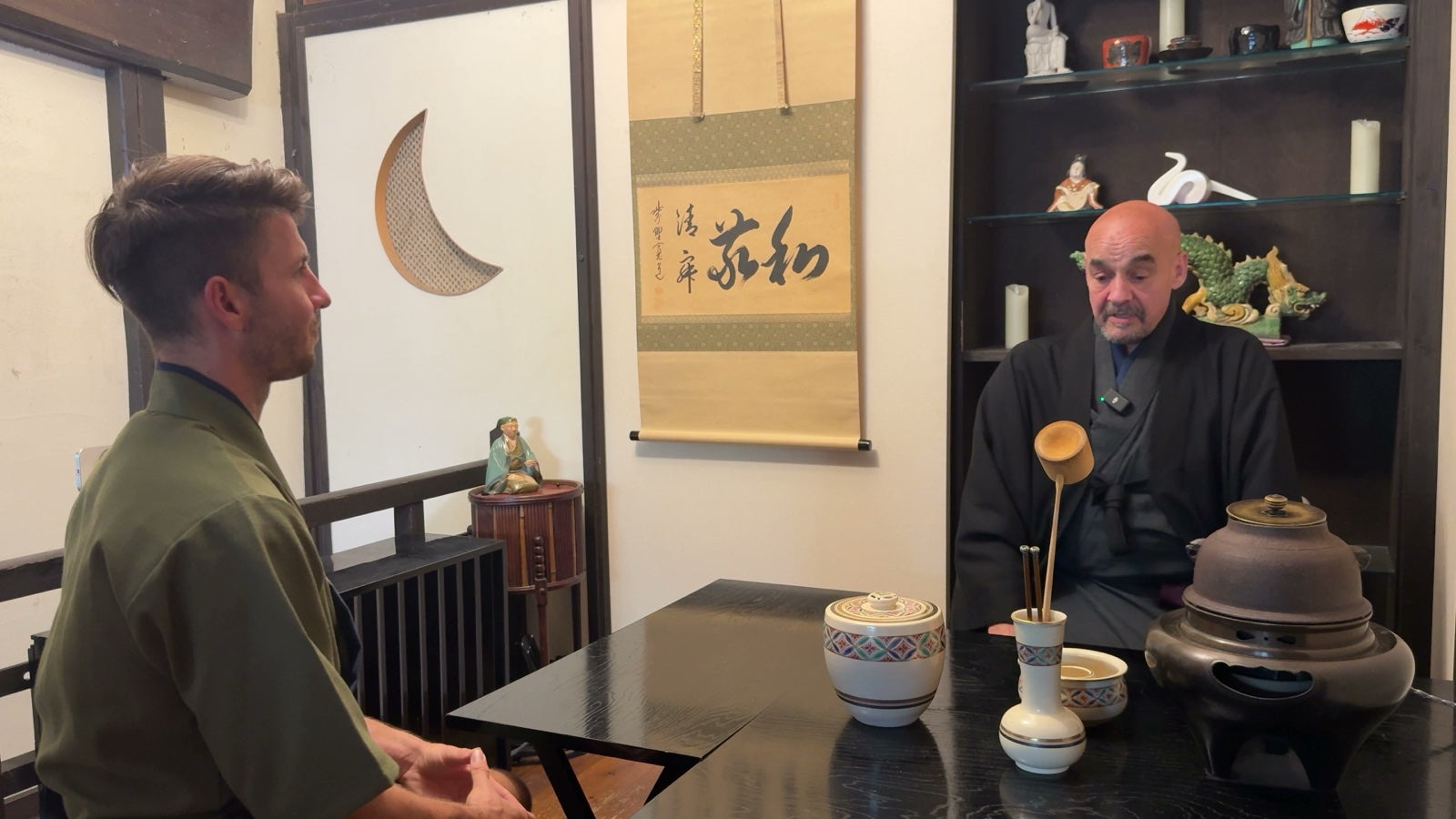
By Christian Mauerer, Founder of One with Tea · Published August 6, 2026 · Updated August 6, 2026
Umami is the fifth basic taste, standing alongside sweet, sour, salty, and bitter. It's the savory, brothy, mouth-filling sensation you get from a good broth, a ripe tomato, aged cheese, or a fine green tea. It comes from glutamate and a few related amino acids and nucleotides, which the tongue detects through dedicated umami receptors. In plain terms, umami is savory depth: the taste that makes food feel round, full, and satisfying.
I source shade-grown Japanese tea directly from farms in Shizuoka and Uji, and umami is the single quality I chase hardest in a cup. This is the guide I wish I'd had when I started, written to answer the question cleanly first, then take you through the science, the food, and the reason tea, especially shade-grown tea, is one of the most umami-forward things you can drink.
Key Takeaways
- Umami is the fifth basic taste: the savory, brothy sensation triggered mainly by glutamate, detected by dedicated taste receptors on the tongue.
- Japanese chemist Kikunae Ikeda isolated glutamate from kombu (kelp) broth and named the taste umami in 1908 (Kurihara, 2015).
- Umami multiplies through synergy: glutamate plus a nucleotide like inosinate can produce a response about 8 times stronger than glutamate alone in humans (Kurihara, 2015).
- In tea, umami comes from free amino acids, above all L-theanine, which makes up more than half of green tea's free amino acids (Chen et al., 2022).
- Shading the plants before harvest, the method behind gyokuro and matcha, raises theanine and lowers bitter catechins, which is why shade-grown tea tastes the most umami (Chen et al., 2022).
What Is Umami?
Umami is the fifth basic taste. For most of the last century, textbooks taught four: sweet, sour, salty, and bitter. Umami is the savory one that was missing from that list. It's the taste of glutamate, an amino acid found in protein-rich and aged foods, along with a few related compounds. Your tongue senses it through specific umami receptors, which is what makes it a genuine basic taste rather than a blend of the other four.
If you want the plain-language version, umami is savory depth. It's the brothy, meaty-without-meat quality in a bowl of dashi, the roundness in a slow-simmered sauce, the lingering savory note in a cup of shaded green tea. It doesn't shout the way salt or sour does. It fills the mouth, coats the palate, and makes you salivate, and it tends to make everything around it taste more complete.
The word itself is Japanese. It joins umai, meaning delicious, with mi, meaning taste, so umami translates roughly as savoriness or deliciousness. English never had a single word for it, which is part of why it took so long for the taste to be recognized in the West.
Where Does Umami Come From? Kikunae Ikeda, 1908
Umami has a clear origin story. In 1908, Kikunae Ikeda, a chemist and professor at Tokyo Imperial University, now the University of Tokyo, set out to explain why a simple broth of kombu (kelp) tasted so satisfying. He isolated the compound responsible, glutamate, and named the taste it produced umami, proposing it as a fifth basic taste (Kurihara, BioMed Research International, 2015; Umami Information Center).
For decades, that fifth-taste idea sat on the edge of acceptance, especially outside Japan. The proof arrived with the biology. In the early 2000s, researchers identified the tongue's umami receptor, a pairing of two proteins called T1R1 and T1R3, that responds to glutamate and is enhanced by nucleotides (Kurihara, 2015; Li et al., PNAS, 2002). Once there was a dedicated receptor, umami had the same standing as sweet, sour, salty, and bitter. Not a combination of them, but its own line to the brain.
Ikeda's discovery also had a practical side. The seasoning we know as MSG, monosodium glutamate, came directly out of his work, and it's simply the sodium salt of the same glutamate that occurs naturally in kombu, tomatoes, and tea. The tongue doesn't distinguish glutamate by its source, a point worth remembering when people treat naturally occurring umami and added umami as different things.
What Does Umami Taste Like?
Umami tastes savory, brothy, and full. The clearest single reference is dashi, the Japanese stock made from kombu and dried bonito, which is umami close to its purest form. Beyond that, think of the deep savoriness of aged parmesan, the concentrated sweetness-savoriness of a sun-ripened tomato, the richness of a mushroom broth, or the lingering savory finish of a well-brewed green tea.
What makes umami distinct is how it behaves in the mouth. Sweet, sour, salty, and bitter each announce themselves quickly and fade. Umami is slower and wider. It coats the tongue, makes you salivate, and lingers after you swallow. It rounds off sharp edges and deepens whatever it sits beside, which is why a pinch of something umami-rich can make a whole dish taste more finished.
If you're trying to locate it, brew a cup of shade-grown green tea and pay attention to the body of the liquid rather than its aroma. The grassy top notes are easy to notice. The savory, almost broth-like weight underneath, the part that feels less like a flavor and more like a texture, is the umami.
The Five Basic Tastes Compared
Each basic taste evolved to tell you something about your food. Sweet flags energy, bitter warns of possible toxins, and umami points to protein. Here is how the five line up, with umami in its place as the savory signal for amino acids.
| Basic taste | What it signals | Key molecule(s) | Everyday example |
|---|---|---|---|
| Sweet | Energy, ripeness | Sugars (glucose, fructose) | Ripe fruit, honey |
| Sour | Acidity, unripe or spoiled food | Hydrogen ions (acids) | Lemon, vinegar |
| Salty | Minerals, electrolyte balance | Sodium ions | Sea salt, cured foods |
| Bitter | Possible toxins, caution | Alkaloids, some polyphenols (catechins) | Coffee, dark greens |
| Umami | Protein, amino acids | Glutamate, plus inosinate / guanylate | Dashi, tomato, aged cheese, green tea |
The five basic tastes and the biological signal each one carries. Umami is the savory line, keyed to glutamate and amino acids (taste science per Kurihara, 2015).
What Foods Are High in Umami? And the Umami Synergy Effect
Umami-rich foods tend to be either aged, dried, fermented, or slow-grown, all processes that concentrate free glutamate. The everyday list is worth knowing because it maps the taste onto foods you already eat:
- Kombu (kelp) and other seaweeds, the original umami source Ikeda studied.
- Katsuobushi (dried bonito) and other dried, cured fish.
- Aged and hard cheeses like parmesan and aged gouda.
- Tomatoes, especially ripe, sun-dried, or cooked down into paste.
- Mushrooms, particularly dried shiitake.
- Fermented seasonings like soy sauce and miso.
- Cured meats and long-simmered stocks.
- Green tea, especially shade-grown Japanese tea.
The most important thing to understand about umami is that it multiplies. On its own, glutamate gives a steady savory note. Combine it with a 5'-ribonucleotide, inosinate from bonito or guanylate from dried mushrooms, and the perceived umami jumps far beyond what either delivers alone. In humans, the response to a glutamate-and-inosinate mixture can be about 8 times larger than to glutamate by itself (Kurihara, 2015).
This synergy is the secret behind classic pairings. Dashi works because kombu brings glutamate and bonito brings inosinate, so the broth tastes deeper than the sum of its parts. A tomato sauce with parmesan, or miso soup with a piece of kelp, does the same thing. Once you know the pattern, you start noticing it everywhere good cooks build savory depth.
Umami in Green Tea: The L-Theanine Connection
All true tea, green, black, oolong, and white, comes from one plant, Camellia sinensis. Our Japanese green tea guide maps the whole family; here we're following one thread through it, the savory one. What separates a harsh cup from a sweet, brothy one is the balance of two groups of compounds inside the leaf. On one side are the amino acids, which taste sweet and savory. On the other are the catechins and caffeine, which taste bitter and astringent.
Green tea is unusually rich in free amino acids, and the dominant one is L-theanine. In the young shoots used for good green tea, theanine can make up more than half of the total free amino acids and about 1 to 2 percent of the leaf's dry weight (Chen et al., Horticulture Research, 2022). Theanine is what gives fine green tea its sweet-savory umami body, and it also softens the bitterness and astringency of the catechins and caffeine that sit beside it in the same cup.
So the umami of a great green tea isn't a metaphor. It's the same family of amino-acid chemistry that makes dashi and aged cheese taste savory, expressed through the leaf. A tea high in theanine and moderate in catechins tastes round, sweet, and brothy. A tea low in theanine and high in catechins tastes sharp and grassy. The growers who make the most prized Japanese teas are, in effect, farming for amino acids. Research also associates theanine with a calm, focused feeling when it's paired with the caffeine naturally present in tea, though that remains an area of ongoing study rather than a promise, so treat it as something researchers are still exploring, not a guaranteed effect.
Why Shade-Grown Tea Is the Most Umami-Forward: Gyokuro and Matcha
The most umami-forward teas in the world, gyokuro and matcha, share one growing technique: shade. For roughly the final few weeks before harvest, growers cover the plants with nets or straw, cutting most of the sunlight the leaves receive. That single change reshapes the leaf chemistry in a way you can taste.
Here's the mechanism. In full sun, the tea plant converts its theanine into catechins as part of normal growth. Take away the light, and that conversion slows. The leaf holds onto more of its theanine and produces fewer of the bitter catechins. Peer-reviewed work on shaded tea confirms the direction: shading raises theanine and lowers the major catechins such as EGCG and epicatechin, which is exactly the trade that produces a sweeter, more umami cup (Chen et al., International Journal of Molecular Sciences, 2022). Shading tends to nudge caffeine slightly upward too, which is one reason shaded teas can taste both sweeter and more energizing at once.
This is why gyokuro and matcha taste the way they do: concentrated, marine-sweet, and brothy, with the astringency pulled back. Matcha takes it a step further, because the shaded leaf, called tencha, is stone-milled into powder and whisked into water rather than steeped. You drink the whole leaf, so its umami arrives undiluted. For the full story on shade-growing and the tea that started this whole tradition, read our guide to gyokuro.
This is also where our own work lives. We source shade-grown Japanese tea directly from growers and lab-test every lot before it's sold, because the amino-acid richness that creates umami only shows up in leaf that was grown and handled with care. Umami is not a marketing word for us. It's the measurable result of how the leaf was farmed.
Does Umami Tea Have Caffeine?
Yes. Green tea, including the umami-rich shaded kind, contains caffeine, generally less per cup than coffee. Mayo Clinic puts an 8 ounce cup of green tea at about 29 mg of caffeine, and brewed coffee at about 96 mg for the same size (Mayo Clinic). USDA FoodData Central's analytical record for brewed green tea sits in the same range, about 12 mg per 100 grams, which works out to roughly 28 mg in a standard cup.
Matcha is the exception worth flagging honestly. Because you whisk the whole powdered leaf into water and drink all of it, matcha usually carries more caffeine than steeped green tea, commonly cited in the range of roughly 40 to 90 mg per 2 gram serving depending on grade and how much powder you use. There is no USDA analytical figure for matcha powder, so treat that range as an estimate rather than a precise number. The reason the shaded, umami-forward teas can still deliver a lift is that theanine and caffeine ride together in the leaf. For the full comparison, including how serving size changes the math, see our tea and caffeine comparison and our deeper look at whether matcha is caffeinated.
How to Brew Tea for Maximum Umami
Umami is a brewing decision as much as a growing one. The amino acids that carry sweetness and umami dissolve readily in cooler water, while the bitter catechins need more heat to release. Brew hot and you pull out astringency. Brew cool and you draw the umami forward and leave most of the bitterness in the leaf. Here's the method for a shade-grown green tea like gyokuro.
- Warm the vessel. Rinse your teapot and cup with hot water, then empty them. This keeps the brew temperature stable.
- Measure the leaf. Use about 3 to 4 grams of gyokuro, a heaped teaspoon, per 100 ml of water. Shade-grown tea likes a generous leaf-to-water ratio.
- Cool the water. Let just-boiled water drop to around 50 to 60°C (122 to 140°F) for gyokuro. Pour it between two cups a couple of times to shed heat. For sencha, aim a little warmer, around 60 to 70°C.
- Pour and steep. Add the cooled water and steep for about 90 seconds to 2 minutes. The low temperature means you wait a little longer for the leaf to open.
- Pour off completely. Empty the pot to the last drop, so the leaves aren't left sitting in water and turning bitter.
- Re-steep. Good shade-grown tea gives two or three infusions. Nudge the water slightly warmer and shorten the time on each following steep.
Matcha follows a different path, because there's nothing to steep and strain. You whisk the whole powdered leaf into water, so its umami arrives undiluted and immediate. Use water off the boil, cooled to around 70 to 80°C, whisk until frothy, and drink it all. For steeped teas, the single habit that most improves umami is patience with the kettle. Cooler water, a little more time, and you'll taste the difference the first cup.
Want to taste umami at its clearest?
Shade-grown ceremonial matcha delivers umami undiluted, whole leaf, USDA Organic, sourced from named Japanese farms and lab-tested per lot.
Shop Ceremonial Matcha Inquire About WholesaleFrequently Asked Questions
Is umami the same as savory?
Essentially, yes. Umami is the scientific name for the savory taste, the fifth basic taste alongside sweet, sour, salty, and bitter. Savory is the everyday English word people reach for to describe the same brothy, mouth-filling sensation. Umami is just the more precise term, tied to a specific taste receptor and to glutamate.
Is MSG the same as the umami in food?
Chemically, the glutamate is the same. MSG is monosodium glutamate, the sodium salt of the glutamate that occurs naturally in kombu, tomatoes, cheese, and tea. The tongue doesn't distinguish glutamate by its source (Kurihara, 2015). Added MSG and naturally occurring umami trigger the same receptor.
Why does good matcha taste both sweet and savory?
Because of shade. Growing the plant in low light before harvest keeps more of the sweet, savory amino acid L-theanine in the leaf and lowers the bitter catechins (Chen et al., 2022). Since matcha is the whole leaf whisked into water, you taste that amino-acid richness directly, which reads as a rounded sweet-savory umami.
Which tea has the most umami?
Gyokuro and high-grade matcha, both shade-grown, carry the most umami of the common teas. Shading concentrates the amino acids that create the savory, brothy body while reducing astringency. A well-made gyokuro is often described as the most umami-forward tea you can drink.
Is umami healthy?
Umami is a taste, not a nutrient or a health treatment, so the honest answer is that it's neither healthy nor unhealthy on its own. Many umami-rich foods, like green tea, mushrooms, and seaweed, are part of a balanced diet, but that's about the foods, not the taste. For nutrition questions specific to matcha, see our matcha benefits page, which stays careful about what the research does and doesn't show.
What foods are highest in umami?
Kombu (kelp), dried bonito, aged cheeses like parmesan, ripe and sun-dried tomatoes, dried shiitake mushrooms, soy sauce, miso, cured meats, and green tea. Combining a glutamate source with a nucleotide source, like kombu with bonito in dashi, multiplies the umami through synergy (Kurihara, 2015).
Have a question about umami, or want to talk wholesale? Email info@onewithtea.com. I read everything.
Sources
- Kurihara, K. "Umami the Fifth Basic Taste: History of Studies on Receptor Mechanisms and Role as a Food Flavor." BioMed Research International, 2015. pmc.ncbi.nlm.nih.gov/articles/PMC4515277
- Umami Information Center. "Kikunae Ikeda." umamiinfo.com/ikedakikunae
- Li, X., et al. "Human receptors for sweet and umami taste." PNAS, 2002. pnas.org/doi/10.1073/pnas.072090199
- Chen, Y., et al. (theanine regulation). "CsGDH2.1 negatively regulates theanine accumulation in late-spring tea plants (Camellia sinensis)." Horticulture Research, 2022. pmc.ncbi.nlm.nih.gov/articles/PMC9832843
- Chen, X., et al. (shading effects). "Effect of Shading on the Morphological, Physiological, and Biochemical Characteristics as Well as the Transcriptome of Matcha Green Tea." International Journal of Molecular Sciences, 2022. pmc.ncbi.nlm.nih.gov/articles/PMC9696345
- USDA FoodData Central. "Beverages, tea, green, brewed, regular," FDC ID 171917 (SR Legacy, 12 mg caffeine per 100 g). fdc.nal.usda.gov
- Mayo Clinic. "Caffeine content for coffee, tea, soda and more." mayoclinic.org
Share:
Can You Drink Matcha Every Day? Daily Amounts and Ritual
Matcha Tested for Heavy Metals: What 2026 Lab Reports Show