



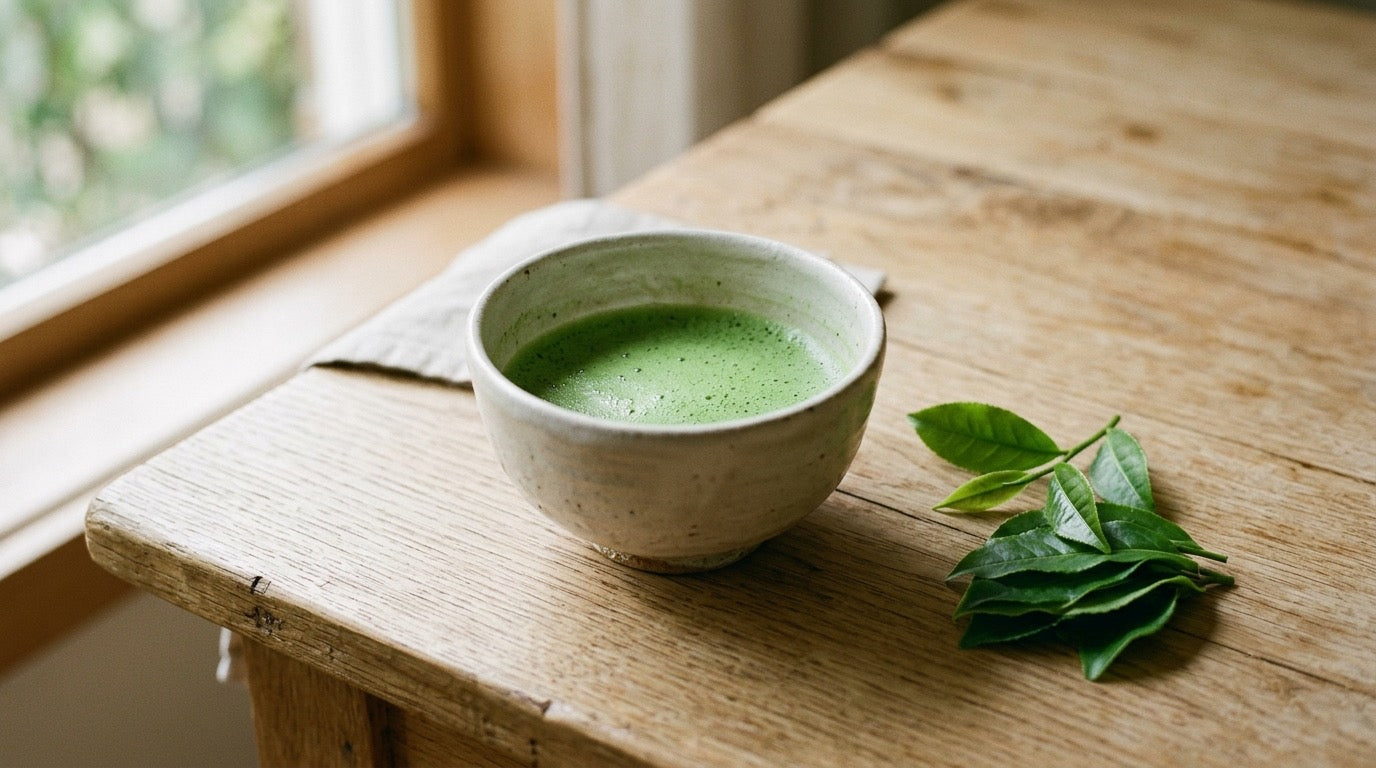
Short answer: green tea catechins, the compounds matcha is rich in, have been linked across multiple clinical trials to a modest but real reduction in LDL ("bad") cholesterol, on the order of a few mg/dL. It's a genuine effect, not a marketing one, but it's small, it varies by person, and it's a complement to diet and exercise, not a replacement for them or for medication.
Key Takeaways
- LDL cholesterol is the particle most associated with arterial plaque. Lower is generally better, within reason.
- A meta-analysis of green tea trials found LDL lowered by about 4.55 mg/dL (Nutrition Journal 2020).
- At higher catechin doses, the effect grows: 107 to 856 mg/day of EGCG over 4 to 14 weeks reduced LDL by about 9.29 mg/dL (meta-analysis, 2016).
- The honest caveat: the effect is modest and not universal. One meta-analysis found no significant LDL change in overweight and obese people (though triglycerides improved).
- This is a function of diet, not a treatment. Matcha is not a statin and not a cure for any heart condition. Individual response varies; talk to your doctor about cholesterol.
What LDL is, in one paragraph
Cholesterol travels through your blood in particles. LDL (low-density lipoprotein) is the one that, in excess, contributes to plaque building up in artery walls. HDL helps carry cholesterol away. When a lipid panel flags "high cholesterol," it's usually LDL that's the concern. The goal most people and their doctors work toward is keeping LDL in a healthy range through diet, movement, and, when needed, medication. The question here is narrow and honest: where does matcha fit into the diet side of that?
The matcha connection: catechins and EGCG
Matcha is unusually rich in catechins, a family of plant compounds, and the most-studied one is EGCG (epigallocatechin gallate). Because matcha is made from shade-grown leaves that are stone-ground and consumed whole, a serving delivers a higher catechin dose than a cup of steeped green tea, where most of the leaf is thrown away. Those catechins are the active ingredient in nearly every green-tea-and-cholesterol study, which is why matcha is a reasonable, food-first way to reach the kinds of doses the research used.
What the research actually shows
The evidence here is stronger than for most "tea and health" claims, because it rests on pooled randomized trials rather than single studies. Benefits and limits together:
The reliable signal. A systematic review and meta-analysis of randomized controlled trials found that green tea consumption significantly lowered LDL cholesterol by a weighted average of about 4.55 mg/dL compared with control (Nutrition Journal, 2020). An earlier review reached the same conclusion: green tea catechins decrease total and LDL cholesterol (Zheng 2011).
Dose matters. A meta-analysis focused on EGCG specifically found that 107 to 856 mg/day for 4 to 14 weeks reduced LDL by about 9.29 mg/dL (2016 review). More catechins, bigger effect, within the studied range.
The honest caveat. It isn't universal. A meta-analysis in overweight and obese populations found no significant LDL reduction in that group, although triglycerides did improve. Response varies by body composition, baseline cholesterol, genetics, and dose. A few mg/dL is meaningful at population scale but small for any one person, and nowhere near what cholesterol medication achieves.
| Evidence | Dose / group | LDL effect |
|---|---|---|
| Green tea meta-analysis (2020) | Green tea, general | −4.55 mg/dL |
| EGCG meta-analysis (2016) | 107–856 mg/day EGCG | −9.29 mg/dL |
| Overweight/obese meta-analysis | Overweight + obese | No significant change |
How the effect likely works
Researchers don't attribute this to a single magic switch. The leading explanations are that catechins appear to reduce how much dietary cholesterol the gut absorbs, and may support the liver's own LDL-clearing machinery. The mechanisms are still an active area of study, and that nuance is the point: this is a gentle dietary nudge across several small pathways, not a drug hitting one target hard.
How much matcha, realistically
The trials above used catechin doses that, in matcha terms, generally mean more than a single casual cup. A 2-gram serving of quality matcha delivers roughly 40 to 100 mg of EGCG, so reaching the studied range usually means one to two servings a day, consistently, as part of an otherwise sensible diet. Practical notes:
- Consistency beats intensity: the trials ran for weeks to months, not days.
- Whole-leaf matters: you're drinking the leaf, so you get the catechins, not just a faint infusion.
- Skip the sugar: a sweetened latte can undo the point. Whisk into water or unsweetened milk.
Individual response varies. If you take cholesterol medication or have a diagnosed condition, talk to your doctor before relying on any food for lipid management. Very high doses of green tea extract supplements (not brewed matcha) have been linked to liver concerns, another reason food-first is the sensible path.
What matcha is not
Matcha is not a statin, and it does not "cure" or "prevent" any heart condition. The honest framing is that a daily matcha habit is one small, pleasant, evidence-backed lever among many, alongside fiber, movement, sleep, and whatever your doctor recommends. We'd rather you trust a real few mg/dL than a slogan. May you become one with tea, one with yourself.
Looking to make it a daily ritual? Our USDA Organic Ceremonial Matcha (30g) is stone-ground, first-harvest, and sourced directly from named Japanese growers, the whole-leaf catechins this guide describes.
Frequently asked questions
Does matcha lower cholesterol?
Pooled randomized trials suggest green tea catechins, which matcha is rich in, modestly lower LDL cholesterol, by roughly 4 to 9 mg/dL depending on dose (Nutrition Journal 2020; EGCG meta-analysis 2016). The effect is real but small, varies by person, and is not seen in every population.
How much matcha should I drink to help cholesterol?
Studies used catechin doses that, in matcha terms, usually mean one to two 2-gram servings daily, taken consistently over weeks to months. Whisk it into water or unsweetened milk rather than a sugary latte.
Can matcha replace my cholesterol medication?
No. Matcha is a food, not a treatment, and its effect is far smaller than medication. It can be part of a heart-healthy diet, but never a substitute for what your doctor prescribes. Talk to them before making changes.
More in the matcha science series: What is EGCG · Matcha health benefits
Share:
Matcha and Cortisol: What the Research Actually Says About Stress (2026)
Matcha and Blood Sugar: What the Research Says (2026)