



by Christian, founder of One with Tea, May 21, 2026
The drive into Shibushi feels nothing like the tight, forested valleys of Yame. The Osumi Peninsula opens up. Kagoshima is the deep south of Japan, the bottom right corner of Kyushu, and the tea country here sits on long volcanic plateaus where the rows of camellia run for what feels like a horizon. By the time we pulled into the Horiguchi Seicha gates in Ariake-cho, I had already started recalibrating what scale means in Japanese tea. This is not a postcard farm. This is an operation.
I had come to Kagoshima Horiguchi Seicha to meet Daisuke Horiguchi, the second-generation Representative Director of the company and one of the most talked-about young producers in the region. The Global Japanese Tea Association profiled him at length in their Japanese Tea Innovators series, and what I had read on the plane did not prepare me for what 300 hectares actually looks like when you stand at the edge of it. Here is what the day taught me about Kagoshima, about smart agriculture, and about why this farm is one of the most important addresses in modern Japanese tea.
Key Takeaways
- Kagoshima Horiguchi Seicha is a second-generation tea company based in Shibushi City on the Osumi Peninsula, with roots reaching back roughly 75 years to post-war black tea cultivation.
- The operation processes leaf from 300 hectares total, 120 hectares directly managed by Horiguchi Seicha and another 180 hectares managed by 42 affiliated farmers.
- Daisuke Horiguchi, born 1982 in Shibushi, became Representative Director in July 2018 after four years training with a Shizuoka producer and a return home in April 2010.
- The farm holds FSSC 22000 food safety certification, Rainforest Alliance certification (among the first tea farms in Japan to earn it), and runs approximately 60 hectares under organic certification.
- Horiguchi Seicha is not on One with Tea's shelves today. The visit shaped how we read scale, certification, and innovation in any Japanese producer we consider working with.

The Osumi Peninsula and the road to Shibushi
Kagoshima is one of Japan's biggest tea-producing prefectures by volume, alongside Shizuoka. The geography is part of why. The Osumi Peninsula, on the eastern side of Kagoshima Bay, has long, gentle plateaus of volcanic soil, mild winters, and a harvest calendar that opens earlier than anywhere else on the main islands. By the time Yame and Uji are still waking up, the first flush in Kagoshima is already on the truck.
Shibushi City sits on the Pacific side of the peninsula, looking out across Shibushi Bay. The town has a working port, an agricultural belt that runs inland for kilometers, and a small but stubborn community of tea families who have been planting here since the post-war years. If you want to anchor it on a map, our Japan tea production map places Shibushi roughly two hundred kilometers south of Fukuoka, deep into Kyushu. The contrast with Yame is sharp. Yame is narrow valleys, forest shade, and craft at the high end. Kagoshima is open fields, mechanized harvest, and a different conversation about what excellent tea looks like at scale.
Meeting Daisuke Horiguchi: second generation, three hundred hectares

Daisuke met us in a meeting room at the head office in Yomogihara, dressed plainly, talking quietly, with the slightly serious focus of someone who is running a business that does not pause for visitors. He was born in 1982 right here in Shibushi, qualified as a Japanese tea instructor, then spent four years after university working at a Shizuoka tea producer before coming home in April 2010. He took over as Representative Director in July 2018.
The company itself traces back roughly 75 years, to the post-war era when his predecessors began cultivating black tea on this stretch of Kagoshima soil. His father, Yasuhisa Horiguchi, took over and over a stretch of about ten years from roughly 2001 expanded the farm to 120 hectares. That number is not a typo. Most Japanese tea families work a few hectares. Yasuhisa took the operation into a different category, and Daisuke is now running the next chapter from there.
Today the total processing footprint sits at 300 hectares. 120 of those are directly managed by Horiguchi Seicha. The other 180 hectares come from a network of 42 affiliated farmers in the area who deliver leaf into the Horiguchi factory. When Daisuke says "we", he means a real organism. Field crews, factory teams, a research relationship with Kagoshima Prefecture, plus dozens of partner growers. None of this was in my head when I booked the visit. I had expected a producer. I met a system.
Why this farm decided to skip the pesticide
On May 31, 2026, I spent a day in the field with the Horiguchi team, hand-weeding between the Yutakamidori rows. No machines, no chemistry, just hats, gloves, and small sickles. The work is slow on purpose. Skipping pesticides means accepting that every weed and every pest gets handled by people, season after season. After a few hours bent over a single row, you understand why most farms gave up on this approach decades ago, and why the ones that kept going taste different.

The most interesting hour of the day was about pest control. Kagoshima's warmer climate means more bug pressure than the cooler central regions, and the conventional industry answer in any country is to spray. Daisuke's answer is engineering. He walked us through the lineup of in-house and prefecture-developed machines they use to keep the leaf clean without conventional chemicals on the organic blocks.
The first is called Hurricane King, which uses pressurized wind and water to knock pests off the canopy without chemicals. The second is Black Shadow, an automated field-shading rig. The third is Cyclone, a system developed in partnership with Kagoshima Prefecture. Since 2019 the farm has also been part of a demonstration project, hosted by the Kagoshima Prefecture government and a national research institute, that tests unmanned harvesters across the fields.
"I think it is important to establish a track record of contributing to the development of smart agriculture by participating in smart agriculture demonstration experiments such as agricultural robotics," Daisuke told me, in the careful, slightly formal register that the GJTA interview captured well. That sentence sits at the heart of the farm. He is not chasing novelty for its own sake. He is trying to prove out the operating model that allows a 300-hectare organic-leaning Japanese tea farm to exist in the first place. As of the current season, about 60 hectares are under organic certification, and the goal is to keep growing that share without giving up the consistency that scale requires.
Two notes before anyone gets the wrong idea. First, Horiguchi Seicha is not Sakamoto, the small Shibushi organic gyokuro grower that Western blogs sometimes profile. They are different operations with different scales and different teas. Second, the no-pesticide story applies to the certified organic blocks. The rest of the 300 hectares is conventional with reduced inputs. Daisuke is candid about that. He is engineering a transition, not staging a marketing claim.
The cultivar lineup: twenty varieties, Yabukita's quiet retreat
Kagoshima has been one of the more active prefectures in moving Japan beyond a single-cultivar national tea map. Yabukita has long been the dominant variety across the country, and Horiguchi is one of the farms working the other side of that question.
Across the 300 hectares in the Horiguchi network, roughly 20 different cultivars are in active rotation. The lineup includes Yutaka Midori, Saemidori, Asatsuyu, and Okumidori. Yabukita is in the mix too, but only at roughly 2 to 3 percent of total area. At Horiguchi the default is not Yabukita. The default is whatever the field, the season, and the buyer call for.
That mix is one of the reasons this farm matters to anyone serious about the future of Japanese tea. Resilience comes from variety. So does flavor.
From field to factory to FSSC 22000: what it takes to feed 300 hectares of leaf

You cannot run 300 hectares of incoming leaf through a sloppy factory. The Horiguchi processing plant carries FSSC 22000, the top global food safety certification, plus Rainforest Alliance certification, which the farm secured among the first tea producers in Japan. That stack is rare. Most Japanese tea factories run on JAS organic certification alone, or on internal HACCP processes that never get audited by international bodies.
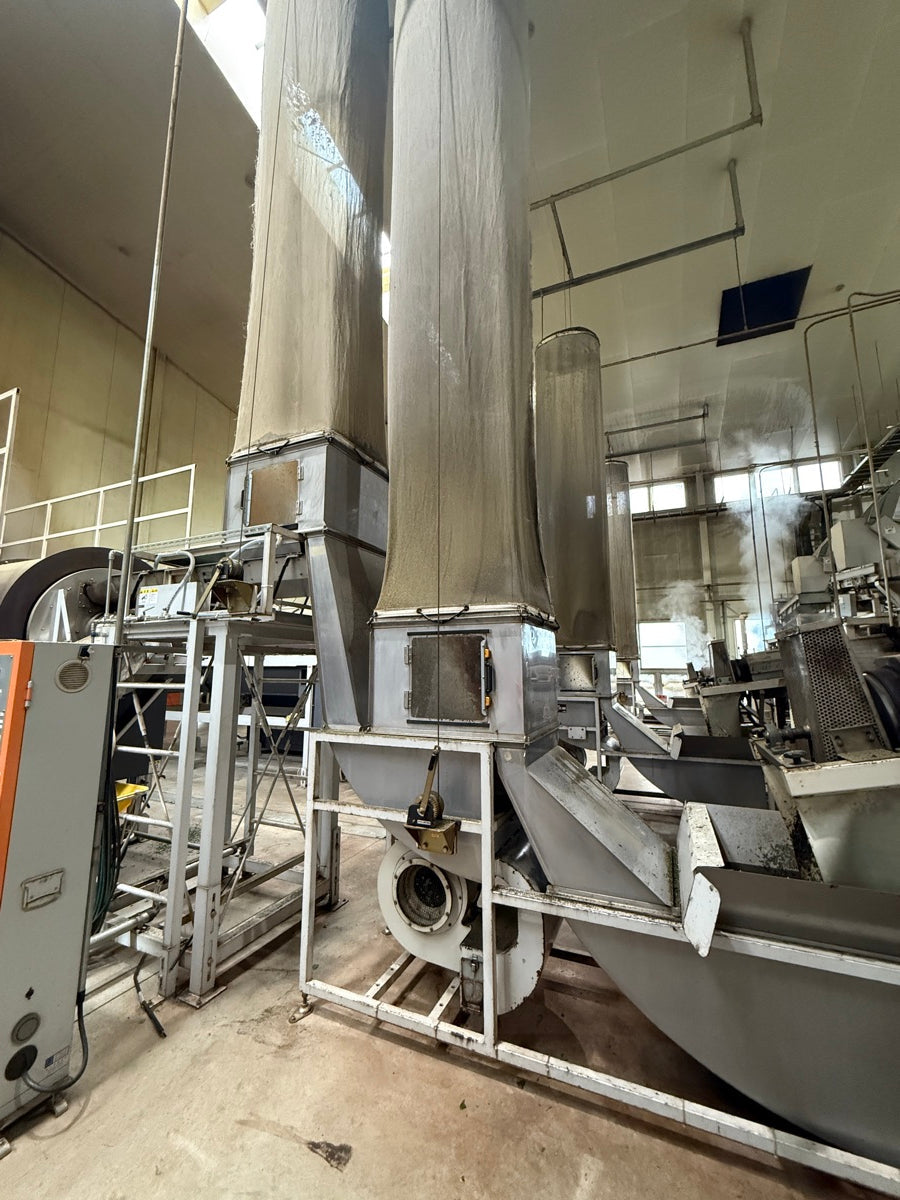
Walking the floor, the obsession with traceability is the thing that lands. Every lot has a paper trail back to the block, the cultivar, the cut, and the operator. The deep-steam lines for fukamushi sencha are separated from the lighter steam lines. The organic processing is physically partitioned from the conventional flow. The aracha that leaves this building is going into supply chains that include export buyers in the EU, the US, and the Gulf, and those buyers will not accept anything less.
In February 2025, Daisuke and the team received the Excellence Award at the INACOME Business Contest 2024. He also serves as an ambassador of the Japanese Ochawari Association. The awards and titles are not the point. They are signals that the conventional Japanese tea world has decided this farm is one of the addresses worth watching.
WAKOEN, TEAET, and the restaurant at Saon no Kura

The other surprise of the day was how much of the Horiguchi story sits downstream of the factory. The company runs a consumer retail brand called WAKOEN, with five physical shops across Kagoshima plus an online store. There are two concept brands, TEAET and Kakuhori. In 2016 the family opened Saon no Kura, a creative restaurant on the property, and in 2022 they added Osumi Sazen, a dedicated tea space.
This is the part of the visit that reframed something for me. The conventional Japanese tea narrative in the West tends to stop at the producer. We profile the maker, taste the cup, write the love letter. Horiguchi is a reminder that a serious producer in 2026 is also a brand operator and a research participant. Daisuke is making the leaf, milling some of the matcha, opening the shop, and designing the menu at the restaurant. That breadth is a model.
Horiguchi Seicha is not currently on One with Tea's shelves. We did not come to negotiate. We came to learn what a serious modern Kagoshima operation looks like from the inside, because the standards we hold our own sourcing to are built on visits like this. The lesson from Shibushi was not about a single bowl of matcha. It was about what it takes, in 2026, to run a Japanese tea farm with integrity at scale.
If you are starting on the more accessible end of the Japanese tea ladder, our organic ceremonial matcha is the daily bowl we built around the principles we saw across the trip, traceability, cultivar care, and the patience to let the leaf finish. And if you run a cafe, a yoga studio, or a wellness brand and want to source matcha at the standard that took us five weeks in Japan to define, our wholesale program is the easiest way to start a conversation.
Where is Horiguchi Seicha located?
Kagoshima Horiguchi Seicha is based at 758 Yomogihara, Ariake-cho, Shibushi City, Kagoshima Prefecture, on the eastern side of Japan's Osumi Peninsula in southern Kyushu. The factory and head office sit within the same 300-hectare processing network the company manages across Shibushi and the surrounding area.
Who is Daisuke Horiguchi?
Daisuke Horiguchi, born 1982 in Shibushi City, is the second-generation Representative Director of Kagoshima Horiguchi Seicha. He is a qualified Japanese tea instructor, spent four years with a Shizuoka tea producer after university, returned to Shibushi in April 2010, and took over as Representative Director in July 2018. He is also an ambassador of the Japanese Ochawari Association.
Is Horiguchi Seicha organic?
Approximately 60 hectares of the Horiguchi Seicha operation are certified organic as of the current season, out of a total 300-hectare processing footprint. The farm also holds FSSC 22000 food safety certification and Rainforest Alliance certification, the latter among the first tea farms in Japan to earn it. The remaining acreage is conventional with reduced inputs and ongoing transition work.
What cultivars does Horiguchi Seicha grow?
The Horiguchi network cultivates roughly 20 different varieties across its 300 hectares, including Yutaka Midori, Saemidori, Asatsuyu, and Okumidori. Yabukita, the most widely planted cultivar across Japan, accounts for only 2 to 3 percent of the area at Horiguchi. The cultivar diversity is one of the farm's defining choices.
Does One with Tea sell Horiguchi Seicha tea?
No. Kagoshima Horiguchi Seicha is not part of the One with Tea catalog. We visited the farm in May 2026 to learn what a serious modern Kagoshima operation looks like from the inside. The lessons from that visit, on scale, certification, cultivar diversity, and smart agriculture, inform how we evaluate every producer we consider working with.
Christian, founder of One with Tea
Share:
Japanese Tea Producers: 5 Voices Reshaping the Matcha World
Kurihara Seicha: A Yame Tea Maker worth its postcode