




Japan produced 74,000 tonnes of tea in 2024, and five prefectures shape nearly everything about the matcha you drink: Uji (Kyoto), Nishio (Aichi), Kagoshima, Shizuoka, and Miyazaki. Each region brings distinct soil, climate, and centuries of craft tradition to the cup, and the differences are not subtle.
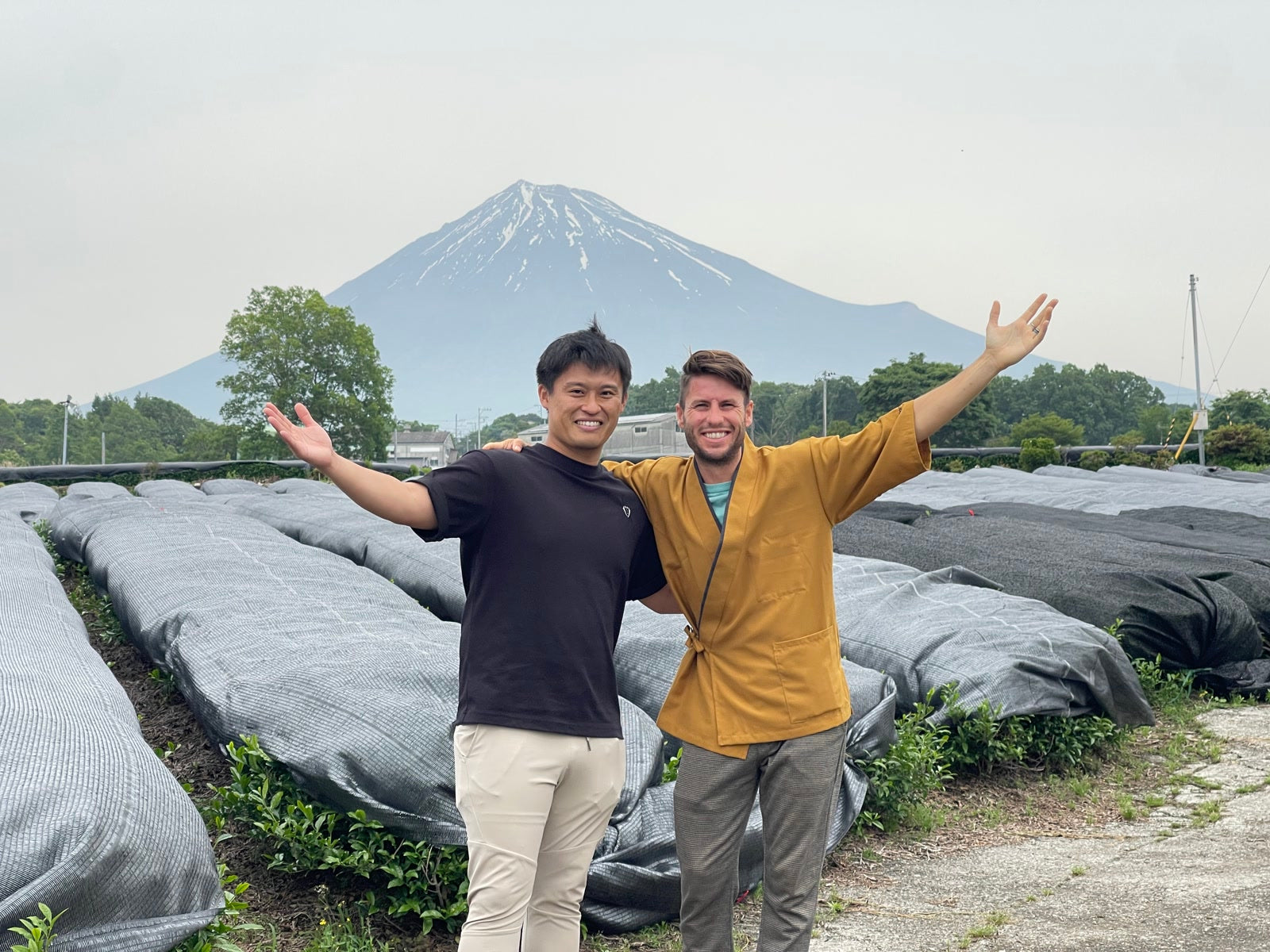
We source our matcha from several of these regions, and our founder Christian has visited tea farms across Japan firsthand, filming a documentary about the sourcing process. That experience taught us something no spec sheet can: the terroir of each region genuinely matters. The same cultivar grown in Uji tastes different from one grown in Kagoshima, just as a Burgundy pinot noir differs from one grown in Oregon.
This guide breaks down every major matcha-growing region in Japan, what makes each one unique, and how to use that knowledge when choosing your next matcha.
Key Takeaways Japan's matcha comes primarily from five regions. Uji (Kyoto) sets the gold standard with 800+ years of tradition but production is shrinking fast. Nishio produces about 20% of Japan's tencha from just 87 growers. Kagoshima surpassed Shizuoka as Japan's #1 tea producer by total output in 2024 and widened that lead in 2025, though Shizuoka reclaimed the first-flush crown in 2026. Meanwhile, tea farms have declined 77% since 2000, creating a paradox of booming global demand against tightening supply.
How Much Matcha Does Japan Actually Produce?
Japan's tencha production (the shade-grown leaf that becomes matcha) hit a record 5,336 tonnes in 2024, nearly 2.7 times the level from a decade earlier. Yet tencha still represents only 7.3% of all Japanese tea grown, which is why supply remains chronically tight even as total tea production declines.
Japan exported 8,798 tonnes of green tea in 2024, valued at 36.4 billion yen (~$252 million), a 24.7% increase in value year-on-year. Of that, 5,092 tonnes were matcha and powdered tea, accounting for 58% of all Japanese tea exports, overtaking leaf teas for the first time.
By October 2025, the numbers became historic: Japan's tea exports crossed 10,084 tonnes in just ten months, surpassing 10,000 tonnes for the first time since 1954. That is a 44% increase over the same period in 2024. The value of exports from January through August alone had already surpassed the full-year 2024 total, reaching 38 billion yen.
The United States is the largest importer, taking in 32% of total exports, followed by Southeast Asia (20%), Taiwan (19%), and the EU plus the UK (16%). US importers pay the highest per-kilo price at $39.37/kg, reflecting American demand for premium ceremonial grades.
The global matcha market was valued at approximately $3.7 billion in 2025 and is projected to reach $5.35 billion by 2031, growing at a compound annual rate of 6.5%. North America is the fastest-growing region.
The Matcha Paradox: Booming Demand, Shrinking Supply
Here is the uncomfortable truth behind those export records: Japan's tea industry is contracting even as global demand surges.
Tea farms have declined from 53,687 in 2000 to fewer than 12,000 in 2024, a 77% collapse in 24 years. Tea plantation area has fallen from roughly 49,000 hectares in 2004 to about 29,400 hectares in 2024, losing 700 hectares in 2024 alone. Over 70% of remaining tea farmers are age 65 or older, and only about 1,500 tea farmers nationwide are under 49.
The 2025 harvest drove this home: tencha production fell to 80-90% of 2024 levels nationwide. Tea industry closures in the first seven months of 2025 hit 11 cases (10 closures, 1 bankruptcy), already exceeding the full-year 2024 total of 10.
The result is price spikes. First-flush tencha prices in Kyoto exploded from 5,500 yen/kg in 2024 to 14,333 yen/kg in 2025, about 2.6 times as much. Premium organic tencha is now selling at 2-3 times the 2024 price, with allocation limits expected through 2027.
Exports are consuming a larger share of a shrinking pie. For consumers, this means authentic Japanese matcha, especially organic and ceremonial grade, will likely continue getting scarcer and more expensive.
Why Is Uji (Kyoto) Considered the Birthplace of Matcha?
Uji's tea heritage stretches back over 800 years to the Kamakura era, when Buddhist monks brought tea seeds from China in the 13th century. It was here, during the 16th century, that farmers invented the oishita saibai shading method, covering tea plants with reed screens to block sunlight. That innovation is what makes matcha possible: shading forces the plant to produce more chlorophyll and L-theanine, creating the deep green color and umami richness that define high-grade matcha.
The terroir plays a significant role. Mist rising from the Uji River, cool nights rolling down surrounding hillsides, and mineral-rich alluvial soil create conditions that are nearly impossible to replicate elsewhere. Uji matcha tends toward a smooth, creamy body with layered umami and a gentle marine sweetness on the finish.
Production volumes, however, are small and shrinking fast. Hand-picked tencha in Uji fell from 10,216 kg in 2024 to just 6,140 kg in 2025, a 40% decline. Machine-picked first-harvest tencha dropped 18% in the same period, from 529,960 kg to 434,521 kg. Kyoto's total first-flush production fell 19% to 1,070 tonnes in 2025.
The price impact has been dramatic. At the Zennoh Kyoto auction, hand-picked Uji tencha surged from 20,024 yen/kg to 47,096 yen/kg, a 135% increase. Machine-harvested tencha jumped from 5,411 to 14,141 yen/kg, up 161%. Less tea sold for nearly double the money: 939 tonnes for 9.6 billion yen in 2025, versus 1,127 tonnes for 4.6 billion yen in 2024.
Only 5% of all tencha in Japan is still hand-picked. Uji represents much of that remaining artisanal production, which is why competition-grade matcha almost always traces back to Kyoto-area farms. When we source from Uji, we are tapping into a tradition that predates most Western nations.
What Makes Nishio Japan's Matcha Powerhouse?
Nishio City in Aichi Prefecture is, by volume, one of the most concentrated matcha-producing areas in the world. The region accounts for roughly 20% of Japan's total tencha production, with 334 tonnes produced in 2024 from just 87 growers on approximately 180 hectares. What makes Nishio remarkable is its specialization: over 90% of the city's tea fields are dedicated to tencha cultivation.
Nishio's matcha heritage is newer than Uji's but still substantial. Tea cultivation was established in 1872-1884 when a temple priest brought seeds from Uji. The region's flat terrain along the Yahagi River, combined with mild winters and warm summers, creates favorable growing conditions. The soil is well-drained alluvial earth from the river, and the gentle slopes (Inariyama, at just 15.7 meters elevation) provide the mild microclimate tea plants prefer.
Nishio holds a distinction no other matcha region can claim: it was the first matcha to receive Japan's Geographical Indication (GI) designation in March 2017, and the first regional group trademark for matcha in February 2009. These protections help preserve quality standards and origin authenticity.
The cultivar mix in Nishio is also distinctive. Yabukita accounts for about 50% of plantings, Samidori for 30%, and Okumidori for 20%. The Samidori cultivar in particular produces a vivid green color and refined umami that Nishio is known for.
The flavor profile of Nishio matcha is generally described as bright, clean, and slightly vegetal, with excellent balance and approachability. This makes Nishio matcha popular for both drinking-grade and culinary applications. For buyers, Nishio represents a strong value proposition: the region's scale means consistent supply and competitive pricing at quality levels that rival more prestigious Uji teas for everyday use.
How Did Kagoshima Surpass Shizuoka as Japan's Top Tea Producer?
In a historic shift, Kagoshima surpassed Shizuoka in total annual tea production in 2024, producing 27,000 tonnes versus Shizuoka's 25,800 tonnes. Then in 2025, Kagoshima surpassed Shizuoka in first-flush (ichibancha) production as well, the first time this has happened since statistical surveys began in 1991. Kagoshima held steady at 8,440 tonnes while Shizuoka dropped 19% to 8,120 tonnes.
By 2025, the gap widened further: Kagoshima produced 30,000 tonnes (+11% year-on-year) compared to Shizuoka's 24,100 tonnes (-7%). In 2026, though, Shizuoka reclaimed the first-flush (ichibancha) crown, about 10,700 tonnes to Kagoshima's 9,610 (News On Japan), so the two now trade the first harvest while Kagoshima keeps the total-output lead.
The reasons behind this shift are structural, not temporary. Kagoshima, located on Japan's southernmost main island of Kyushu, has several advantages that align with modern production demands:
- Flat, expansive farmland that allows mechanized harvesting at scale, with 97.5% of farms using mechanized harvesting
- Higher productivity: 1,680 kg per 10 ares versus Shizuoka's 1,030 kg, despite having less total farmland (7,970 ha vs 13,700 ha)
- Volcanic soil from nearby Sakurajima, naturally rich in potassium, calcium, and magnesium
- Earlier harvest season, allowing farmers to reach market sooner
- Tencha expansion: Kagoshima now accounts for roughly 40% of Japan's total tencha production
Kagoshima's organic sector is still early but expanding with government backing. In the Chiran tea district, 102 of 1,200 hectares are organic, with 35 hectares fully JAS-certified. The prefecture has allocated 36 million yen for international sales channel development.
Kagoshima matcha tends to have a robust, slightly bolder flavor profile compared to the refined subtlety of Uji. Some tasters note a pleasant earthiness and a slightly stronger astringency. For matcha lattes and culinary uses, Kagoshima teas perform exceptionally well.
Where Does Shizuoka Fit in the Matcha Landscape?
Shizuoka remains Japan's most famous tea prefecture, but production is in structural decline. Total output fell to 24,100 tonnes in 2025, down 7% from 25,800 tonnes in 2024. The prefecture lost the ichibancha crown to Kagoshima for the first time since records began in 1991, though Shizuoka reclaimed that first-flush crown in 2026 (about 10,700 tonnes to Kagoshima's 9,610).
Historically, Shizuoka focused on sencha rather than matcha. As of 2024, tencha accounted for only about 2% of Shizuoka's total tea output. But a pivot is underway. Tencha factories in Shizuoka have grown from 4 to more than 10 in recent years, and roughly 50 factories joined a 2024 export base development plan.
This pivot faces real challenges. Shizuoka's mountainous terrain makes mechanized harvesting difficult, small plot sizes limit scale, and the prefecture's farming population is aging rapidly. Mount Fuji's slopes, Pacific Ocean breezes, and volcanic-ash soils create excellent growing conditions, but the steep terrain that gives Shizuoka sencha its prized character also makes modern production economics difficult.
Shizuoka sencha is prized for its bright, refreshing character with clean vegetal notes. As the region's tencha production grows, early results suggest Shizuoka matcha carries a lighter, more delicate flavor compared to the fuller body of Uji or the boldness of Kagoshima. This could position Shizuoka matcha as an interesting option for drinkers who prefer subtlety.
What Should You Know About Miyazaki Tea?
Miyazaki Prefecture, on the eastern coast of central Kyushu, is Japan's fourth-largest tea-producing prefecture, accounting for roughly 5% of national production at approximately 3,800 tonnes. The prefecture is best known as Japan's largest producer of kamairicha, a rare tea made using Chinese-style pan-firing rather than the steaming method used for most Japanese teas.
What sets Miyazaki apart for the future is its organic sector. About 13% of Miyazaki's tea production is organic, well above the national average. As global demand shifts toward certified organic matcha, Miyazaki's head start in organic farming positions it as an emerging region to watch.
Tea gardens in Miyazaki's mountainous areas, particularly around Gokase-cho, sit above 600 meters in altitude. The dramatic temperature swings between day and night at that elevation produce intensely aromatic teas. This high-altitude cultivation was recognized as a World Agricultural Heritage site in 2015.
Miyazaki also has historical roots in tencha production dating to the 1930s, when the region was a major tencha hub during Japan's export boom. That heritage is seeing a revival as Kyushu broadly increases tencha output to meet global demand.
For tea enthusiasts, Miyazaki represents the artisanal edge of Japanese tea. Tasting notes often include toasted almond, caramel, and a gentle nuttiness that sets Miyazaki teas apart from the marine umami of Uji or the bold earthiness of Kagoshima.
How Does Region Affect Matcha Flavor and Quality?
Three factors determine how region shapes matcha flavor: climate, soil composition, and cultivation tradition.
Climate and latitude play the most obvious role. Southern regions like Kagoshima get more sunlight and warmth, producing faster leaf growth and bolder, slightly more astringent flavors. Northern regions like Uji have cooler temperatures and more fog cover, which slows growth and concentrates amino acids in the leaves, resulting in deeper umami.
Soil composition varies dramatically across Japan's tea belt. Uji's alluvial river-valley soil delivers mineral complexity. Kagoshima's volcanic ash soil from Sakurajima, naturally rich in potassium, calcium, and magnesium, produces a distinctly earthy character. Nishio's well-drained alluvial earth along the Yahagi River creates clean, balanced flavors.
Shading traditions differ by region too. Uji pioneered and perfected the traditional reed-screen shading (honzu) method, which produces the most nuanced flavor but costs significantly more than the synthetic netting (kanreisha) used in larger-production regions. Nishio uses traditional shelf-shading (tana) that creates different leaf quality from Uji's methods. The length of shading, typically 20 to 30 days before harvest, also varies by farm and region.
Processing method makes a measurable difference at the grinding stage. Traditional stone mills (ishiusu) produce about 40 grams per hour, while industrial bead mills can process roughly 20,000 grams per hour, a 500-fold difference. The slow stone grinding avoids heat that degrades flavor compounds, which is why stone-ground matcha commands a premium.
Here is a quick reference for what to expect from each region:
- Uji: Rich umami, creamy body, gentle marine sweetness, minimal astringency
- Nishio: Clean, balanced, moderately vegetal, approachable for beginners
- Shizuoka: Light and refreshing, bright vegetal notes, delicate finish
- Kagoshima: Bold, full-bodied, earthy undertones, moderate astringency
- Miyazaki: Aromatic, nutty, gentle sweetness from high-altitude cultivation
How to Choose Matcha by Region: A Buyer's Guide
Knowing the region helps, but matching it to your intended use matters more. Here is how to think about it:
For traditional tea ceremony or straight usucha: Uji remains the benchmark. The deep umami and creamy texture stand on their own without milk or sweetener. Look for first-harvest (ichibancha), stone-ground ceremonial grade. Our USDA Organic Ceremonial Matcha (30g tin) is sourced for exactly this purpose.
For daily matcha drinking: Nishio and Uji both work well. If you drink matcha every morning, Nishio's consistent quality and balanced flavor make it an excellent daily companion. Our 60g ceremonial matcha pouch is sized for regular drinkers.
For matcha lattes and blended drinks: Kagoshima's bolder profile holds up well when mixed with milk or plant-based alternatives. The earthiness and slight astringency cut through dairy in a way that subtler teas cannot. Our Latte Grade Matcha is designed for this.
For baking and cooking: Nishio's food-processing matcha has been the industry standard for decades. Its clean flavor integrates well into recipes without overpowering other ingredients.
For the adventurous tea drinker: Seek out Miyazaki teas, especially kamairicha, for something genuinely different from standard matcha. Shizuoka's emerging tencha offerings are also worth watching as the region develops its matcha identity.
How One with Tea Sources Across Japan's Matcha Regions
We do not just read about these regions. Our founder Christian traveled across Japan's tea-growing prefectures, visiting farms, watching harvests, and tasting matcha at the source. That journey became a documentary that captures what makes each region special, and it permanently changed how we think about sourcing.
Our sourcing philosophy has three pillars:
Direct farm relationships. We work with farms we have visited and growers we know personally. This is not commodity purchasing through brokers. Direct relationships mean we can verify growing conditions, shading duration, and harvest timing.
Organic certification and lab testing. Every batch of our matcha is USDA organic certified through QCS (Quality Certification Services). Beyond that, we lab test for heavy metals and pesticides with results you can actually view on our site. We post verifiable test data because transparency is not a marketing claim for us, it is a practice.
Traditional stone grinding. Our matcha is ground with traditional ishiusu granite mills, which turn slowly to avoid generating heat that degrades flavor and nutrients. At roughly 40 grams per hour, stone grinding is painstaking compared to industrial bead mills that can process 20,000 grams per hour. The difference in the cup is unmistakable: finer particle size, smoother mouthfeel, and more vibrant color.
We source from multiple regions because different products serve different purposes. Our matcha collection reflects this intentional approach: ceremonial grade for drinking straight, latte grade for blended preparations, each selected from the region that produces the best expression for that specific use.
If you want to go deeper into the science behind matcha's compounds and what they do in the body, our health and science page breaks down the research. And for preparation techniques that bring out the best in any regional matcha, our matcha preparation guide covers everything from traditional whisking to modern methods.
Frequently Asked Questions
Which Japanese region produces the most matcha?
Kagoshima now accounts for roughly 40% of Japan's total tencha production, making it the largest matcha-producing prefecture by volume. For matcha-specialized cultivation, Nishio produces about 20% of Japan's tencha from just 87 growers, with over 90% of its tea fields dedicated exclusively to matcha.
Is Uji matcha really better than matcha from other regions?
Uji matcha has an 800-year heritage and terroir advantages, including river mist, mineral-rich soil, and pioneering shading techniques, that produce exceptionally umami-rich matcha. However, "better" depends on your use case. Uji excels for straight drinking and ceremony. Kagoshima matcha may actually be preferable for lattes, where its bolder flavor profile holds up against milk. Quality varies more by individual farm and harvest than by region alone.
Why is there a matcha shortage?
Global demand for matcha has surged, with Japan's tea exports crossing 10,000 tonnes in 2025 for the first time since 1954. Meanwhile, Japan's tea farms have declined 77% since 2000, from 53,687 to fewer than 12,000, and over 70% of remaining farmers are age 65 or older. The 2025 tencha harvest fell to 80-90% of 2024 levels. Uji hand-picked tencha prices surged 135%. Supply simply cannot keep up with the global matcha boom.
Does the region where matcha is grown affect its caffeine content?
Region has a modest effect, but shading duration and harvest timing matter more. All true matcha comes from shade-grown tencha, and the shading process increases caffeine and L-theanine content regardless of region. First-harvest (ichibancha) matcha from any region will have higher amino acid content than later harvests. Typical matcha contains about 30-40 mg of caffeine per gram, with regional variation of perhaps 10-15%.
Can matcha be grown outside Japan?
Tea plants grow in many countries, and matcha-style powdered teas are produced in China, South Korea, and even parts of the United States. However, Japanese matcha's distinctive flavor comes from specific cultivars (like Samidori, Okumidori, and Yabukita), combined with Japan's unique terroir and centuries of refined shading and processing techniques. Japan exported over 10,000 tonnes of tea in the first ten months of 2025, and demand for authentic Japanese-origin matcha continues to grow faster than supply.
What is the difference between stone-ground and industrially milled matcha?
Traditional stone mills (ishiusu) grind tencha at about 40 grams per hour, while industrial bead mills can process 20,000 grams per hour. The slow speed prevents heat buildup that degrades flavor compounds, chlorophyll, and L-theanine. Stone-ground matcha typically has a finer, more uniform particle size (5-10 microns), smoother mouthfeel, and more vibrant green color. The trade-off is cost: stone grinding is roughly 500 times slower.
Explore our full matcha collection to taste the difference that regional sourcing, organic certification, and stone grinding make. Or visit our blog for more deep dives into Japanese tea culture and sourcing.
Looking for ceremonial matcha sourced honestly from named Japanese regions?
USDA Organic and JAS certified, third-party lab tested, direct from family farms.
Shop Matcha CollectionInquire About Wholesale
Share:
Best Matcha Powder for Lattes: Craft Your Perfect Drink
What Is Stone-Ground Matcha? Why Processing Matters More Than You Think