



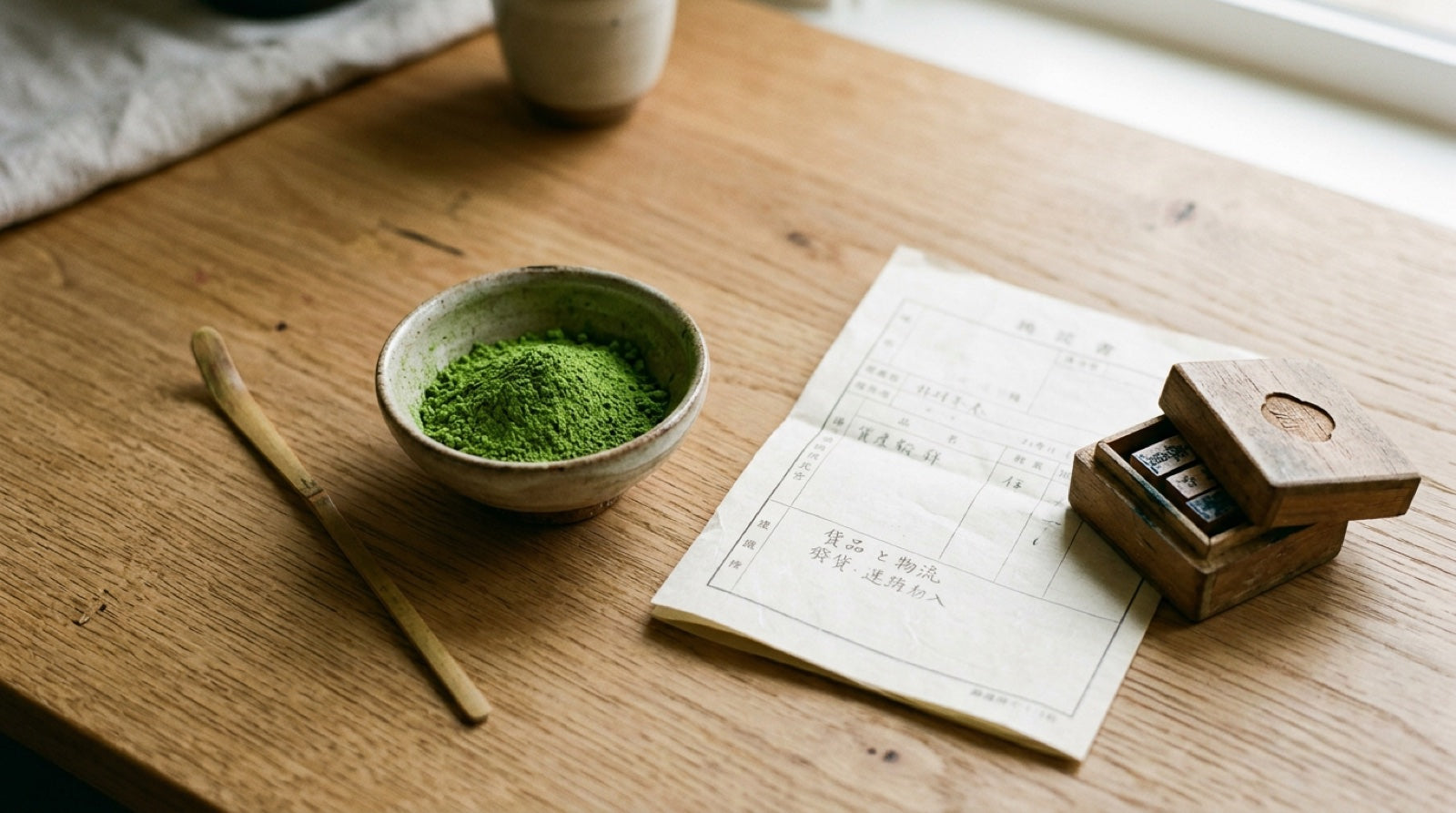
Japan Matcha US Tariffs 2026: From IEEPA to Section 122 Invalidation

The US tariff environment for Japanese matcha has shifted four times in six months. The November 2025 executive order exempted matcha from the reciprocal IEEPA tariff schedule. The February 20, 2026 Supreme Court ruling (6-3) invalidated the IEEPA-based tariff framework entirely. The administration replaced it with a 10 percent Section 122 import duty in Q1 2026. On May 7, 2026 the Court of International Trade invalidated Section 122 as well, holding that Proclamation 11012 did not identify the type of balance-of-payments deficits required by statute. As of late May 2026, only the standing 6.4 percent base duty on HS 0902.20 (green tea, including matcha) applies, with appeals pending on Section 122. For US cafes, the practical reality is: tariff policy is volatile, your customs broker is your only reliable source for what you pay today, and the case for direct-from-Japan sourcing is now about absorbing policy noise cleanly, not about hitting a specific rate.
Key Takeaways
- Four tariff-policy changes in six months: Nov 2025 EO exempted matcha from the 15 percent reciprocal IEEPA tariff (Washington Post); Feb 20, 2026 Supreme Court ruling (6-3) invalidated IEEPA; Q1 2026 10 percent Section 122 duty replaced it; May 7, 2026 Court of International Trade invalidated Section 122 (Proclamation 11012). Appeals are pending.
- Current operative state (late May 2026): standing 6.4 percent base duty on HS 0902.20 applies. Section 122 invalidated for now. Verify with your customs broker before quoting, this can change again in weeks.
- Japan's FY2025 green tea exports hit 13,125 tons, up 42 percent year over year, with matcha-led powdered tea making up roughly 70 percent of that volume (Japan Times). US demand is the dominant pull. Producer-side input cost pressure is the larger driver of US wholesale price than the tariff layer.
- The case for direct-from-Japan sourcing in 2026 is about absorbing policy volatility cleanly, not hitting any specific tariff rate. Aggregator margin stacking (typically 30-60 percent on top of producer price) is structurally the bigger cost layer than the tariff line, regardless of which framework is active at any moment.
The 2025-2026 US matcha tariff timeline (what actually happened)
Four policy events in six months reshaped what US cafes pay at the border on Japanese matcha imports. Worth understanding the sequence because it dictates how you model landed cost and why "what is the current tariff" depends on what day you ask.
November 2025: Executive Order exempts matcha from reciprocal IEEPA tariffs. The original IEEPA reciprocal tariff proposal would have stacked a 15 percent duty on Japanese matcha imports starting late 2025. Contemporary reporting cited that 15 percent impact passing through to US shelf prices (Washington Post). The November EO explicitly exempted "coffee and tea" from the reciprocal tariff schedule, effectively zeroing out the reciprocal duty layer for HTS 0902.20 imports.
February 20, 2026: Supreme Court invalidates IEEPA tariff authority (6-3). The Court ruled that the International Emergency Economic Powers Act does not authorize the president to impose tariffs. The broader IEEPA tariff framework, which the November exemption was carved out of, was struck down entirely. This created a regulatory vacuum on the import side of US trade policy.
Q1 2026: Section 122 10 percent import duty replaces the framework. The administration backfilled the gap with a Section 122 import duty under Proclamation 11012, applying 10 percent on top of the standing base duty for matcha (HS 0902.20). Combined effective rate during this period: base 6.4 percent + Section 122 10 percent = approximately 16.4 percent.
May 7, 2026: Court of International Trade invalidates Section 122. The Court ruled that Proclamation 11012 did not identify the type of balance-of-payments deficits required by Section 122 of the Trade Act of 1974, making the proclamation invalid as issued. Appeals are pending. As of late May 2026, only the standing 6.4 percent base duty on HS 0902.20 applies, with the Section 122 layer suspended pending appellate review.
What this means for your landed cost today. If you import matcha in late May 2026, factor 6.4 percent base duty into your CIF landed cost. Do NOT assume the 10 percent Section 122 layer applies right now. Do also not assume it stays suspended; the appeal could reinstate it within weeks. Confirm the current duty schedule with your customs broker before finalizing any quote.
Why the tariff math is the smaller layer of your cost stack
Wholesale matcha pricing in the US has three structural layers. The Japanese producer or cooperative sets the field price (and tencha prices roughly doubled in 12 months: the Kyoto May 2025 auction averaged 8,235 yen per kilo, 1.7 times the prior year's average per GJTA). The US-side importer or aggregator adds margin, often 30 to 60 percent. Then the duty stack (currently base 6.4 percent, with Section 122 +10 percent in legal limbo) compounds on top of CIF landed cost.
The regional picture is here: which Japanese prefectures actually grow the tea.
For the market context behind this, see the import data behind matcha pricing.
Producer-side cost increases are the biggest layer at roughly 70-80 percent of total wholesale cost. Aggregator margin is the second-biggest at 30-60 percent of CIF. The duty stack at 6.4 percent base (or up to 16.4 percent if Section 122 returns) is the smallest of the three. For a cafe buying 5 to 50 kg per month, sourcing through a direct importer or founder-led wholesaler beats a multi-tier aggregator because the aggregator margin layer is structurally bigger than the tariff layer, regardless of which tariff framework happens to be active that week.
The 2026 consequence most cafe buyers miss: aggregators that built their pricing assuming a specific tariff scenario (any of the four states above) are constantly out of date. We have seen quotes still calculated against the proposed 15 percent IEEPA reciprocal that never took effect. We have seen quotes including the Section 122 layer that the Court of International Trade just invalidated. Direct importers update their landed cost in real time as policy changes. The volatility itself is now the strongest case for direct sourcing: a stable founder-led or specialty-importer relationship is the only thing that absorbs four tariff-policy changes in six months without surprise re-quotes.
The 4-step sourcing window playbook
This is what I would do in 2026 if I were setting up or rationalizing a cafe matcha supply chain. None of it requires switching suppliers tomorrow. It requires understanding the math and building the relationship before policy or competitive pressure changes the window.
| Step | What to do | Why now matters |
|---|---|---|
| 1. Verify your current cost stack | Ask your current supplier for a line-item invoice breakout: producer price, freight, duty, supplier margin. Most aggregators will not share. That itself is a signal. | Establishes baseline before comparison. You cannot negotiate what you cannot measure. |
| 2. Quote a direct or founder-led alternative | Get a quote from at least two direct-import or founder-led wholesalers with the same grade and volume specs. Compare landed cost line by line. | The tariff exemption compressed the gap. The direct quote may now be materially cheaper than aggregator pricing for identical product. |
| 3. Negotiate a 12-month commitment | If the direct route wins on cost AND transparency, propose a soft 12-month volume commitment in exchange for priority allocation and stable pricing. | Direct importers value forecast-sharing accounts. The commitment buys you allocation priority during 2026 supply tightness. |
| 4. Document the policy assumption | Write a one-page memo: current cost stack, post-exemption math, what changes if the exemption is reversed or modified. Revisit quarterly. | Tariff policy can shift. A cafe that built the direct relationship before any reversal is better positioned than one that scrambled after. |
What happens if the tariff environment shifts again
The November 2025 to Q1 2026 sequence shows the US matcha tariff is now a policy variable, not a fixed cost. The Section 122 duty could be modified, expanded, or replaced. The Court could rule on Section 122 as it did on IEEPA. New executive orders could carve out or add categories. None of this is predictable, and trying to time the tariff is not a procurement strategy.
What IS predictable: direct sourcing relationships absorb policy volatility better than aggregator relationships. A cafe with a direct founder or specialty-importer relationship gets a clean updated landed cost in the same email cycle when the duty changes. A cafe buying through a multi-tier aggregator gets a quote re-issue 60-90 days later, often with margin stacking applied on top of the new duty. In both upside (further exemption) and downside (higher duty) scenarios, direct beats aggregator. The tariff math is the smaller layer; the margin-stacking math is the bigger layer.
Where the supplier landscape sits in 2026
Three things to know about the current US-channel matcha supplier landscape if you are evaluating direct sourcing. First, several heritage Japanese names are not accepting new US wholesale accounts: Ippodo Tea has paused USA and Canada applications (Ippodo), Marukyu Koyamaen routes through US-side distributors (Marukyu FAQ), and Mizuba Tea Co. is waitlisted (Mizuba). Second, the accessible-today direct channels are specialty importers with active B2B doors (Naoki, Encha, Tezumi) and founder-led D2C plus wholesale brands. Third, the aggregator middle of the market is the place where the tariff savings most often fail to pass through to the buyer.
For a fuller breakdown of how to choose among these archetypes by business size and use case, see our pillar guide on choosing a wholesale matcha supplier for your cafe.
What we recommend
If you are running a cafe matcha program in 2026, factor the 10 percent Section 122 duty into your landed-cost model and benchmark your current supplier against a direct or founder-led alternative. The right move is a side-by-side cost comparison: same grade, same volume, line-item breakout including the duty line. For cafes under roughly $5,000 per month matcha spend who want a direct founder relationship that absorbs policy volatility cleanly, that is what we built One with Tea for, sourcing from named Japanese cooperatives in Uji, Nishio, and Kagoshima and passing tariff and cost changes through transparently in writing. For higher-volume buyers, application-gated importers like Naoki Matcha or Encha typically deliver the same direct-economics advantage at scale. For pure-volume buyers, Matcha.com (Bulk Matcha) has published tier pricing that makes comparison easy.
What we will say plainly: the tariff math is the smaller layer of your wholesale cost stack. The aggregator margin is the bigger layer. A 10 percent duty is predictable. A 30-60 percent stacked margin compounded over a year of supply is not. The 2026 cost-control move is supplier-model selection, not tariff-timing speculation.
Frequently Asked Questions
What is the current US tariff on Japanese matcha imports (late May 2026)?
The standing 6.4 percent base duty on HS 0902.20 (green tea, including matcha) applies. The 10 percent Section 122 import duty that took effect in Q1 2026 was invalidated by the US Court of International Trade on May 7, 2026, with appeals pending. As of late May 2026 you should model 6.4 percent for landed cost, but verify with your customs broker before quoting because the appeals process could reinstate the Section 122 layer (returning to a combined ~16.4 percent) within weeks.
How much does the 2026 tariff actually cost me as a cafe operator?
It depends which day you ask. Under the standing 6.4 percent base alone (late May 2026 state), a cafe spending $3,000 per month on direct-from-Japan matcha at CIF landed cost is paying roughly $192 per month in duty. If the Section 122 layer returns on appeal, that climbs to roughly $492 per month. Either way the aggregator margin layer (30-60 percent on top of producer price) is significantly larger than the duty layer and is the real cost-control lever. Direct importers pass duty changes through transparently in writing; aggregators surprise buyers with re-quotes 60-90 days later.
What is the minimum cafe volume to make direct sourcing worth the operational overhead?
Roughly 5 kg per month is the practical floor for direct or founder-led sourcing. Below that, the operational simplicity of an aggregator account often outweighs the cost savings. Above 5 kg, the cost gap and the transparency benefits compound, and founder-led suppliers under $5,000 per month spend typically deliver better service than aggregators at that scale.
If the tariff environment shifts again, am I worse off having switched to direct?
No. The Nov 2025 to Q1 2026 sequence (exemption to invalidation to 10 percent Section 122) is exactly the kind of policy volatility direct sourcing handles better than aggregator sourcing. A direct supplier updates landed cost in real time. An aggregator surprises you with a re-quote 60-90 days later, often with margin stacking on top of the new duty. Direct sourcing has structural advantages beyond the tariff math (priority allocation, origin transparency, founder accessibility) and absorbs both upside and downside policy shifts more cleanly.
How long should a direct sourcing transition take?
Plan for 90 days. Two weeks to vet alternative suppliers and gather quotes, two weeks to negotiate terms and run a pilot order, four weeks to confirm the pilot lot meets your quality standards in cafe operation, two weeks to transition primary volume. Faster is possible but increases the risk of a supply gap during the changeover.
Where this leaves you
The US matcha tariff layer has changed four times in six months and the current state (6.4 percent base, Section 122 suspended pending appeal) could shift again before your next quarterly reorder. Stop trying to time the tariff. The bigger cost-control lever is supplier-model selection: direct or founder-led relationships absorb policy volatility cleanly and avoid the stacked margin layer that adds 30-60 percent on top of the duty in multi-tier aggregator channels. If you want a framework for choosing the right supplier archetype for your business, our pillar piece on how to choose a Japanese matcha supplier walks through the five real options in the current market.
If you are modeling 2026 landed cost on Japanese matcha and want a transparent direct-from-Japan quote that reflects today's actual duty schedule (and updates in writing when the next ruling lands), our wholesale inquiry page is the right place to start. We answer every email personally.
Christian Mauerer is the founder of One with Tea. He sources ceremonial-grade matcha directly from producer cooperatives in Uji, Nishio, and Kagoshima, and helps US cafes evaluate direct sourcing as an alternative to multi-tier aggregator wholesale.
Share:
Matcha Supply Security: How US Cafes Lock In Authentic Japanese Supply in 2026
Founder-Led vs Aggregator Matcha Suppliers: Which Wholesale Model Wins for Cafes in 2026